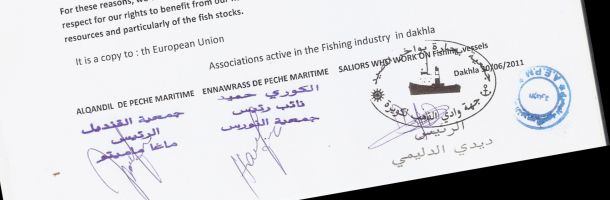
Three fishermen associations registered in Dakhla, occupied Western Sahara, say they've not seen any benefits stemming from investments and projects at the local harbour. Ironically, their statement comes only a few days after the EU Member States' split vote approval of the much debated one-year extension of the EU Morocco fish pact – claiming the investments under the agreement are beneficial to the local population.

Three officially registered organisations, Alqandil de Pêche Maritime, Ennawrass de Pêche Maritime and the Association of Sailors who work on Fishing Vessels, have taken their case to the European Commission.
In a statement issued on 30 June 2011, the organisations confirmed that only a small percentage of the local population of Dakhla is still employed in the Western Sahara fishing sector, in spite of Morocco’s ongoing claims of having made heavy investments in the harbour.
“While exclusion and corruption are prevalent in the Moroccan administration in the region, additional devastating investments have destroyed the middle class of the population; 42% of them made their livelihood in the fishing sector before the Moroccan administration was installed. But over the last 15 years, this proportion has dropped to 4,9%”, the statement reads.
“The Moroccan Ministry of Fisheries has limited all its investments and interests in exploitation in accordance to the wishes of lobbies and companies without any other principle than making profits. The Fisheries Ministry and the Moroccan State constantly mention the investments and developments in the region, while in reality it’s not undertaking any efforts on the ground to engage the local population and make them benefit from this alleged “investments”, or to create jobs for the local population in the fish sector in the region or the development projects linked to that sector”.
Click on the picture to the right for a larger version of the fishermen associations' statement.
EU Member States back fish deal, despite lack of proof on Saharawi benefits
Earlier this week, the EU Council of Ministers formally agreed to give green light to the controversial and widely criticised one-year extension of the EU fisheries agreement with Morocco. In voting this through, the EU split, with only a qualified majority believing that Morocco has provided sufficient proof that the Saharawi people of Western Sahara do indeed benefit from the fish agreement.
But according to an article in European Voice today “the Moroccan documentation – a confidential 44-slide PowerPoint presentation – makes no reference to Western Sahara and lumps the territory together with areas in Morocco proper, which makes it impossible to judge what benefits, if any, go to the Sahrawi population”.
Seven Member States – Sweden, Denmark, Austria, Finland, Cyprus, the UK and the Netherlands - did not agree to the proposal, as they failed to see how the agreement with Morocco was advantageous to the people of Western Sahara.
Their position is backed by a UN Legal Opinion from 2002, which not only lists the Western Sahara’s people’s interests, but also their prior consent as legal requirements for economic activities in the territory. A lack of evidence that the Saharawi people had been giving its consent and would benefit from the fish deal resulted in the European Parliament’s legal services calling for an immediate halt to the pact in 2009.
Ill-management of fish-stocks
In their declaration, the three associations from Dakhla also lament the ill-management of fish stocks, alleging “serious abuses contributing to the exhaustion of the fish stocks on a daily basis”.
According to the fishermen, the Moroccan fleet continues to use illegal netting techniques such as driftnets. Under the 2007-2011 EU-Morocco FPA, Morocco received an annual 1 million euro for phasing-out the use of destructive driftnets.
The fishermen see the “irresponsible and corrupt control of foreign vessels” active in the waters as an important contributing factor to the depletion of fish stocks. The lack of effective controls on board of Moroccan-, Russian- or Portuguese-flagged vessels is particularly prominent in their statement.

Heidelberg Materials deepens its role in Morocco’s occupation of Western Sahara
The German company confirms once again that its operations in occupied Western Sahara are closely tied to Morocco’s infrastructure expansion in the territory - while continuing to dismiss the Saharawi people’s right to consent.

The conflict phosphates - four decades of plunder
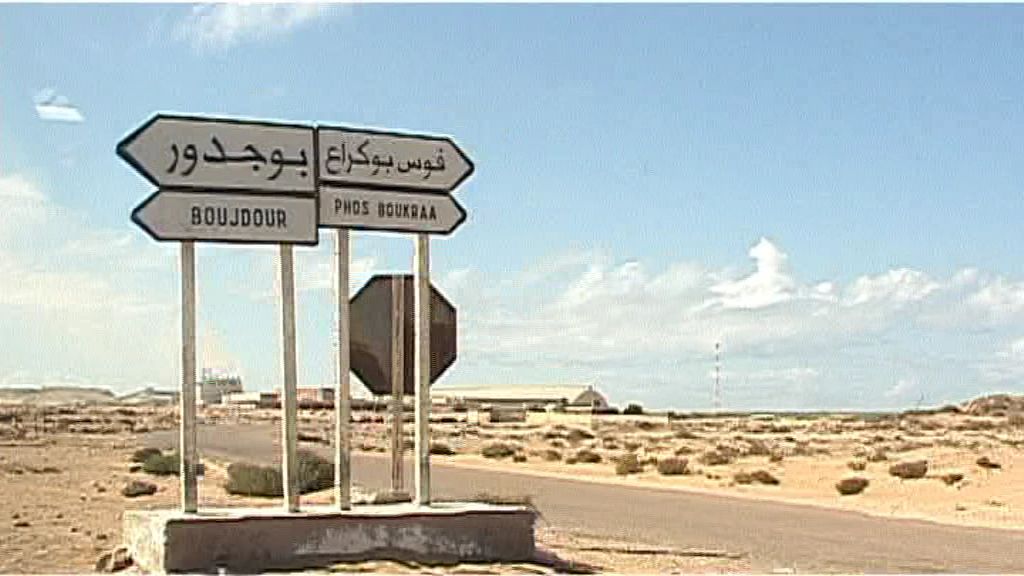
For over 40 years, a Moroccan state-owned company has exported phosphate rock from occupied Western Sahara.
Record low number of importers of Western Sahara phosphates
Only three companies imported phosphate rock from occupied Western Sahara in 2025 - the lowest number ever recorded. The findings appear in our annual P for Plunder report, released today.

One of the richest coastlines in the world
The fish stocks of occupied Western Sahara have not only attracted the interest of the Moroccan fleet: other foreign interests are also fishing in the occupied waters through arrangements with Moroccan counterparts. Along the Western Saharan coastline, a processing industry has emerged.