BRUSSELS (Reuters) - A politically divisive fishing pact between Morocco and the European Union has been costing Europe millions of euros a year and could deplete Morocco's fish stocks, according to a confidential report seen by Reuters.
UPDATE - The hunger strike was ended on Saturday 18 June 2011.
Since 12 April, six Saharawi citizens in Guelmim in Southern Morocco have been on hunger strike to condemn the EU’s fisheries in occupied Western Sahara and the involvement of US phosphate importer PCS and Irish oil company San Leon in the plunder of the territory.

Member of Western Sahara Resource Watch, Elena Pollán, was this week-end forced to leave Western Sahara after harassment from Moroccan police. Pollán was carrying out interviews with Saharawi about the illegal EU fisheries in the territory.

President of Western Sahara says the EU is prolonging the conflict through its illegal fisheries in his country's waters.
After two days of talks, the European Commission and Rabat have signed a one-year extension of the EU-Moroccan fisheries agreement on Friday 25 February in Rabat. The original agreement, widely criticized for supporting Morocco’s claim over occupied Western Sahara, was set to expire on 27 February.
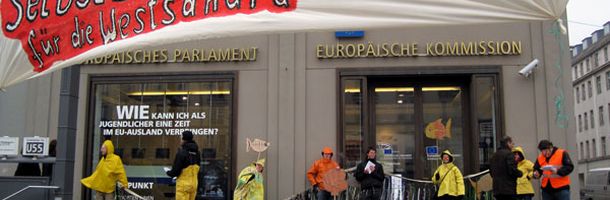
A Press Release by the Actionsgruppe Westsahara on their demonstration in front of the European Commission's representation in Berlin, Germany, on 18 February 2011.
A group of leading Swedish experts on international law, from 4 Swedish universities, today issued a statement saying any further EU fisheries in Western Sahara would be in violation of international law.
Next Friday, the European Commission will formally ask the EU-governments for a mandate to negotiate a 12-month extension of the EU-Moroccan fisheries agreement (FPA) on current terms. Read: one more year of paying Morocco to fish in non-Moroccan waters.

Next Friday, the European Commission will formally ask the EU-governments for a mandate to negotiate a 12-month extension of the EU-Moroccan fisheries agreement (FPA) on current terms. Read: one more year of paying Morocco to fish in non-Moroccan waters.
The Spanish government has asked the European Commission for a one-year transitional extension of the soon to expire EU-Moroccan fisheries agreement. Spain is the main benefactor of the agreement.
The European Commission announced today that it considers extending the soon to expire EU-Moroccan fisheries agreement. The Commission has also received 'relevant information' from Rabat on the agreement's impact on the local population of Western Sahara. No mention was made to the wishes of the people of Western Sahara.
"We have still time to influence so that the waters offshore Western Sahara are left outside of the agreement", writes columnist Helena Olsson in Finland's largest newspaper, Helsingin Sanomat, on the unethical EU fisheries.

Members of the European Parliament in Brussels who defend the illegal fisheries agreement offshore Western Sahara, did not want to explain their position to Swedish national radio.
The Spanish embassy in Oslo does not wish to respond to the question whether the word “wishes” is mentioned in the conclusion of the UN 2002 legal opinion. In order to get an answer of how Spain interprets the UN document, a national Norwegian student organisation was referred to the Saharawi delegation in Madrid.
The European Commission earlier this year asked the Moroccan government of a report on how the Saharawis benefit from the EU fisheries. “This position is simply not acceptable”, writes former UN Legal Counsel Hans Corell in an article.
The European Fisheries Commissioner, Maria Damanaki, is evaluating the possibility of negotiating a new fishing agreement with Morocco which excludes the waters of Western Sahara. If approved, more than a hundred EU vessels would have to withdraw from the Moroccan fisheries. FIS, 17 December 2010.
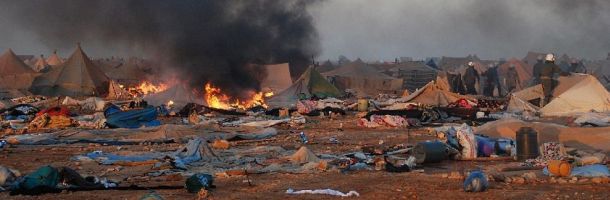
In the midst of a complete media blackout and during a wave of human rights violations, Moroccan government has set up a separate charter plane to Western Sahara to convince Spanish businessmen that doing business in the territory is safe and smart.