On the UN's map of remaining colonies in Africa, there is still one colony left.
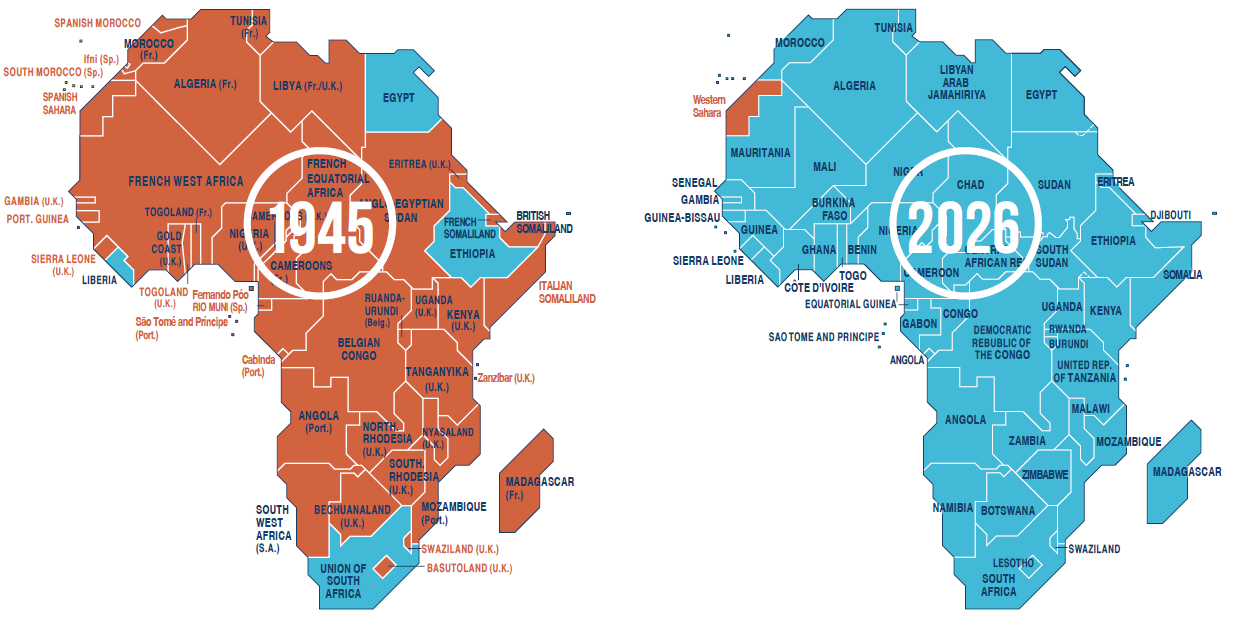
Many believe that the age of colonialism is over. It is not. On the UN's maps of remaining non-self-governing territories in Africa, there is one last colonial question left. Neighbouring Morocco occupies a large part of Western Sahara and obstructs the decolonisation process.
It was during the last months of 1975, that the Saharawi people's aspiration to independence took a serious blow. The territory's colonial power, Spain, abandoned Western Sahara without finalising the process of independence, as the UN had demanded. Instead, it allowed Moroccan military forces to invade the territory, in violation of international law and a decision from the International Court of Justice in The Hague.
Moroccan forces met resistance from the Saharawis, who had organised under the liberation movement Polisario. After 16 years of armed conflict, the two parties entered into a ceasefire agreement in 1991. According to the agreement, a referendum on independence in Western Sahara was to take place in 1992. The solution was in line with the over 100 UN resolutions calling for the respect of the Saharawi people's right to self-determination.
The UN operation MINURSO was established to monitor the ceasefire and to secure the implementation of the referendum. But this has still not materialised. Morocco has sabotaged the peace process by failing to cooperate with - or refusing to accept the nomination of - UN Special Envoys to the territory.
In 2020, after 18 months without a UN special envoy and no progress towards a referendum, tension increased until armed conflict was resumed, for the first time in 29 years.
The Saharawi people's right to self-determination is supported by more than 100 UN resolutions, by the abovementioned important opinion of the International Court of Justice in The Hague, and, so far, by four rulings of the EU Court of Justice.
"Thus the Court has not found legal ties of such a nature as might affect the application of General Assembly resolution 1514 (XV) in the decolonization of Western Sahara and, in particular, of the principle of self-determination through the free and genuine expression of the will of the peoples of the Territory."
International Court of Justice, 16 October 1975
However, Morocco has two main allies: its former colonial power France and the US administration. In 2020, under President Trump, the United States became the first country to state that Western Sahara is part of Morocco. This was subsequently followed by President Macron in France.
France has a substantial business presence in Morocco and a large Moroccan diaspora in its own country. Spain, the former colonial power over Western Sahara, has its own reasons for maintaining close relations with Rabat. These include geographical proximity, economic ties and, not least, the importance of cooperation with Morocco in managing migration.
The Franco-American duo, together with Spain, defends Morocco in key diplomatic forums. Together, the governments and a majority of political parties from Spain and France succeed in exercising such pressure on the EU's institutions, that even the EU's policies are coloured by Moroccan positions. Attempts from Northern European, African or Latin American states to limit the alliance’s influence have so far proven to be an uphill battle.
An informal group of states called ‘Friends of Western Sahara’ has historically prepared the draft resolutions prior to the UN Security Council votes. The group has not been formally appointed and does not have an official mandate. None of the five states in the group are particularly good friends of the people of Western Sahara, and Spain and France hold two of the five seats (the remaining are US, UK and Russia). The fact that two of the five members are among Morocco's strongest diplomatic supporters raises questions about the extent to which the process adequately reflects the interests and rights of the Saharawi people. All attempts to change the composition of the group are being rejected by those states who already claim to be ‘members' of the group.
In 2025 and 2026, the growing alignment between Donald Trump and Macron in support of Morocco’s position reached a critical point. The annual resolution to prolong the UN mission in the territory did not pass. With no agreement in the Security Council, MINURSO’s mandate expired on 31 October 2026, and the UN Secretary General announced the winding down of the peace-keeping operation the following day.
For the first time since its establishment in 1991, the UN mission tasked with organising the referendum and monitoring the ceasefire was no longer operational. This marked a dramatic setback for the international efforts to resolve the conflict and raises fundamental questions about the future of the UN's role in Western Sahara.
"The General Assembly [...] Deeply deplores the aggravation of the situation resoluting from the continued occupation of Western Sahara by Morocco and the extension of that occupation to the territory recently evacuated by Mauritania".
UN General Assembly, resolution 34/37, 1979
As the Franco regime collapsed in Spain, the Spanish government alerted the UN unilaterally that it had terminated its responsibilities in the territory. This announcement has not been recognised by the UN. The UN Legal Office in 2002 expressed that Spain could not act in such manner, and the territory hence remains on the UN General Assembly's list of colonies. The Supreme Court of Spain in 2015 concluded that Spain still holds responsibility as administering power of the territory, something that Madrid refuses to accept. To this date, subsequent Spanish governments – regardless of their political composition – have continued to defend their position by referring to the unilateral decision of the Franco regime to give the territory to Morocco in violation of the principles of the UN Charter.
For an easy introduction to the failed peace process, check this report from 2016.

Today, approximately 200.000 Saharawis live in refugee camps in the vicinity of the Algerian town Tindouf, near the Western Sahara border.
The camps are located in a part of the Saharan desert that has not been inhabited in the past. In the summer, the temperatures exceed 50 degrees C. while winter is often freezing. The harsh conditions make the population entirely dependent on international humanitarian aid. Despite the difficulties, however, the refugees have managed in a formidable way.
International aid is organized and distributed by the refugees themselves. International observers characterize the camps as the best organized refugee camps in the world. Regrettably, in recent years the international aid has been gradually reduced. This makes it increasingly more difficult to uphold acceptable living conditions, causing malnutrition. The UN Secretary-General consistenly appeals to the interntional community to increase the funding for humanitarian assistance.
Altogether, there are five Saharawi refugee camps, all named after specific locations inside the occupied territory. In each of the camps one generally finds that the inhabitants come from the same areas in the occupied territory.
In addition to the population inside the camps, the Saharawis are dispersed all over the world. The largest diasporas are found on the Canary Islands and mainland Spain. None are ever asked for their consent when international firms and foreign governments want access to their homeland's wealth.

Western Sahara is among those countries and territories in the world that score the lowest on rankings of civil and political freedoms.
For decades, Saharawis in the occupied territory have faced beatings, intimidation and arbitrary arrests by Moroccan security forces. UN personnel have often been present, driving through the streets, but have no specific mandate to monitor and report publicly on human rights violations. Unlike other contemporary UN peacekeeping operations, MINURSO had no human rights monitoring component.
The reason is France.
The French government actively worked to prevent the inclusion of a human rights component into MINURSO’s remit. Both the US and the UK have on occasion suggested in the Security Council that the MINURSO force should have such a mandate, but France always objected.

The last time a UN special rapporteur on human rights visited Western Sahara was in 2013, when the Special Rapporteur on Arbitrary Detention traveled to the territory. The group documented widespread use of arbitrary detention and torture. Since then, Morocco has refused any further visits. The list of disappeared Saharawis includes hundreds of names. Spanish forensic experts have exhumed some of the disappeared from mass graves.
According to the Moroccan constitution, Western Sahara is an integral part of the kingdom. Saharawis questioning this, demanding the right to self-determination that the UN is calling for, risk being subjected to serious human rights violations.
The video below shows the Saharawi journalist Walid El Batal being pulled out of his car on 7 June 2019. Half a year later, he was sentenced to two years in jail for police violence. The UN has requested Morocco to investigate Batal's arrest and torture.
The history of Western Sahara is full of brave Saharawis who have become victims of violations.
In 2010, dozens of Saharawis were imprisoned, most for having taken part in the organisation of a peaceful protest camp which Saharawis of all ages erected in a desert area outside of the capital city El Aaiún. It had started with a handful of Saharawis bringing their tents, establishing a little camp. As days went by, that group had grown into a parallel society consisting of over 10.000 people, all demanding basic socio-economic rights. It was the week before the Arab Spring started in the other Arab countries. The place was Gdeim Izik.
On 7 November 2010, after months of silent protest, the Moroccan police intervened. Fights erupted between police and frustrated Saharawis. Both police officers and civilian Saharawis died during the clashes. Morocco did not allow foreign observers, media or even the UN mission to access the camp site. After three years, a group of 25 civilian Saharawis were sentenced in a Moroccan military court over their alleged participation in the camp's organisation, most sentences ranging between 20 years and lifetime. Seven years later, the case was appealed before a civilian court, but the sentences were mostly upheld.
The convictions relied heavily on confessions which the defendants said had been extracted under torture. The allegations of torture and the fairness of the proceedings have been seriously challenged by international human rights organisations and UN mechanisms. Here is a report on the kafkaesque trial against the group. In 2023, the UN Working Group on Arbitrary Detention called for the immediate release of the prisoners. Morocco has failed to honour this demand.