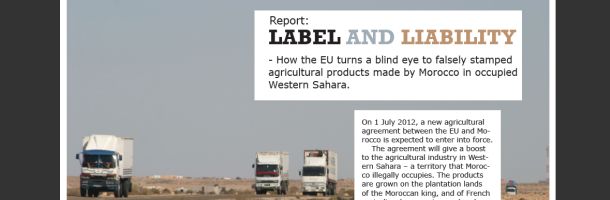
The WSRW report ‘Label and Liability’ documents how produce from the controversial agro-industry in the occupied territory, ends up in the baskets of unaware EU customers.
Western Sahara Resource Watch and Emmaus Stockholm
17 June 2012
On July 1, a new agricultural agreement between the EU and Morocco is expected to enter into force. Its vague territorial scope will allow greater volumes of fresh produce from occupied Western Sahara to enter the EU market.
A new report from Western Sahara Resource Watch launched today documents how produce from the controversial agro-industry in the occupied territory, ends up in the baskets of unaware EU customers. The products are made on plantations owned by the Moroccan King or French-Moroccan conglomerates.
“The income and the employment that these rich lands generate only benefit the occupying power. It directly undermines the UN efforts to solve the conflict”, stated Sara Eyckmans of Western Sahara Resource Watch.
The report, ‘Label and Liability’, reveals furthermore how the industry is blooming under a systematic false country of origin reporting, which leaves the customers in the dark.
Download the report here.
“There is a systematic mislabelling of tomatoes from the occupied territories in EU supermarkets. This is in direct violation of a key EU directive which gives the consumers the right to be properly informed on the country of origin of the products”, stated Eyckmans.
In addition, the entire trade seems unquestioned by the EU. The products are certified locally as “Moroccan” in the occupied territories by the Moroccan Ministry of Agriculture. These offices are remarkably approved by the EU. Through the practice, the EU has a completely different approach to the produce from Western Sahara than on the same vegetable production by Israeli settlements on occupied Palestinian land.
The report also names which vegetable labels that the consumers should be careful of purchasing in local stores.
“As its new trade agreement with Morocco is entering into force, the EU must immediately stop the imports of agricultural products from the occupied territory”, stated Eyckmans.
The report is published by the international organisation Western Sahara Resource Watch together with Emmaus Stockholm from Sweden.
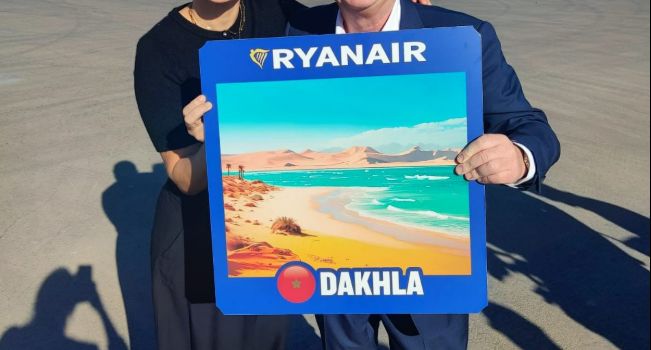
Irish ad watchdog: Ryanair misleading about flights to Western Sahara
In a preliminary decision, the Irish advertising watchdog says the airline’s ads are likely to mislead, as Dakhla is “not a part of Morocco”.
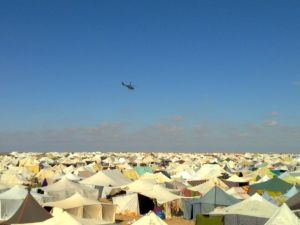
Gdeim Izik prisoners resume hunger strike
Saharawi political prisoners have resumed a hunger strike in Moroccan prisons, demanding their release, improved detention conditions and the implementation of UN decisions.
SRI update
The following overview enlists stock-exchange registered companies with current or recent operations in occupied Western Sahara. Updated 28 September 2026.
Another company of the Moroccan king involved in occupied Western Sahara
A company closely linked to Morocco’s royal business network has entered a new project in occupied Western Sahara, partnering with a Chinese state-owned electricity giant on high-voltage infrastructure in Boujdour.