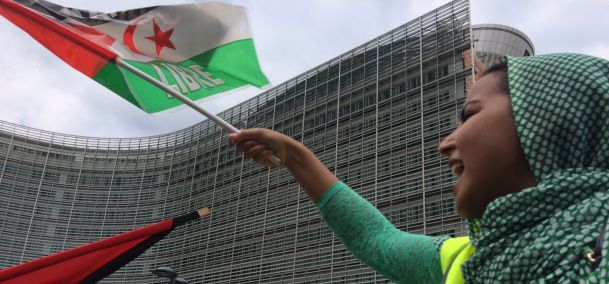
The European Commission has ignored to seek consent from the people of Western Sahara as it negotiated a trade agreement with occupier Morocco. Saharawi protestors yesterday expressed anger over the EU's disrespect for the rule of law.
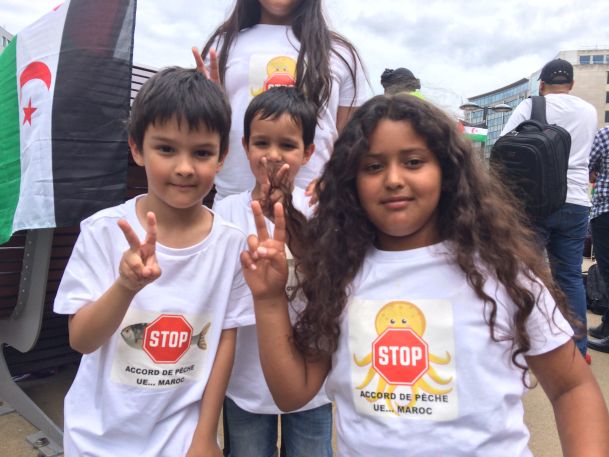
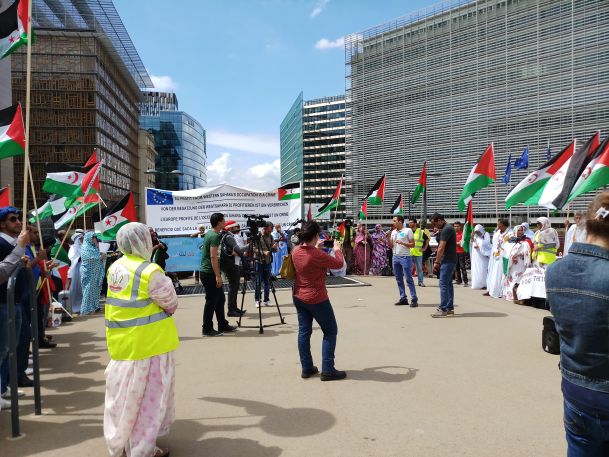
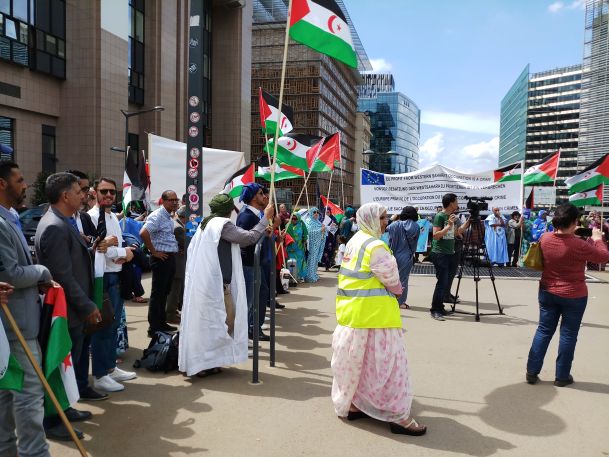
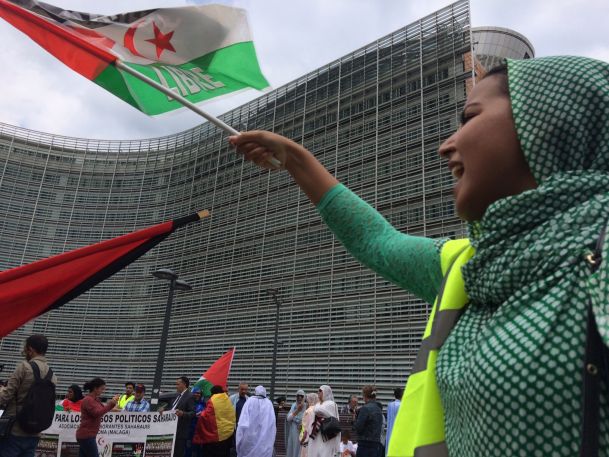
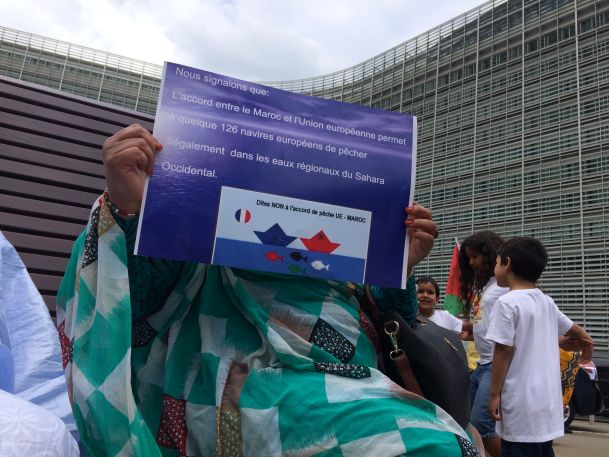
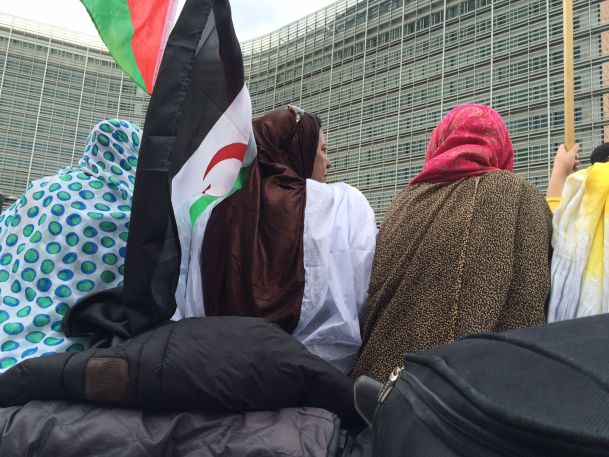
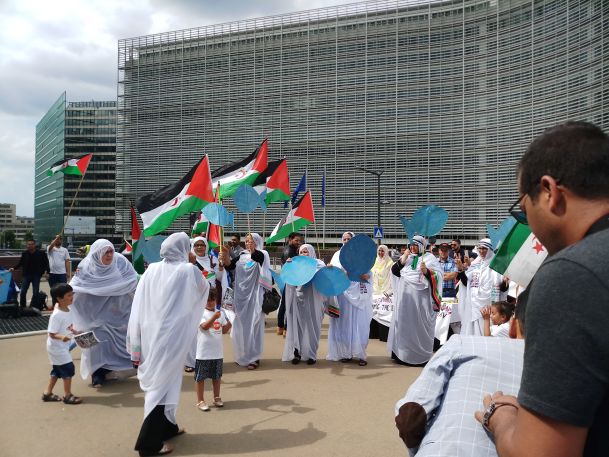
7 June 2018, over one hundred Saharawis were gathered in front of the European Commission building in Brussels to protest the conclusion of EU's trade talks with Morocco.
The Court of Justice of the EU on 21 December 2016 ruled that Western Sahara cannot be part of an EU-Morocco trade cooperation. It stated that the only case an agreement could cover Western Sahara, was if the representatives of the people of Western Sahara want it to.
However, instead of seeking consent from the Saharawis, the EU has again entered into talks with with the government of Morocco, which is illegall occupying the territory, in order to trade with the resources of the occupied territory.
The legitimate representative of the people of Western Sahara, the national liberation movement Polisario, has expressedly denounced the EU plans to enter into a trade deal covering Western Sahara. The EU institutions have not been in contact with a single Saharawi group advocating for the right to self-determination in order to obtain their consent. The EU has instead engaged with Moroccan state-companies, organisations and politicians. See the list of the Moroccan bodies that the EU had been in touch with.
At a conference on Western Sahara in the European Parliament on 7 June, a representative of the Commission stated that the Commission has been in what they call a "consultation process", and that they ensure that the population of Western Sahara benefit. It should be noted that the CJEU never requested a consultation process, and that the Court specifically clarifies that the benefits aspect of the deal is irrelevant. What the Court stresses, is that the people need to consent.
As it is now, the Commission is steering the new trade agreement with Morocco into another legal case, as a new agreement will obviously challenged by the representatives of the territory, as no consent has been sought or achieved.
Morocco has illegally occupied parts of Western Sahara since 1975, and prevents the UN from carrying out a referendum on independence. Non-EU states like Norway, Switzerland, USA, Iceland and Liechtenstein have trade agreements with Morocco that do not include Western Sahara. The EU, however, is under intense pressure from Morocco's main ally France, to go against the Court ruling. The Saharawis at the demonstration expressed the EU to respect the rule of law.
Download the images below for a high resolution version. Free use, no credit needed.
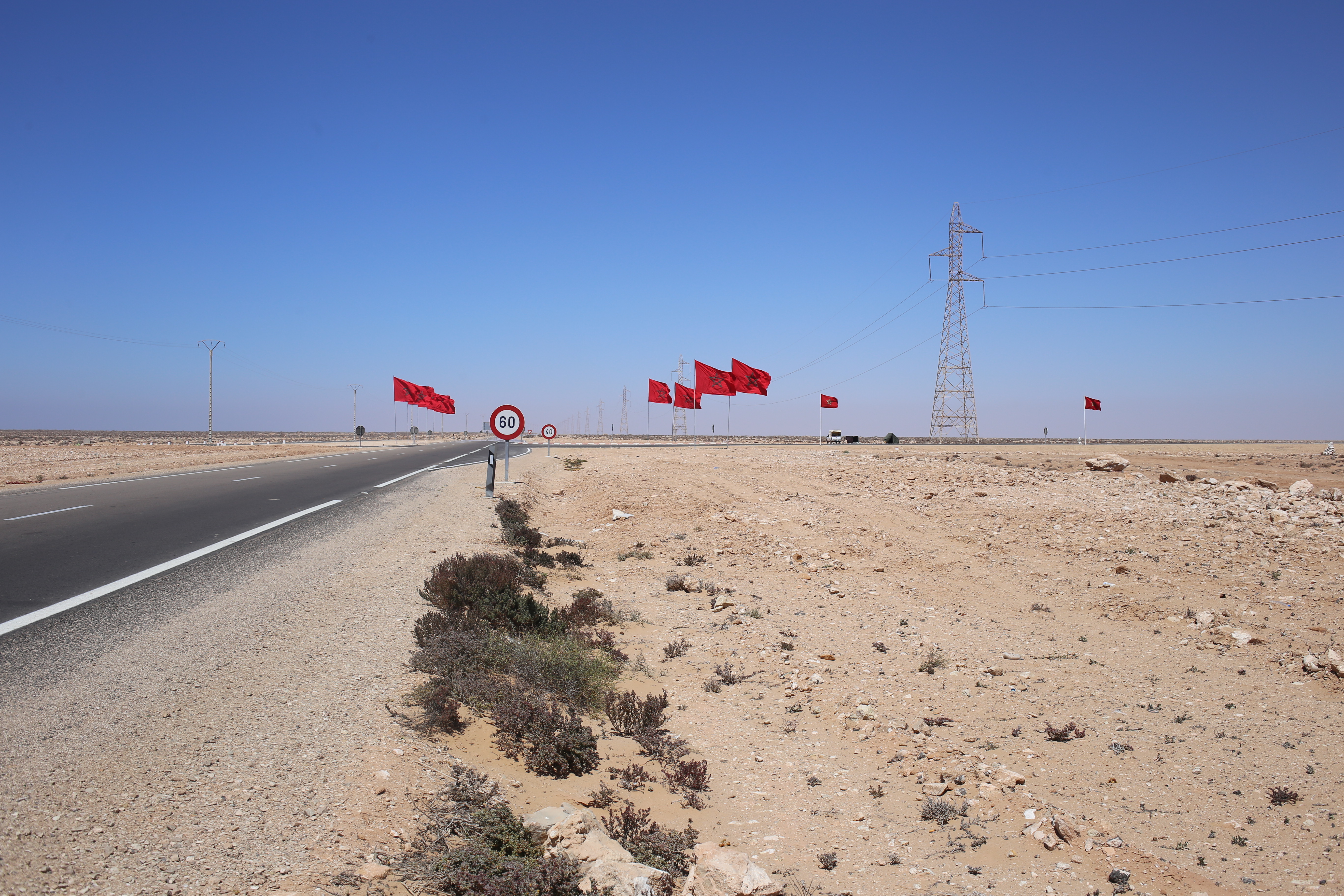
Moroccan budget: Four hydrogen projects in occupied Western Sahara
Morocco’s Finance Bill for 2027 reveals that four out of six planned green hydrogen projects are located in occupied Western Sahara.
Swedish hydrogen company embraces Morocco’s position on Western Sahara
S2H2+Bm has publicly welcomed Morocco’s annexation of Western Sahara, while refusing to clarify whether its planned green hydrogen investments will take place in the occupied territory.
Guterres reminds Morocco: Self-determination still stands
In one of his final statements as UN Secretary-General, António Guterres has made an unequivocal point: the end of MINURSO does not extinguish the inalienable right of the Saharawi people to self-determination. It is a reminder that Morocco cannot declare the Western Sahara question closed simply because the UN mission is leaving.
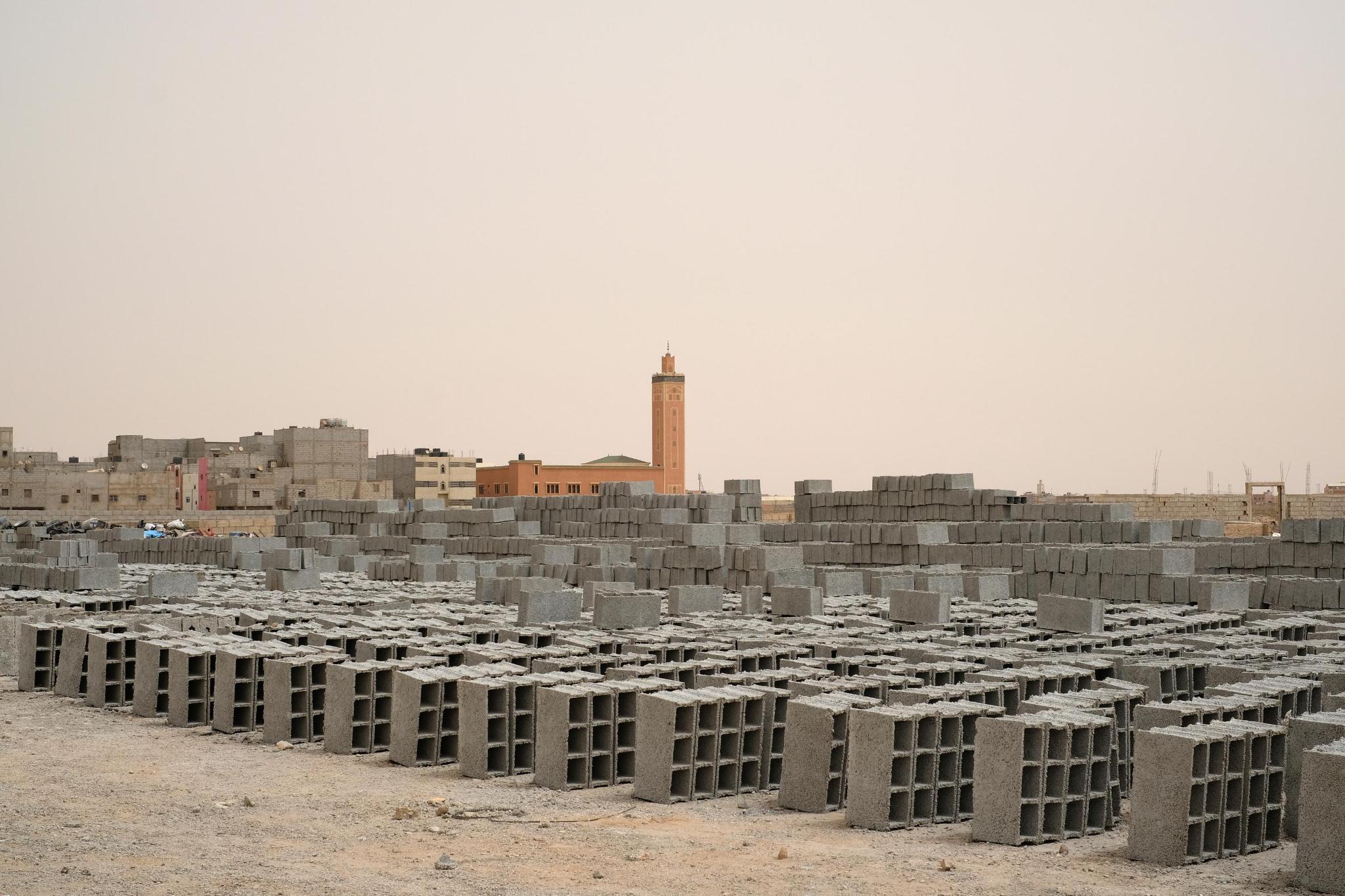
Morocco allocates vast tracts of occupied Western Sahara
Moroccan budget documents released in late October reveal that the kingdom allocated tens of thousands of hectares of land in occupied Western Sahara to investment projects.