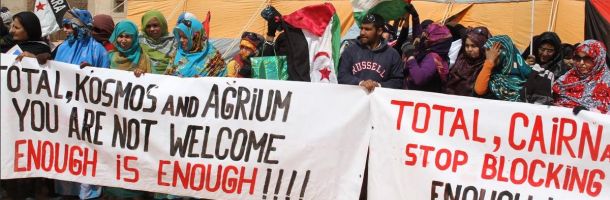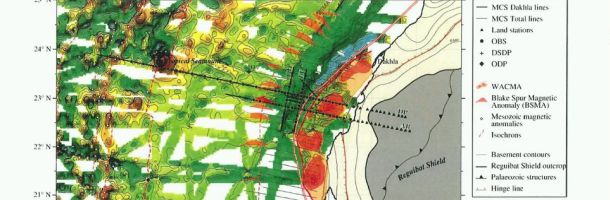
A research fellow attached to the Norwegian Geological Survey has been working on an oil research project in the occupied Western Sahara. Western Sahara Resource Watch requests that a scientific geological journal temporarily suspend further publication of her research data. The research institute is itself sceptical of the research project.
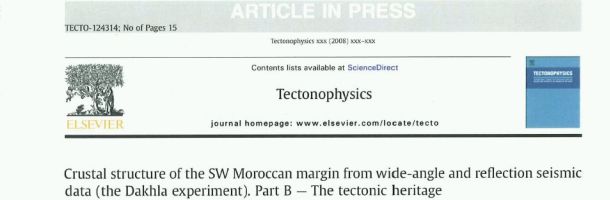
A French research fellow attached to the Norwegian Geological Survey (NGU) has been researching the geology of the occupied Western Sahara, and has published results of the work in at least two articles in the scientific geological journal Tectonophysics. In the published articles, where the researcher thanks the Moroccan military for their support during the collecting of project data, it also states that she is attached to NGU.
NGU is a geological research institute wholly owned by the Norwegian Ministry of Trade and Industry. Research in the occupied Western Sahara is done in cooperation with Morocco’s oil partners.
This work is thus done in stark contrast to the Norwegian government's own opinion that oil search in Western Sahara is "a particularly serious violation of fundamental ethical norms e.g. because it may strengthen Morocco's sovereignty claims and thus contribute to undermining the UN peace process".
The Director at NGU, Morten Smelror, in a recent meeting with the Support Committee for Western Sahara, underlined the view that they did not wish her to work on research such as that being done in Western Sahara during her working hours at the institute.
Mr. Smelror expressed his understanding of the political situation in the country and his sympathy for the Western Sahara issue. He underlined the fact that due to ethical and political reasons, NGU would not undertake the type of research that the French researcher was involved with. He also pointed out that NGU did not have the authority to stop publication of the stipendiary’s research findings. Research is done during the researcher’s own private time and as part of her post doctorate degree.
The NGU director was himself of the opinion that it was ‘regrettable’ that the French researcher referred to Western Sahara as ‘Morocco’ in her published work.
Mr. Smelror promised to relay the concerns expressed to the researcher and recommend that henceforth any published work referring to Western Sahara should be terminologically correct.
Controversial Data
In 2001, the oil company Total signed an agreement that allowed the company to search for oil in the occupied Western Sahara. A few months later UN legal advisors pronounced that further surveying is in violation of international law. Despite this warning Total began their operations in Western Sahara without any consultations with the Sahrawi people.
The search for oil was conducted by sending a seismic research vessel to survey the sea bed offshore the country’s coastline.
The data, which were collected in contravention of international law, are now being processed. It is in this work that the NGU researcher has played, and continues to play, a role. Although Total decided to discontinue its searches in Western Sahara, they continue giving financial support to a research project by oil geologists in Western Sahara. The French geological research institute Ifremer is the leading project partner.
Following Total’s example, the NGU researcher and her foreign colleagues also neglected to consult representatives of the Sahrawi people, in order to obtain their permission to survey the Sahrawi waters.
The Norwegian Support Committee for Western Sahara deeply deplores both the research activity and the methods employed in its execution.
“After 33 years of occupation, and as long as the present political situation continues, there is only one of the two sides that can derive any benefit from an increased knowledge of the geology of Western Sahara. Morocco plans to violate international law by drilling for oil in the occupied area. It is unacceptable that the European research community should support this initiative”, said the chairman of the Support Committee for Western Sahara, Ronny Hansen.
“It is therefore of the utmost importance that this research ceases immediately”, said Hansen.
The Support Committee for Western Sahara praises NGU for clearly stating that their researchers can not continue this type of research while they are attached to NGU.
On the 19th March of this year the Support Committee for Western Sahara and Western Sahara Resource Watch sent a letter to the editorial board of the geological journal Tectonophysics; the same journal that has published the data compiled by the NGU researcher.
The letter requests that the journal discontinue printing any further articles concerning the controversial research project until they have received the necessary permission from the Sahrawi authorities. Read the letter here. No answer has so far been received.
The researcher in question has supposedly submitted yet another article that is currently being prepared for publication in the journal. Western Sahara Resource Watch and the Norwegian Support Committee wish this submission to be temporarily withheld from publication.
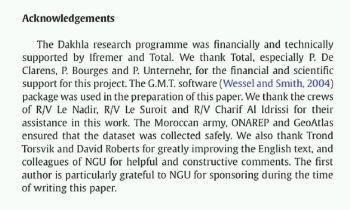
Thanked the army
Court proceedings are currently in progress, in Spain, against leading Moroccan military officers accused of genocide against the Western Sahrawi people. More than 500 Sahrawi citizens have disappeared since the unlawful invasion in 1975. The bombing of Sahrawi towns and villages with napalm and white phosphorous by military forces during the occupation of Western Sahara is well documented. Moroccan military and police forces have been, and continue to be, illegally established on Sahrawi territory; subjecting Sahrawi human-rights activists to violent persecution.
Regardless of this the researcher attached to NGU has, in Tectonophysics, openly thanked (above) the Moroccan military for their support in connection with data collection.
The researcher also thanked ONHYM, the Moroccan State oil company. It is they who are responsible for the issuance of oil exploration licences in the occupied territory, even though it is in contravention of international law and against the advice of the UN.
The research project is a cooperation between the oil company Total and the French geological institute Ifremer. The Universities of Brest, El Jadida and Lisbon are also involved in the project.
WSRW demands oil research stopped
Western Sahara Resource Watch demanded in a letter on 19 March 2009 to the scientific journal Tectonophysics, that research done by a PhD student at the Norwegian Geological Survey should not be published. The geological research in occupied Western Sahara is done in cooperation with Moroccan oil authorities, but without the consent of the Sahrawi people.
Total paid near 4 million to occupier for oil block
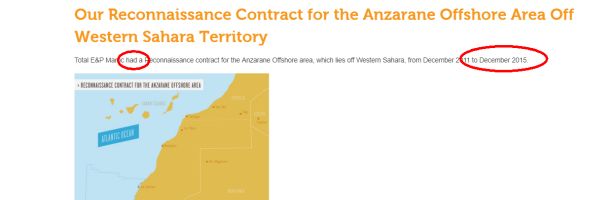
Total officially states it has left Western Sahara
"The contract was not extended in December 2015", company writes on website. It has also confirmed that it has "no plans" to return to the territory, which lies in the part of Western Sahara under Moroccan occupation.