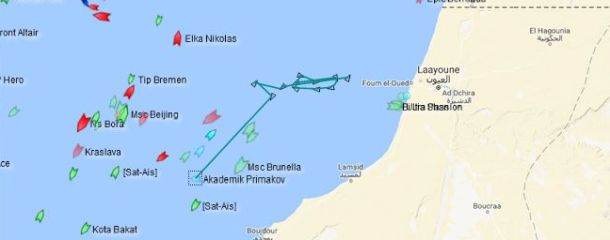
The Moroccan government undertook a 1002 Km² seismic study offshore occupied Western Sahara in the first part of 2018.
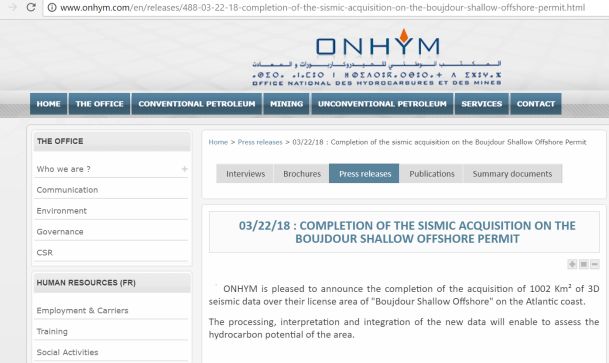
On 22 March 2018, the Moroccan state oil company ONHYM announed in a release that a 1002 Km² seismic study 3D study at the Boujdour Offshore Shallow had been completed. "ONHYM is pleased to announce the completion of the acquisition of of 3D seismic data over their license area of "Boujdour Shallow Offshore" on the Atlantic coast. The processing, interpretation and integration of the new data will enable to assess the hydrocarbon potential of the area", ONHYM wrote.
From what Western Sahara Resource Watch understands, the study was done by the Russian research vessel Akademik Primakov, in the fleet of the Russian company Rosgeo, accompanied by the Vanuatu flagged guard vessel Marja (IMO 7301051), and the standby safety vessel Sursum Corda (IMO 8119508). Rosgeo made a separate statement on the end of exploration on 30 March 2018, regarding Akademik Primakov's works "on the shelf of Morocco".
The study took place on the block which Swiss multinational Glencore used to be the operator of, but that it renounced after over a year of negotiations with ONHYM. Today, the block is operated by the minor UK company Teredo Oils, controlled by Mr. Alan Soulsby. The study took place in the waters directly to the west of the capital of Western Sahara, El Aaiún. However, it is not necessarily Teredo who did the study - it could well have been done by ONHYM directly.
Morocco has occupied the larger part of Western Sahara since 1975. Its oil exploration takes place in violation of international law, by not respecting the wishes of the people of the territory.
Morocco allocates vast tracts of occupied Western Sahara
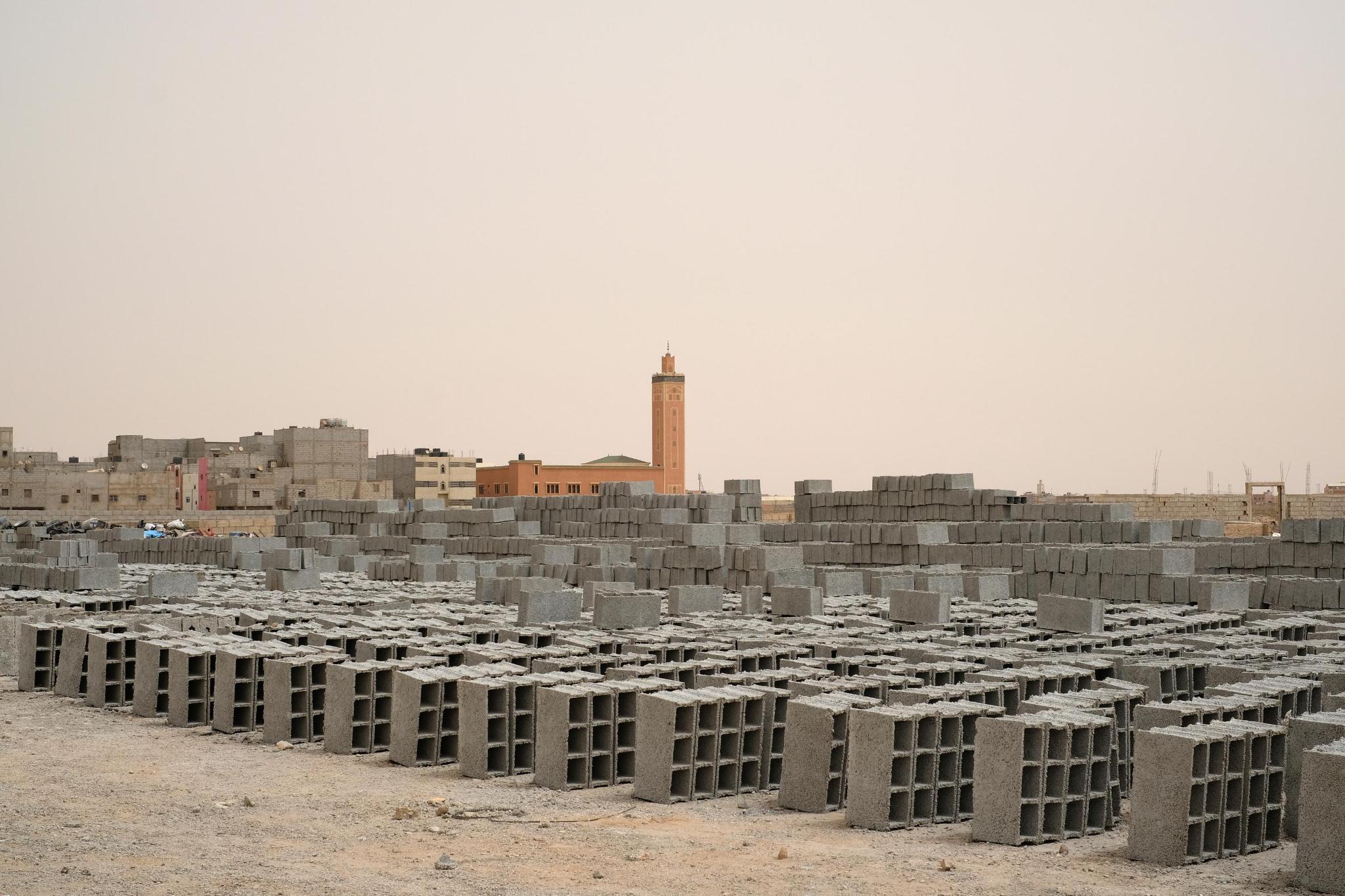
Moroccan budget documents released in late October reveal that the kingdom allocated tens of thousands of hectares of land in occupied Western Sahara to investment projects.
Guterres reminds Morocco: Self-determination still stands
In one of his final statements as UN Secretary-General, António Guterres has made an unequivocal point: the end of MINURSO does not extinguish the inalienable right of the Saharawi people to self-determination. It is a reminder that Morocco cannot declare the Western Sahara question closed simply because the UN mission is leaving.
When countries defend self-determination while voting against it
Our analysis of yesterday's UN Security Council vote on Western Sahara reveals a striking gap between what some governments said about the Saharawi people's right to self-determination and the resolution they voted to support.
US and Russia veto competing Western Sahara resolutions, leaving MINURSO’s future uncertain
In an extraordinary confrontation, both permanent members blocked each other’s proposals on Western Sahara. With no resolution adopted, the UN mission faces an imminent expiry of its mandate.