
A report from the Moroccan state and mining company ONHYM from September 2009 reveals that Morocco is exploring the uranium potential in occupied Western Sahara.
The United Nations has stated, and international law requires, that no natural resources activities can take place in Western Sahara unless the people of the territory agree to it. Western Sahara is treated as a colonial question in the UN General Assembly, and Morocco has illegally occupied it since 1975.
Still, Morocco is proceeding to explore and market the uranium potential in Western Sahara.
The report “Uranian Perspectives in Morocco” from September 2009, apparently intended to market the uranium potential of Morocco, says the following of the region in the south of occupied Western Sahara:

The South provinces are almost-unexplored for uranium, and present good perspectives for uranium occurrences in the coastal basin as well as in the Precambrian basement. Two airborne geophysical campaigns by magnetrometry and spectrometry were carried out in 2002 and 2004.
In 2002, ONHYM conducted an airborne geophysical survey by magnetrometry and gamma-ray spectrometry on an area of 20852 km², covering the Proterozoic formations of Adrar Souttouf massif.
The acquisition and the interpretation of the magnetic and radiometric data allowed establishing different geophysical maps that gave a clear lithostructural idea of the sector and served of support for the geological controls undertaken in 2003.
Several uranium indications have already been identified; Glibat Lafhouda and Twihinate associated with carbonatite complexes. These volcanic structures present high grades in niobium, tantalum, uranium and light rare earths present in iron oxides.
The drilling results in Glibat Lafhouda have grades of uranium that vary between 312 and 1261 ppm U3O8 on thickness ranging between 29 and 56 m.
Several anomalies of uranium and thorium have been identified by these surveys in both the coastal basin and in the basement (Proterozoic and Paleozoic formations).
The first ground control work has started in 2008 on the topographic sheet of Madanat Aghracha on a radiometric (U, Th) anomaly. The scintillometry survey showed significant radioactive anomalies (up to 6000 c/s) in the carbonatites of Lachariyat sector. The first results of chemical analysis showed uranium grades with a maximum of 225 ppm; radiometric anomalies detected could be explained by the presence of monazite identified in samples with high radiometry.
The Bou Craa basin, like the other Cretaceous - Eocene basins of the ,Northern provinces, is a potential target for the exploration for uranium. The interpretation of the radiometric survey has identified several uranium anomalies that will be controlled in ground.
The ONHYM report can be downloaded in English and French.
A report by the International Atomic Energy Agency, IAEA, from October 2009, estimates that the sources east of Dakhla in the occupied Western Sahara at between 25,000 and 50,000 tonnes.
The deposit has been listed by IAEA as "dormant", meaning that Uranium is not currently being extracted from the Phosphorite stone.
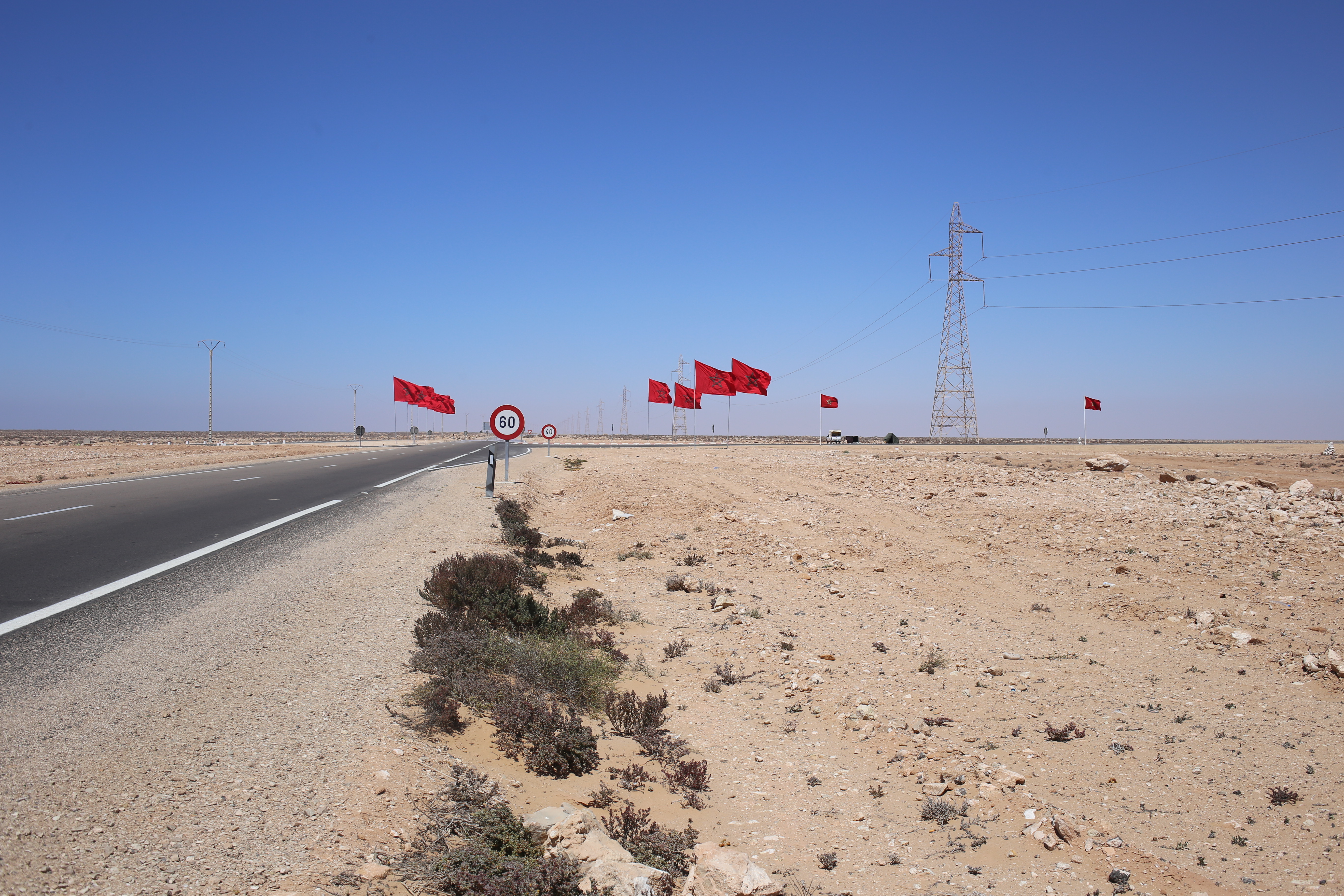
Moroccan budget: Four hydrogen projects in occupied Western Sahara
Morocco’s Finance Bill for 2027 reveals that four out of six planned green hydrogen projects are located in occupied Western Sahara.
Swedish hydrogen company embraces Morocco’s position on Western Sahara
S2H2+Bm has publicly welcomed Morocco’s annexation of Western Sahara, while refusing to clarify whether its planned green hydrogen investments will take place in the occupied territory.
Guterres reminds Morocco: Self-determination still stands
In one of his final statements as UN Secretary-General, António Guterres has made an unequivocal point: the end of MINURSO does not extinguish the inalienable right of the Saharawi people to self-determination. It is a reminder that Morocco cannot declare the Western Sahara question closed simply because the UN mission is leaving.
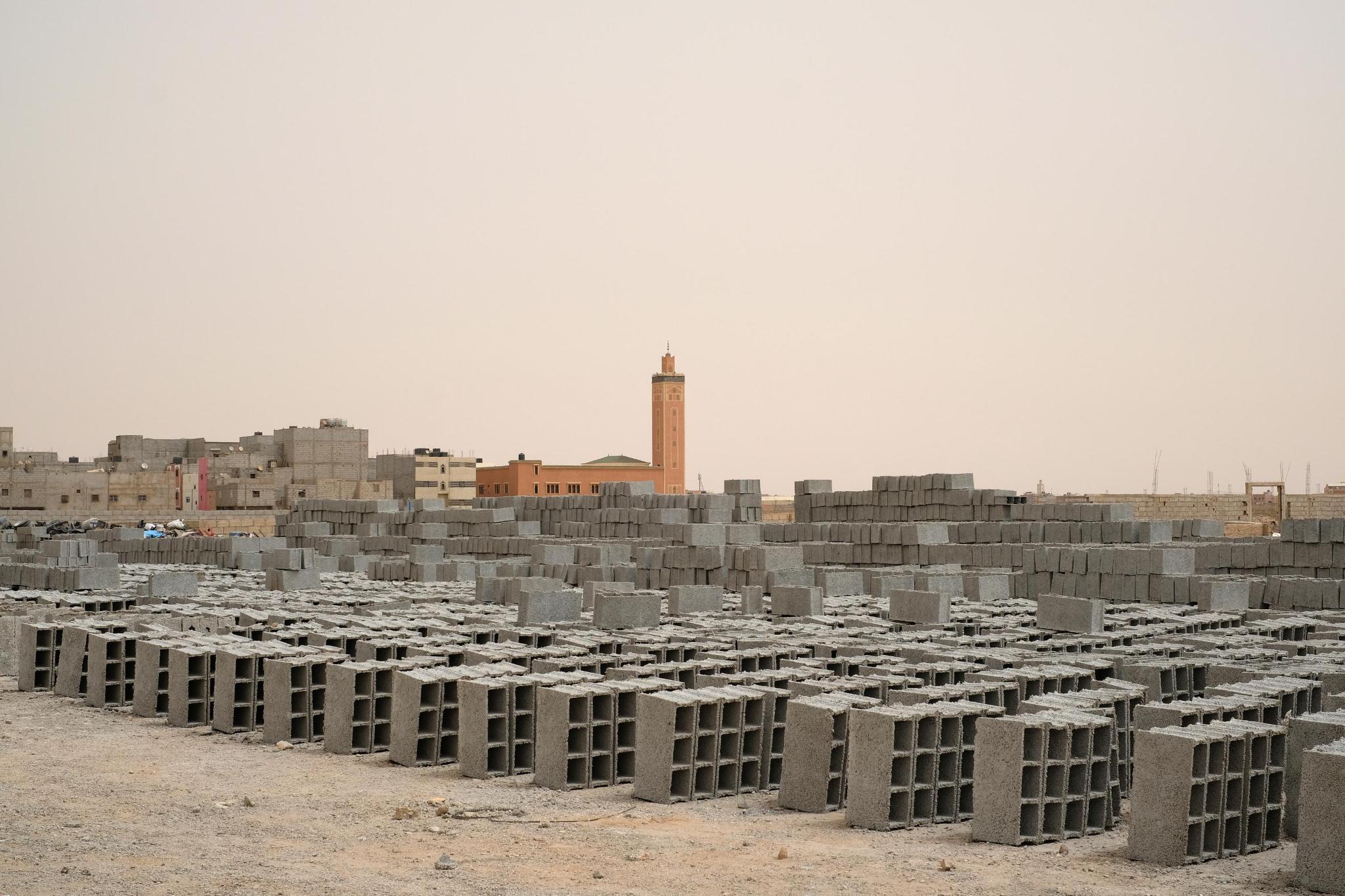
Morocco allocates vast tracts of occupied Western Sahara
Moroccan budget documents released in late October reveal that the kingdom allocated tens of thousands of hectares of land in occupied Western Sahara to investment projects.