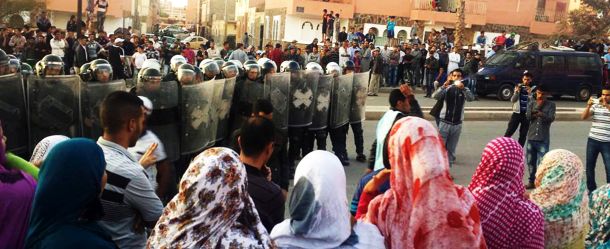
Nareva, the wind company of the King of Morocco, fails to answer questions on human rights by the international Business and Human Rights Center, in a study published yesterday.
The Business and Human Rights Center on 3 November published a new study on how 50 international renewable energy companies relate to Human Rights.
As usual, the green energy company of the king of Morocco, which wins all tenders in the occupied territory of Western Sahara, is totally impossible to reach.
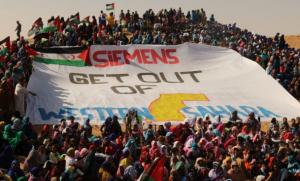
WSRW has tried getting comments from Nareva in the past, on all email addresses that were possible to find, including addresses found on documents Nareva has sent to the UN Framework Convention on Climate Change. All mails bounce. The company does not have a website.
Nareva is an energy company owned by the Moroccan Palace via its holding company SNI. Nareva's 100% owned subsidiary EEM played a role in the building of the windmills in Western Sahara together with Siemens. It is also involved in the two large sites to be built in Western Sahara in partnership with Siemens and Enel over the coming years. Western Sahara Resource Watch on 2 November published a report about these programmes on occupied land.
Both Siemens Wind Power and Enel have indeed responded to the requests from Business and Human Rights. However, they have never responded to questions whether they have sought the consent of the people of Western Sahara to construct energy infrastructure in the territory.
Business and Human Rights asked the following question to the two companies: "What is your company’s process for obtaining and evaluating free, prior & informed consent?"
Enel answered shortly that "We do not have a structured process". Siemens Wind Power responded that "In this context, it is important to understand that Siemens Wind Power usually only offers the delivery, installation and commission of wind turbine generators. Siemens Wind Power normally does not by itself develop or own wind power projects, nor is it responsible for the balance of plants of a certain wind park projects".
The International Court of Justice has rejected Morocco's claims to Western Sahara, and stated that the Saharawi people have a right to self-determination. Over 100 UN Resolutions have called for the exercise of that right.
In 2015, the Committee on Economic, Social and Cultural Rights in the UN Human Rights Council, urged Morocco to respect the free, prior and informed consent of the people of the territory. All evidence suggests it is not doing so.
Gdeim Izik prisoners resume hunger strike
Saharawi political prisoners have resumed a hunger strike in Moroccan prisons, demanding their release, improved detention conditions and the implementation of UN decisions.
SRI update
The following overview enlists stock-exchange registered companies with current or recent operations in occupied Western Sahara. Updated 28 September 2026.
Another company of the Moroccan king involved in occupied Western Sahara
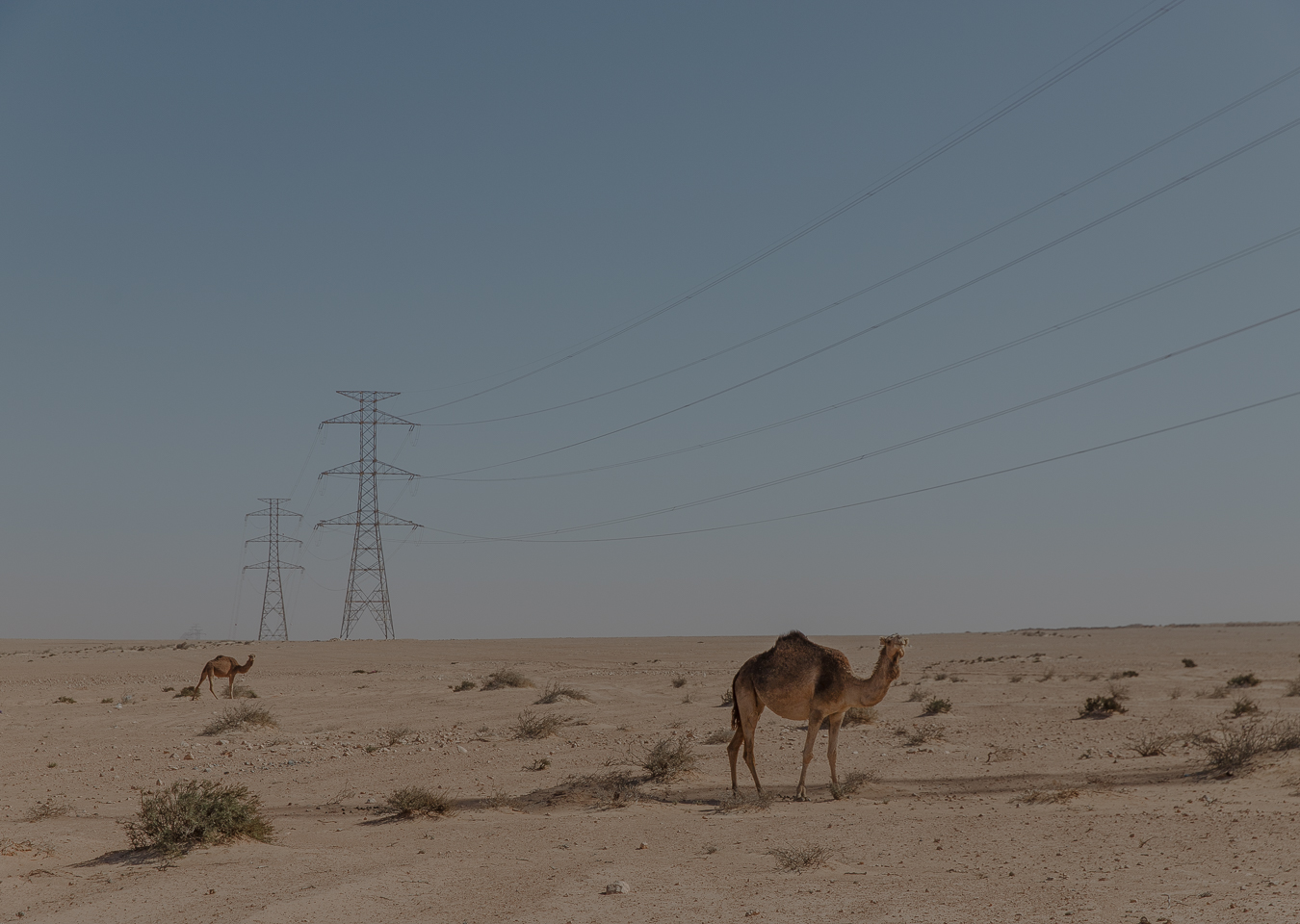
A company closely linked to Morocco’s royal business network has entered a new project in occupied Western Sahara, partnering with a Chinese state-owned electricity giant on high-voltage infrastructure in Boujdour.
Don't let resource exploitation decide Western Sahara's future
Western Sahara Resource Watch calls on the UN to address the accelerating exploitation of the territory’s natural resources - and prevent it from becoming an even greater obstacle to self-determination.