The former Legal Counsel to the UN Security Counsel, Mr. Hans Corell, comments on the EU's fisheries activities in Western Sahara.
The statements came in a speech delivered at the annual conference of The Belgian Society of international Law, in Brussels, 14-15 November 2019, titled The well-being of the inhabitants of occupied territories: Limiting or gutting the duty of non-recognition. Mr. Corell's key-note speech is available on his website www.havc.se [or download].
In 2002, while working as the UN Legal Counsel, Mr. Corell rendered a legal opinion to the UN Security Council on the matter of natural resources in Western Sahara. That opinion was later used by the EU in an attempt to legitimize its operations in the territory. Corell has on several occasions criticized the EU's misuse of his text and the Union's fisheries practices.
The EU has entered into several consecutive fisheries agreements with Morocco covering Western Sahara. No effort has been made by the Union to obtain the consent of the people of the territory. In February 2018, the Court of Justice of the European Union invalidated the application of the EU-Morocco Fisheries Partnership Agreement to the waters of Western Sahara, citing violation of the right to self-determination.
However, in spite of the ruling, the EU has entered into a new Sustainable Fisheries Partnership Agreement with Morocco, expressly applying to the last colony in Africa. While the bulk of EU fishing takes place in Western Sahara's waters, the EU did not ask the Saharawi people for their consent. Instead, it reverted to a consultation of Moroccan institutions. No pro-self-determination Saharawi group has been heard on the agreements. Nor do they benefit, as the EU's financial contribution ends up in the Moroccan treasury.
This is Corell's main critique:
"It is also important that the European Union acts in accordance with international law in this matter. I was quite taken aback when I saw the formulations in the first agreements between the EU and Morocco. It is wholly unacceptable that a clear distinction is not made between the territory of Morocco and the territory of Western Sahara, including the maritime areas.
I refer again to what I have said about the fisheries agreements in the past. To be legal, such an agreement would have to contain an explicit reference to the fishing zone off the coast of Western Sahara, defined by coordinates. The regime for issuing fishing licences within this zone would have to be completely separate from the regime that applies in the Moroccan fishing zone. Furthermore, the revenues generated by the licences in the zone of Western Sahara would have to be delivered not to Morocco’s public treasury or equivalent but to a separate account that can be audited independently by representatives of the people of Western Sahara so that they can ascertain that the revenues are used solely in accordance with the needs and interests of their people. This system must apply also to other natural resources in Western Sahara, such as phosphates, oil or gas, or other resources, be they renewable or non-renewable."
When discussing conflict-resolution, Mr. Corell again pointed to the EU: "It is obvious that the parties must act with responsibility. But the Security Council and the European Union should not forget that also their behaviour is of fundamental importance here."
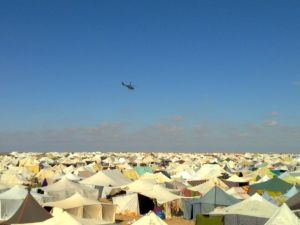
Gdeim Izik prisoners resume hunger strike
Saharawi political prisoners have resumed a hunger strike in Moroccan prisons, demanding their release, improved detention conditions and the implementation of UN decisions.
SRI update
The following overview enlists stock-exchange registered companies with current or recent operations in occupied Western Sahara. Updated 28 September 2026.
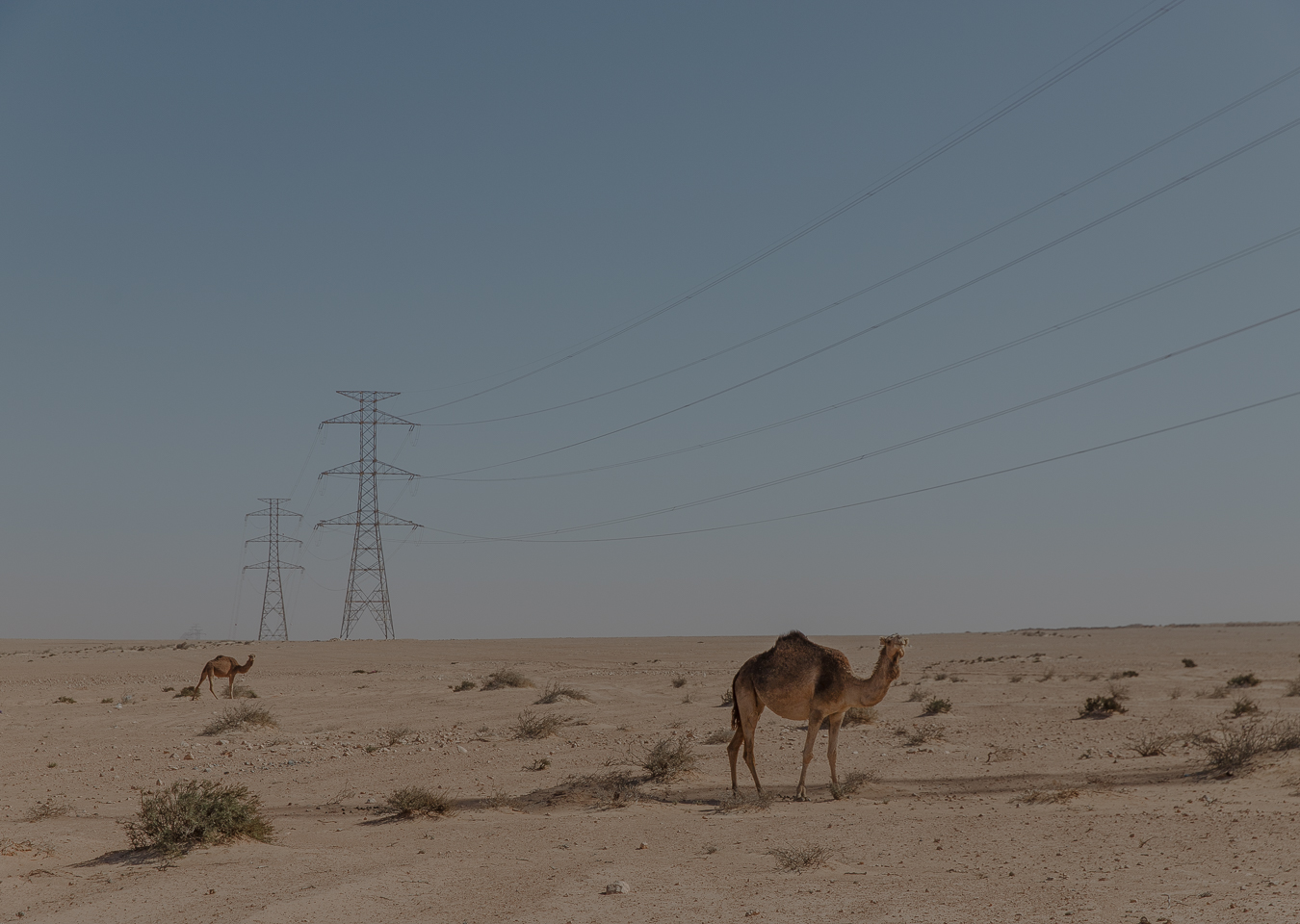
Another company of the Moroccan king involved in occupied Western Sahara
A company closely linked to Morocco’s royal business network has entered a new project in occupied Western Sahara, partnering with a Chinese state-owned electricity giant on high-voltage infrastructure in Boujdour.
Don't let resource exploitation decide Western Sahara's future
Western Sahara Resource Watch calls on the UN to address the accelerating exploitation of the territory’s natural resources - and prevent it from becoming an even greater obstacle to self-determination.