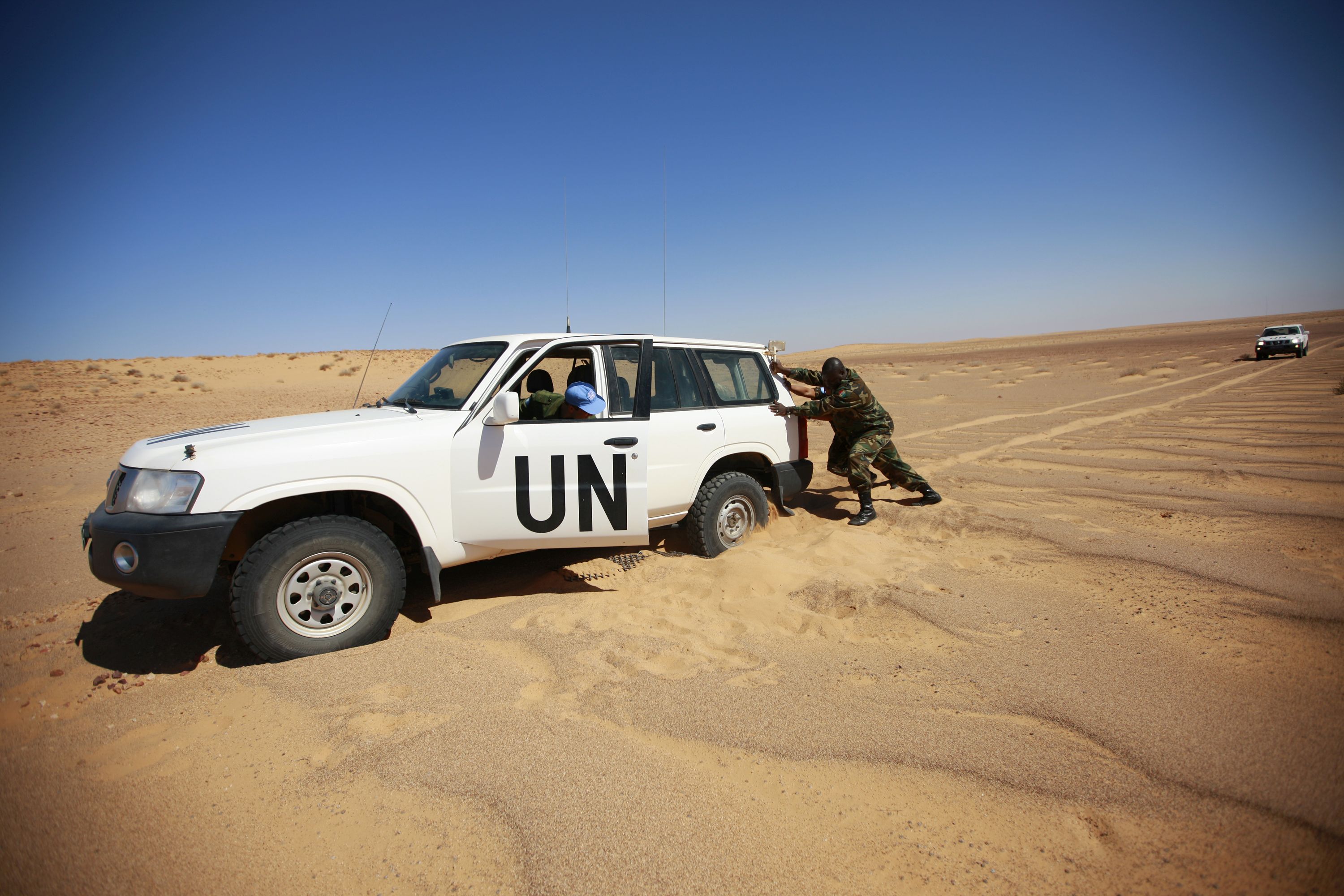
In an extraordinary confrontation, both permanent members blocked each other’s proposals on Western Sahara. With no resolution adopted, the UN mission faces an imminent expiry of its mandate.
Photo: UN Photos/Martine Perret
This article is under construction.
The UN Security Council failed on 30 October to agree on the renewal of the mandate of the United Nations Mission for the Referendum in Western Sahara (MINURSO), after Russia vetoed a US-drafted resolution and the United States subsequently blocked a competing Russian text.
The confrontation marks an exceptional breakdown in the Council’s handling of the Western Sahara file, where annual mandate renewals had traditionally been negotiated through efforts to secure broad agreement. For the first time in this process, the two permanent members put forward competing resolutions and used their vetoes to prevent the other’s proposal from being adopted.
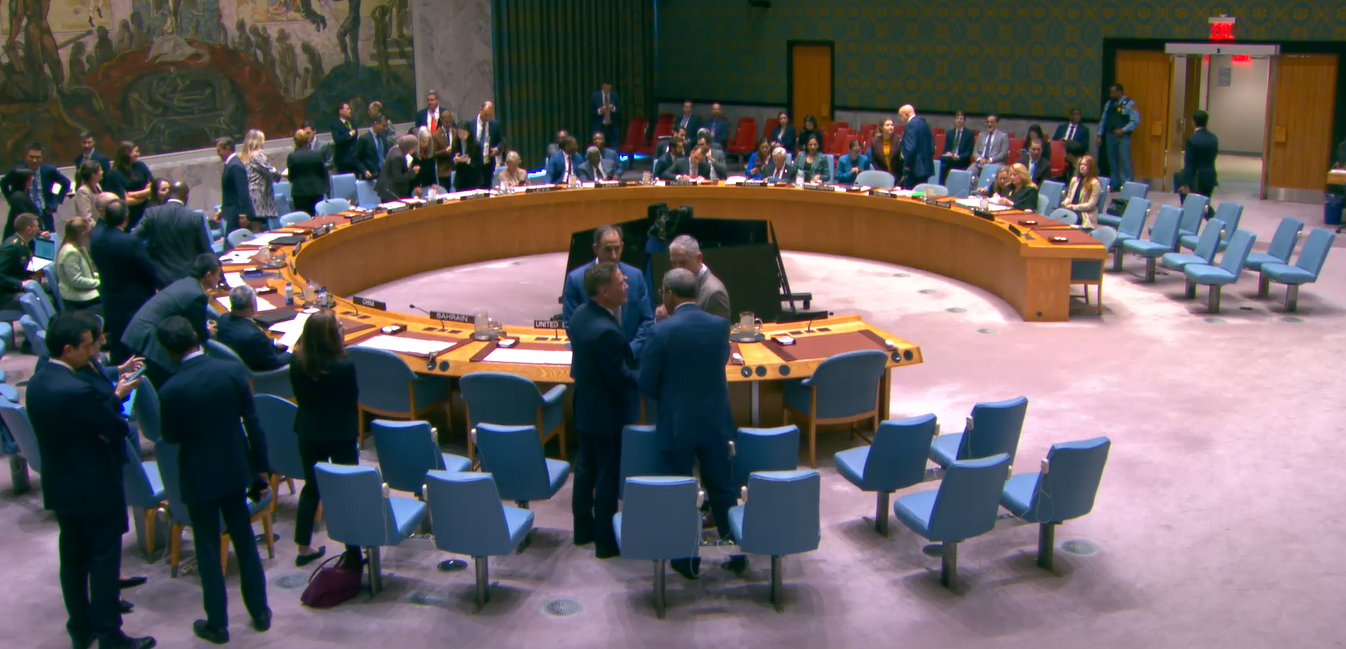
Two competing visions for Western Sahara
The US draft proposed extending MINURSO’s mandate until 31 October 2027, but also sought significant changes to the mission and the UN political process. It would have renamed the mission MINUSO, removing the word “Referendum” from its name, and requested proposals from the Secretary-General on its future structure and staffing, including possible reductions in uniformed personnel and the closure or consolidation of team sites.
Most significantly, the US text made Morocco’s autonomy proposal under Moroccan sovereignty the only basis for continuing negotiations. It described genuine autonomy under Moroccan sovereignty as the most feasible solution, while also referring to a just, lasting and mutually acceptable settlement that provides for self-determination.
France was among the countries supporting the text, underlining that Western Sahara is already part of Morocco - a position that is in violation of France´s obligations under international law.
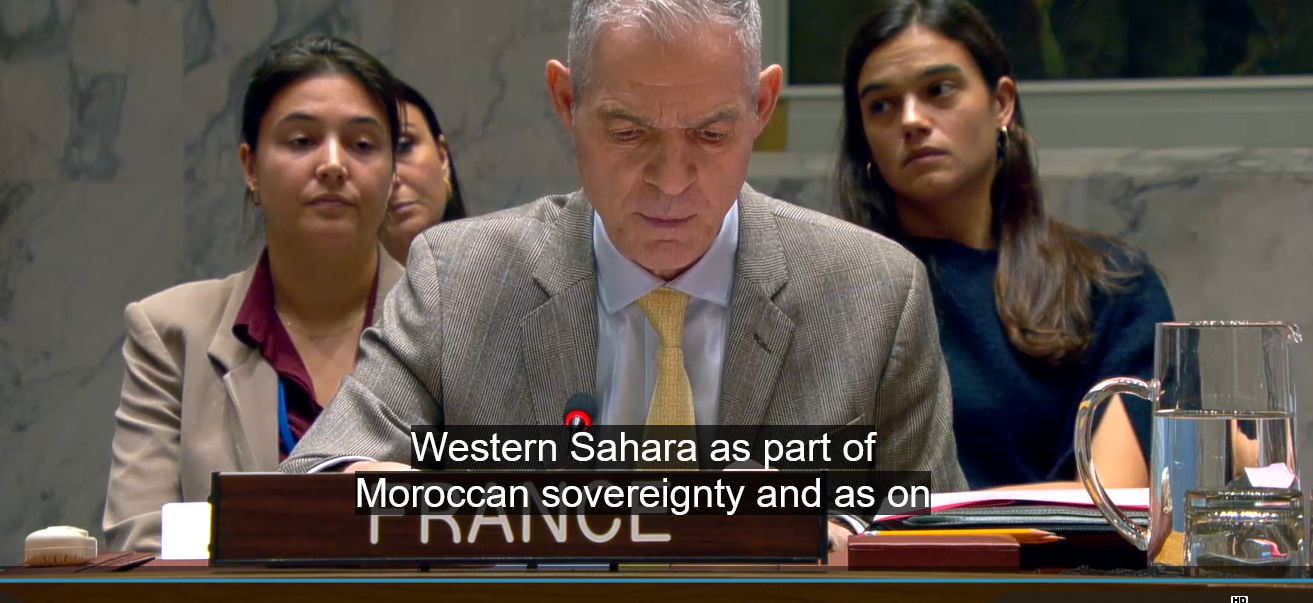
The draft received 11 votes in favour, one against and three abstentions. Russia voted against, exercising its veto and preventing adoption despite the majority in favour.
Russia had tabled an alternative resolution. Its short text proposed a straightforward one-year renewal of MINURSO, without changing the mission’s name or structure. It made no reference to Morocco’s autonomy proposal. Instead, it supported the efforts of the Secretary-General and his Personal Envoy, Staffan de Mistura, as well as the United States, to advance negotiations towards a just, lasting and mutually acceptable solution consistent with the UN Charter, including the principle of self-determination.
The Russian text was also not adopted, after the United States voted against it. Neither proposal therefore secured the nine votes and the absence of a veto required for adoption.
A breakdown in the established approach
The competing vetoes expose a fundamental disagreement within the Security Council over the political framework for resolving Western Sahara and the future of the UN mission.
For many years, the annual renewal of MINURSO was negotiated through the Group of Friends of Western Sahara - France, Russia, Spain, the United Kingdom and the United States - before being discussed with the wider Council. The unanimous adoption of Resolution 1495 in 2003, which strongly supported the Baker Plan for self-determination, illustrates the earlier effort to build agreement around a political process.
That consensus has progressively weakened. Russia began abstaining on MINURSO renewals in 2018, and China also abstained in 2025. This year, however, the disagreement escalated from abstentions and objections during negotiations to competing draft resolutions and reciprocal vetoes.
During negotiations, concerns were also raised by other Council members. Denmark reportedly argued that self-determination must meaningfully guide the political process, rather than be subordinated to a predetermined outcome. China stressed the importance of retaining the mission’s established name and mandate and cautioned against prejudging the outcome of negotiations.
MINURSO’s mandate now in jeopardy
With neither draft adopted, the Council has not renewed MINURSO’s mandate, which expires on 31 October. The immediate task is to find a compromise that allows the mission to continue while leaving the disputed political and institutional questions for further negotiations.
A shorter extension has been identified as one possible way forward, potentially giving Council members more time to reach agreement. However, no such compromise had been confirmed at the time of writing.
If the mandate expires without an extension, the legal basis for MINURSO’s continued operations, including ceasefire monitoring and mine action, will become uncertain. The expiry would not automatically terminate the wider UN-led political process, but it would create serious uncertainty for the mission and its work on the ground.
Self-determination cannot be decided by competing vetoes
The events of 30 October have exposed the extent of the divisions among the Security Council’s permanent members. Neither the US proposal to make Morocco’s autonomy plan the exclusive basis for negotiations nor Russia’s alternative straightforward renewal secured the Council’s approval.
For the Saharawi people, the central issue remains unchanged. Western Sahara is a UN-listed Non-Self-Governing Territory, and its decolonisation remains unresolved. The right of its people to self-determination cannot be replaced by political arrangements decided over their heads.
The Security Council now faces the urgent task of restoring the continuity of its mission and finding a way forward for a political process that genuinely respects that right.
Since you're here....
WSRW’s work is being read and used more than ever. We work totally independently and to a large extent voluntarily. Our work takes time, dedication and diligence. But we do it because we believe it matters – and we hope you do too. We look for more monthly donors to support our work. If you'd like to contribute to our work – 3€, 5€, 8€ monthly… what you can spare – the future of WSRW would be much more secure. You can set up a monthly donation to WSRW quickly here.
Moroccan budget: Four hydrogen projects in occupied Western Sahara
Morocco’s Finance Bill for 2027 reveals that four out of six planned green hydrogen projects are located in occupied Western Sahara.
Swedish hydrogen company embraces Morocco’s position on Western Sahara
S2H2+Bm has publicly welcomed Morocco’s annexation of Western Sahara, while refusing to clarify whether its planned green hydrogen investments will take place in the occupied territory.
Guterres reminds Morocco: Self-determination still stands
In one of his final statements as UN Secretary-General, António Guterres has made an unequivocal point: the end of MINURSO does not extinguish the inalienable right of the Saharawi people to self-determination. It is a reminder that Morocco cannot declare the Western Sahara question closed simply because the UN mission is leaving.
Morocco allocates vast tracts of occupied Western Sahara
Moroccan budget documents released in late October reveal that the kingdom allocated tens of thousands of hectares of land in occupied Western Sahara to investment projects.