Struan Stevenson, Scottish conservative MEP, is convinced that the much criticised EU-Morocco fish pact should be extended. “If the EU walks away from this critical deal, Russia, China or Korea would be sure to step in. In such circumstances, conservation efforts and jobs would disappear. Also, more than 100 Spanish trawlers would be displaced back into EU waters, where most fish stocks are already fully exploited”.
Yet an independent evaluation study issued by a consultancy firm at the request of the European Commission, shows that all stocks in Morocco and Western Sahara are already fully exploited. As a consequence, continued EU fishing could severely harm the region’s fish stocks, the evaluation reads.
The report also concluded that the European Union's controversial fisheries agreement with Morocco is the least cost-effective of all the EU's existing fishing deals with third countries. Every euro invested under the agreement generated just €0.65 in added value.
Not only has the agreement been costing the EU millions of Euros and has it contributed to depleting the fish stocks in both Morocco and Western Sahara, it is also considered in violation of international law by UN and EU lawyers. In 2002, the UN issued a legal opinion stipulating that economic activities in Western Sahara could only be lawful if they’d take into account the wishes and interests of the people of the territory. For failing in both aspects, the European Parliament’s lawyers in July 2009 labelled the fish agreement with Morocco to be violation of international law.
But these elements were not discussed at the Gibraltar conference. Instead, the floor was given to Ian Gatt, chief executive of the Scottish Pelagic Fishermen’s Association (SPFA), and George Nicol, owner of the Scottish boat “Krossfjord” that has been fishing occupied Western Sahara’s waters for years. Nicol also owns a processing plant in Dakhla, all the way in the south of Africa’s last colony.
Ian Gatt was quoted saying: “Scottish fishing operations have provided a huge number of jobs in the Western Sahara area and should be rewarded for this initiative.” He added that the UK has had a “positive effect in the Western Saharan territory.”
People from the territory, the Saharawi, living either under the yoke of Moroccan occupation or in forgotten refugee camps in the inhospitable Algerian desert, were not invited to explain how their lives have been affected by the EU’s fish deal with the regime occupying their homeland.

Heidelberg Materials deepens its role in Morocco’s occupation of Western Sahara
The German company confirms once again that its operations in occupied Western Sahara are closely tied to Morocco’s infrastructure expansion in the territory - while continuing to dismiss the Saharawi people’s right to consent.

The conflict phosphates - four decades of plunder
For over 40 years, a Moroccan state-owned company has exported phosphate rock from occupied Western Sahara.
Record low number of importers of Western Sahara phosphates
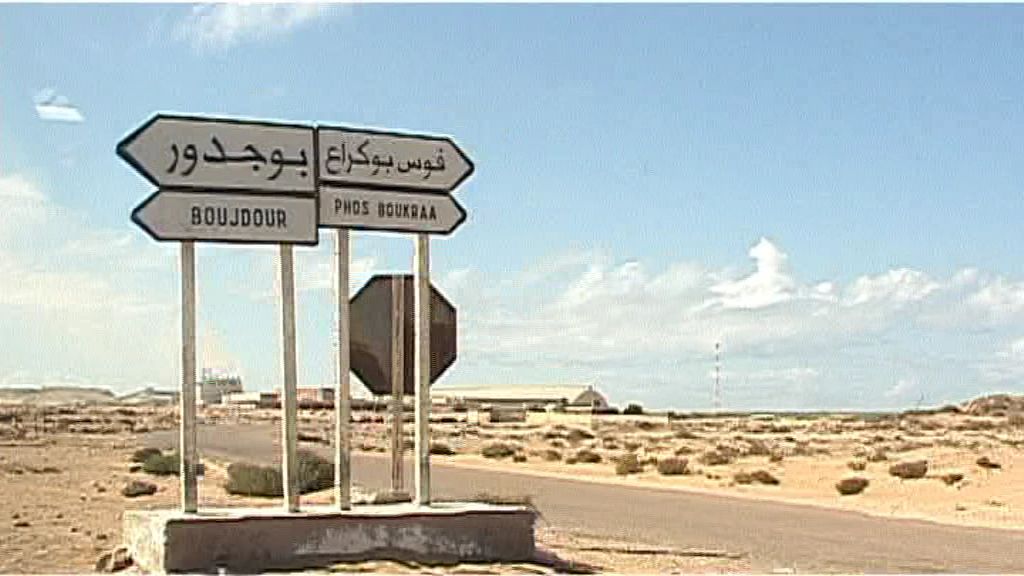
Only three companies imported phosphate rock from occupied Western Sahara in 2025 - the lowest number ever recorded. The findings appear in our annual P for Plunder report, released today.

One of the richest coastlines in the world
The fish stocks of occupied Western Sahara have not only attracted the interest of the Moroccan fleet: other foreign interests are also fishing in the occupied waters through arrangements with Moroccan counterparts. Along the Western Saharan coastline, a processing industry has emerged.