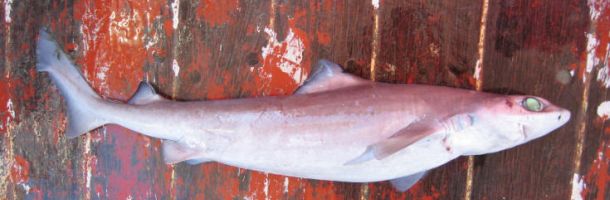
Through targeting sharks, rays and skates, European vessels fishing in Western Saharan waters have adopted the same exploitation strategy as the Moroccan vessels, says the evaluation report from Océanic Developpement - an independent consultancy firm hired by the European Commission to review the EU-Morocco Fisheries Partnership Agreement (FPA).
The Moroccan fleet has long-time held a special interest for sharks. Up to 4.000 tonnes are landed each year to accommodate the demands for shark of the Asian markets. Particularly the deep sea species are targeted, as their large liver makes them interesting for the cosmetic and pharmaceutical industry.
Deplorably, the EU fleet is not lagging behind. No less than 70% of the total catches of the three Portuguese vessels active in Saharawi waters, consists of sharks, rays and skates. That's well above 450 tonnes of endangered species. This is said to be the findings of the independent study written for the European Commission. The report mentions that one single Spanish vessel fished about 60 tonnes of sharks and rays, equalling 30% of its total catches.
The International Union for Conservation of Nature (IUCN) considers sharks, rays and skates to be in danger of extinction. These species are highly vulnerable in terms of reproduction, and are as a consequence in danger of extermination when exposed to over-fishing. And that is precisely the case in Western Sahara: the EU's evaluation study concluded that the fish stocks of both Moroccan and Saharawi waters are either fully exploited or over-exploited.
In order to protect sharks and rays, an International Plan of Action for Conservation and Management of Sharks was adopted by the FAO in 1999. The catches of sharks, rays and skates by European vessels are furthermore in violation of the EU’s Action Plan on Sharks, adopted in 2009. That same year, the Moroccan government issued a set of guidelines to reduce the fishing impact on sharks, but the evaluation report found no information as to whether and how these measures have been implemented.
Since sharks, rays and skates are already in danger of extinction, continued fishing will have detrimental effects on all ongoing attempts of conservation. Three out of ten sharks captured by the EU fleet are of types that are considered 'vulnerable' by the IUCN, meaning that their population has already been reduced by 80%.
Photo above: Thornback ray, red-flagged for extinction by IUCN.

Heidelberg Materials deepens its role in Morocco’s occupation of Western Sahara
The German company confirms once again that its operations in occupied Western Sahara are closely tied to Morocco’s infrastructure expansion in the territory - while continuing to dismiss the Saharawi people’s right to consent.

The conflict phosphates - four decades of plunder
For over 40 years, a Moroccan state-owned company has exported phosphate rock from occupied Western Sahara.
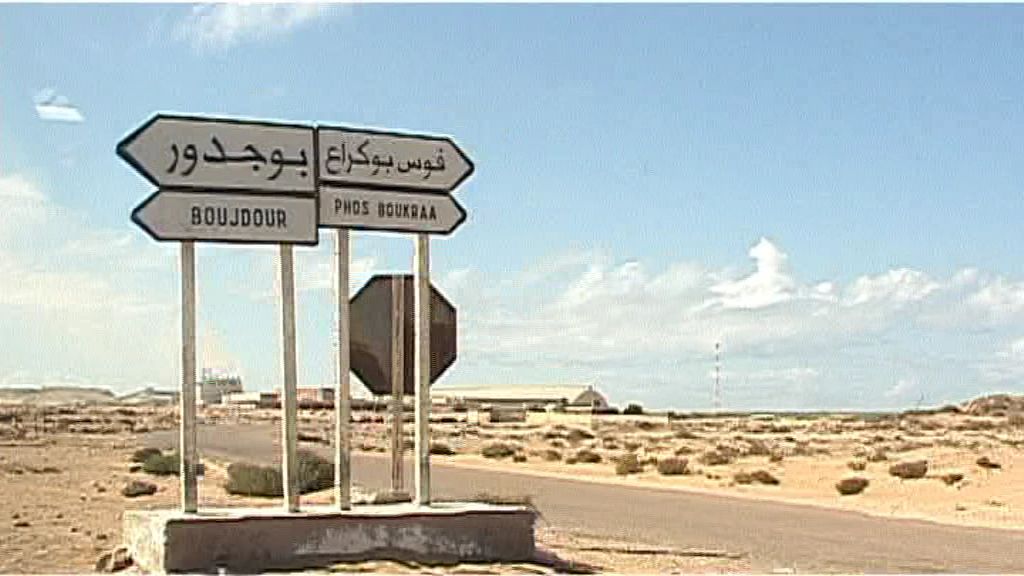
Record low number of importers of Western Sahara phosphates
Only three companies imported phosphate rock from occupied Western Sahara in 2025 - the lowest number ever recorded. The findings appear in our annual P for Plunder report, released today.

One of the richest coastlines in the world
The fish stocks of occupied Western Sahara have not only attracted the interest of the Moroccan fleet: other foreign interests are also fishing in the occupied waters through arrangements with Moroccan counterparts. Along the Western Saharan coastline, a processing industry has emerged.