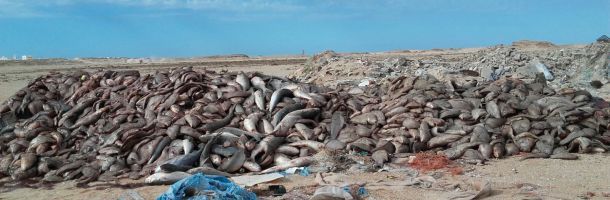
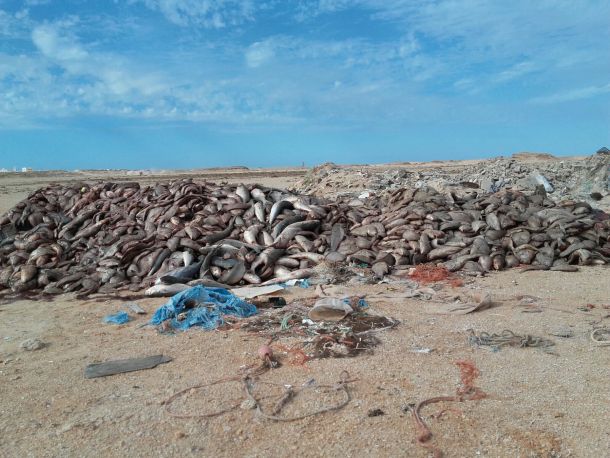
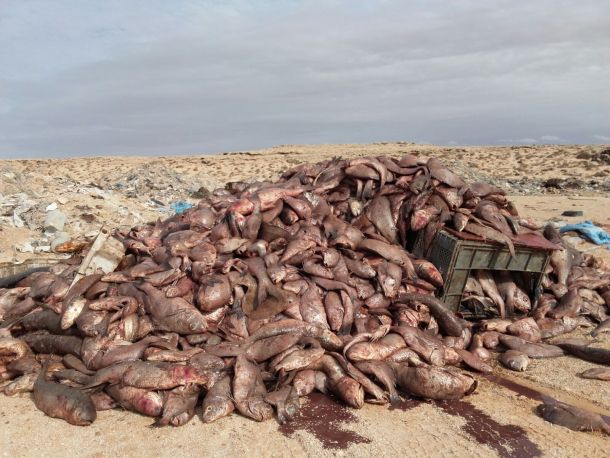
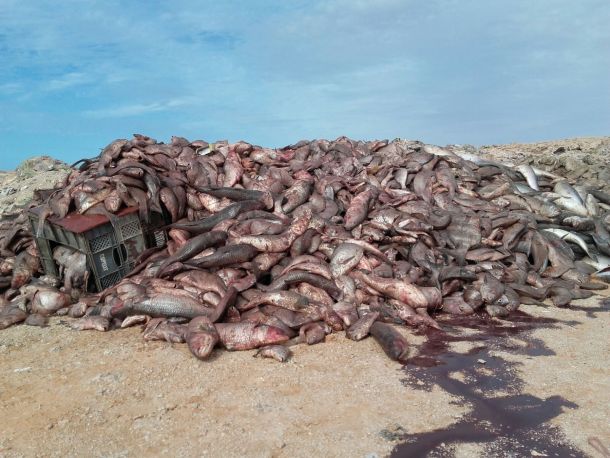
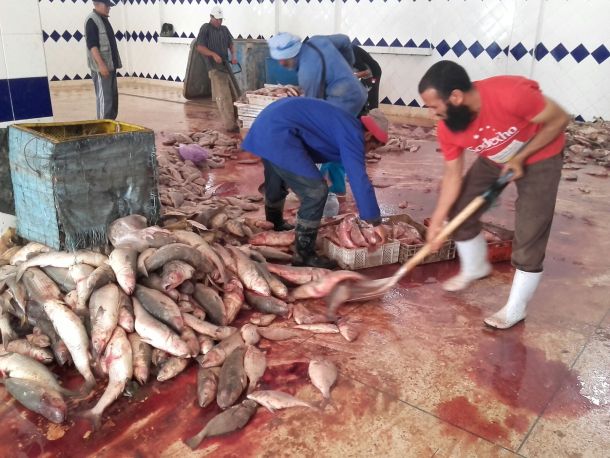
WSRW has received images of fish being dumped in the desert near the town of Dakhla to hide over-fishing. The pictures were taken two days ago.
These images were taken in the Mheriz area, located south of the city of Dakhla in occupied Western Sahara. Local sources state that "hundreds of tons" are being discarded "because of unregulated fishing by the Moroccan fleet, which brings more than its cargo, and here are discarding".
Though this particular discard incident is being attributed to the Moroccan fishermen trying to hide their over-quota fishing, other fleets are also guilty of this destructive practice. Near the end of 2013, WSRW received footage showing a Belize flagged vessel pumping by-catches back into the ocean - a shocking testimony of how Morocco manages Western Sahara's fish stocks.
The European Union, fishing illegally in occupied Western Sahara through its Fisheries Partnership Agreement with Morocco , has issued a landing obligation in January this year. EU fishermen are henceforth obliged to land unwanted catches rather than throwing them back into the water. This rule also applies to international waters, which is the legal status of the waters of occupied Western Sahara. Images such as the ones below raise the question whether the landing obligation will make fishing more sustainable. While EU fishermen may act in good faith and land unwanted catches, the fish can just as easily be dumped on land, as appears to be a common practice in Morocco and the Moroccan occupied parts of Western Sahara.
WSRW has in the past also received photos of discards on land, depicting massive piles of unwanted fish left to rot in the desert.
Morocco is currently occupying the larger part of Western Sahara, including the coastline. Through the fishing industry, Morocco manages to settle many of its own nationals into the territory, thus hampering a solution to the conflict. The International Court of Justice has rejected Morocco's claims to the land in 1975. Nearly half of the Western Sahara people live as refugees in Algerian desert camps where, in periods, one in five children suffer from severe malnutrition. A striking contrast with the abundant fish being dumped in their occupied homeland.
Guterres reminds Morocco: Self-determination still stands
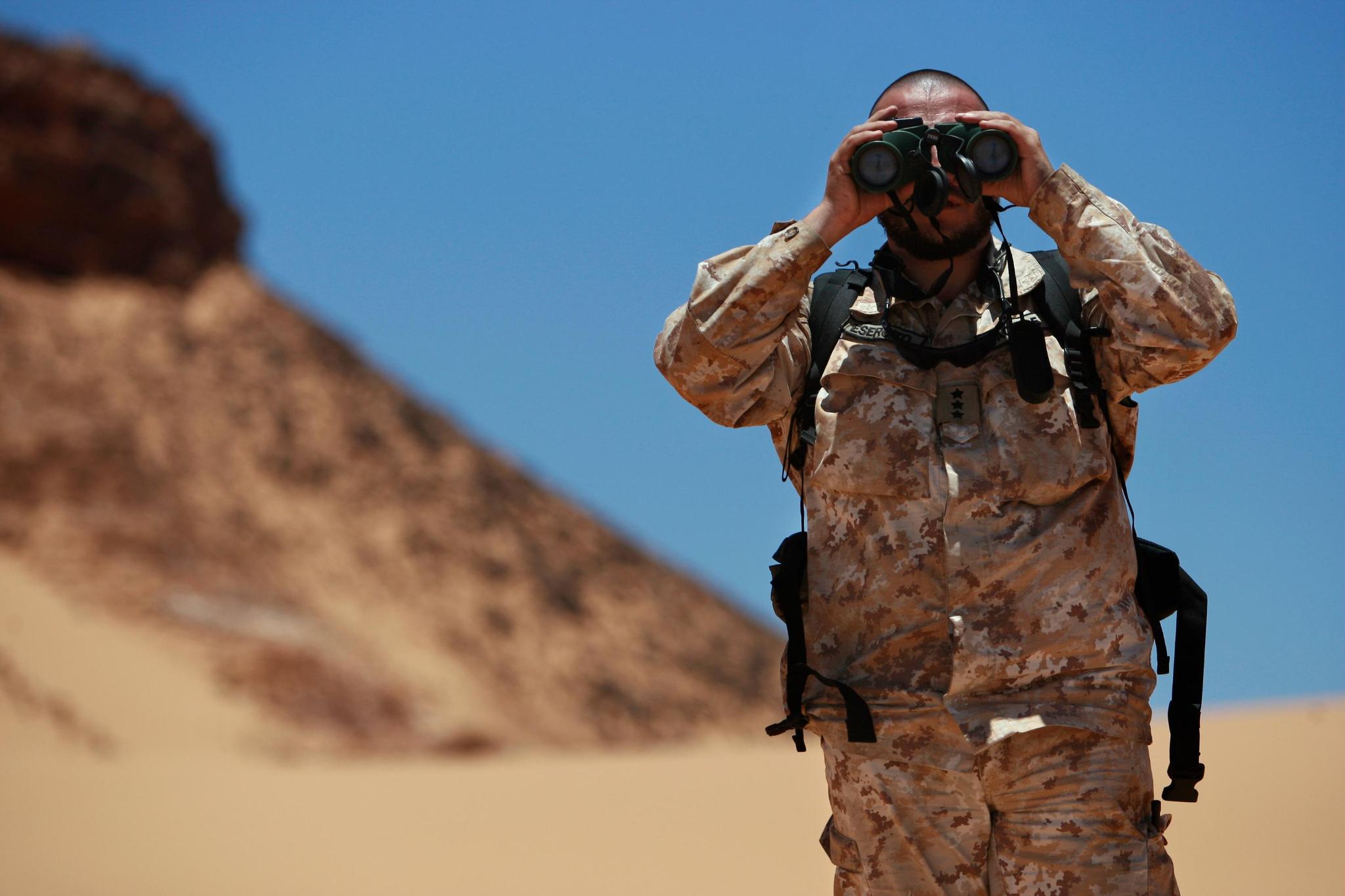
In one of his final statements as UN Secretary-General, António Guterres has made an unequivocal point: the end of MINURSO does not extinguish the inalienable right of the Saharawi people to self-determination. It is a reminder that Morocco cannot declare the Western Sahara question closed simply because the UN mission is leaving.
Morocco allocates vast tracts of occupied Western Sahara
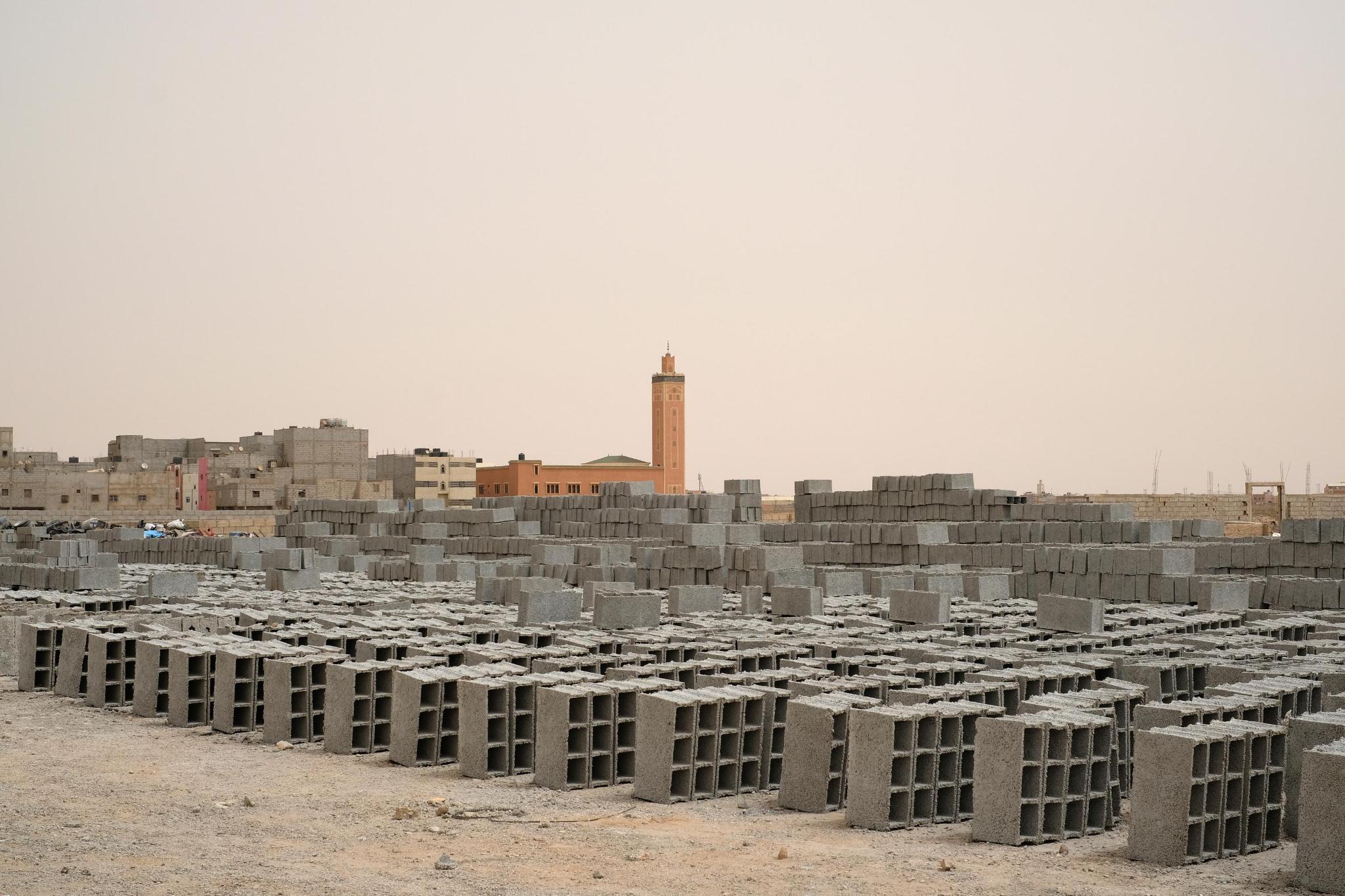
Moroccan budget documents released in late October reveal that the kingdom allocated tens of thousands of hectares of land in occupied Western Sahara to investment projects.
When countries defend self-determination while voting against it
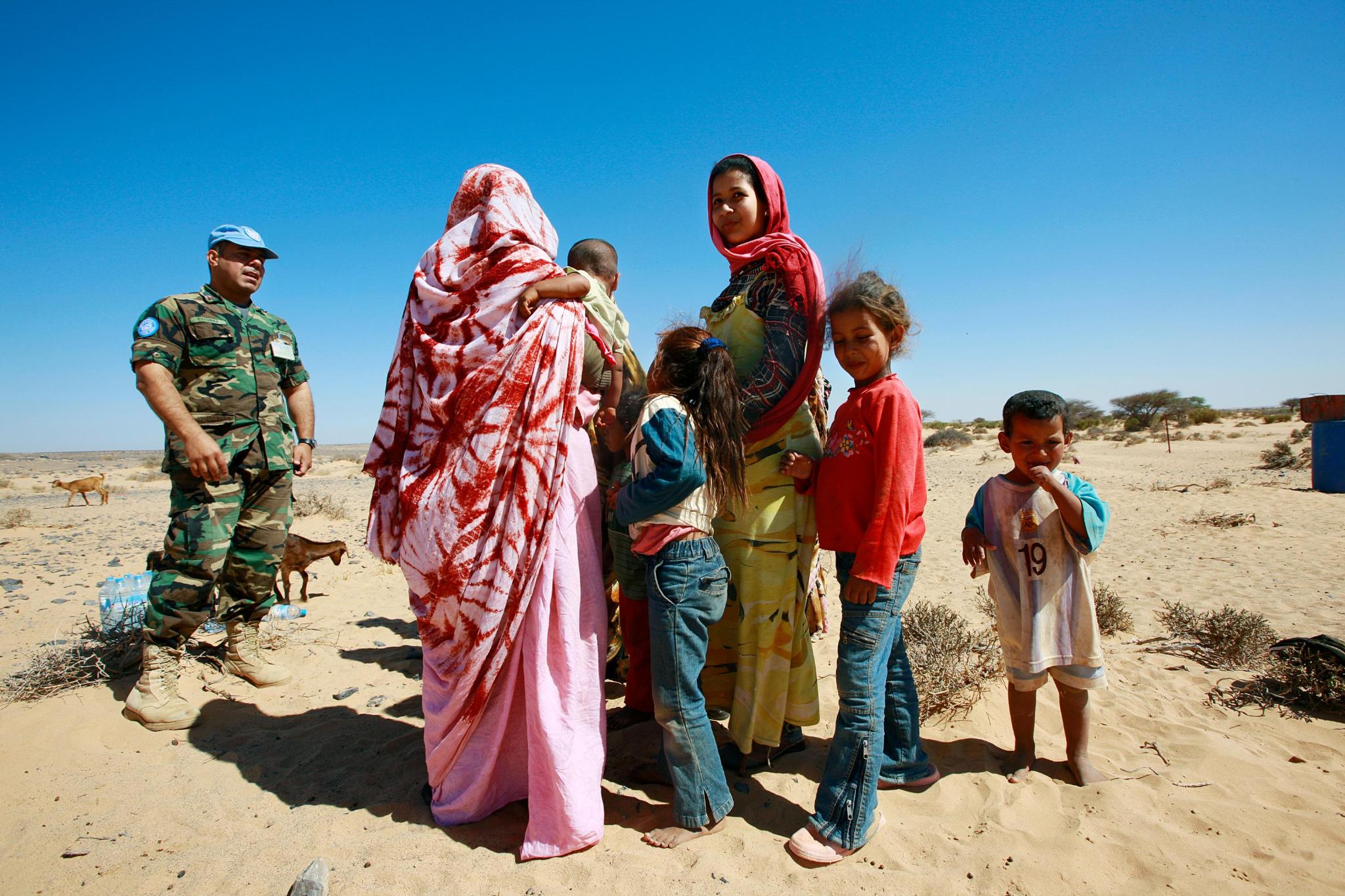
Our analysis of yesterday's UN Security Council vote on Western Sahara reveals a striking gap between what some governments said about the Saharawi people's right to self-determination and the resolution they voted to support.
US and Russia veto competing Western Sahara resolutions, leaving MINURSO’s future uncertain
In an extraordinary confrontation, both permanent members blocked each other’s proposals on Western Sahara. With no resolution adopted, the UN mission faces an imminent expiry of its mandate.