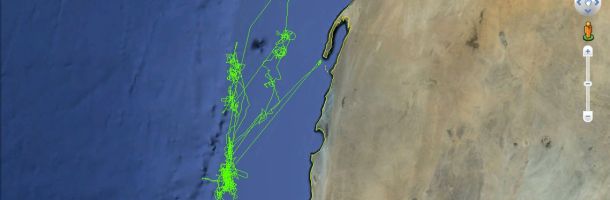
The world’s biggest trawler and fish factory vessel have been operating in Western Sahara’s waters.
The International Consortium of Investigative Journalists revealed in an article 25 January a shocking story of monster vessels sucking the oceans dry of small pelagic fish species.
The eight country investigation showed how the world’s largest fish factory vessel, The Lafayette, has zigzagged the seas of the Pacific and the Atlantic during the last years. The vessel is the size of two football fields, and holds a storage capacity of 14,000 tonnes of fish. The Lafayette is accompanied of a fleet of trawlers that deliver their catches to the vessel at sea.
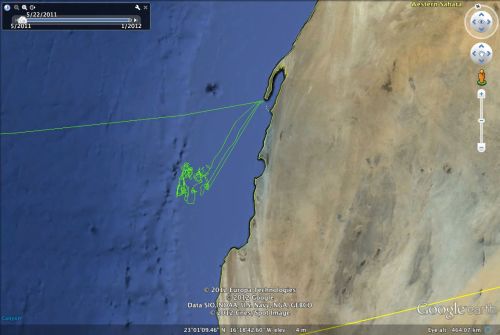
Western Sahara Resource Watch has got access to the detailed route that the monster vessel took last year. The map shows how The Lafayette in November 2011 during a period of fishing offshore Mauritania, also most probably entered the Saharawi waters.
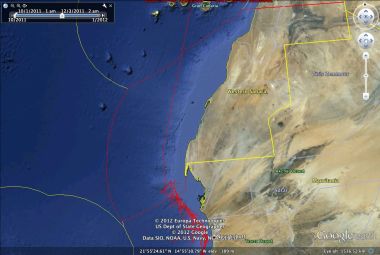
Vessel tracking graphics by Trygg Mat Foundation, Norway, www.tryggmat.no. Click on graphic for higer resolution. The exact boundary of the EEZ of Mauritania and Western Sahara is not settled, however, with the application of modern maritime boundary law, the Western Sahara EEZ would most probably extend directly southwards from Cape Blanc for a number of seamiles, before turning to a direct westwards direction. Morocco has never laid claim to the waters of Western Sahara, which it illegally occupies. This is done, however, by the Western Sahara republic.
The Lafayette was last seen on the Canary Islands, and is currently heading towards Montevideo, Uruguay.
A few years back, Western Sahara was the scene for fisheries from the world’s biggest trawler. The Irish owned vessel Annelies Ilena (ex-Atlantic Dawn) then caught fish offshore the occupied territory from September to November 2009. She has not been to Western Sahara since. Annelies Ilena can catch 350 tonnes daily, and with a carry capacity of 7,000 tonnes.
A recent evaluation done for the European Commission showed that the small pelagic species offshore Western Sahara is threatened with depletion. The reason is exactly overfishing from industrial foreign vessels. The Saharawi people have not consented in regards to this industry, which thus is in violation of international law. Read a UN opinion from 2002 on matters of natural resources exploitation in Western Sahara here.
Annelies Ilena, September 2009
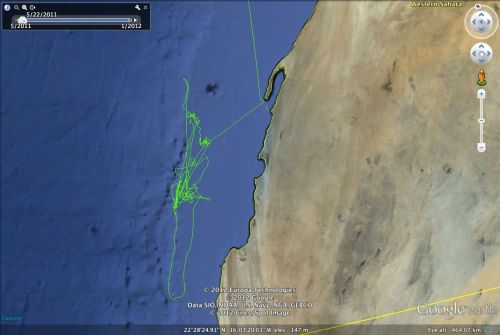
Annelies Ilena, October 2009
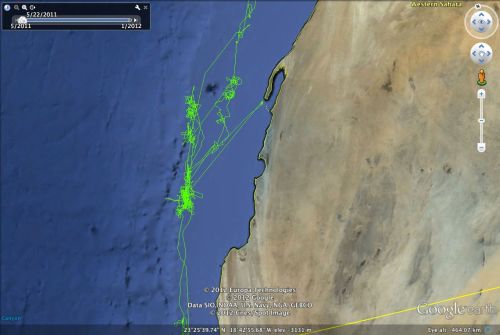
Anlies Ilena, November 2009
SRI update
The following overview enlists stock-exchange registered companies with current or recent operations in occupied Western Sahara. Updated 28 September 2026.
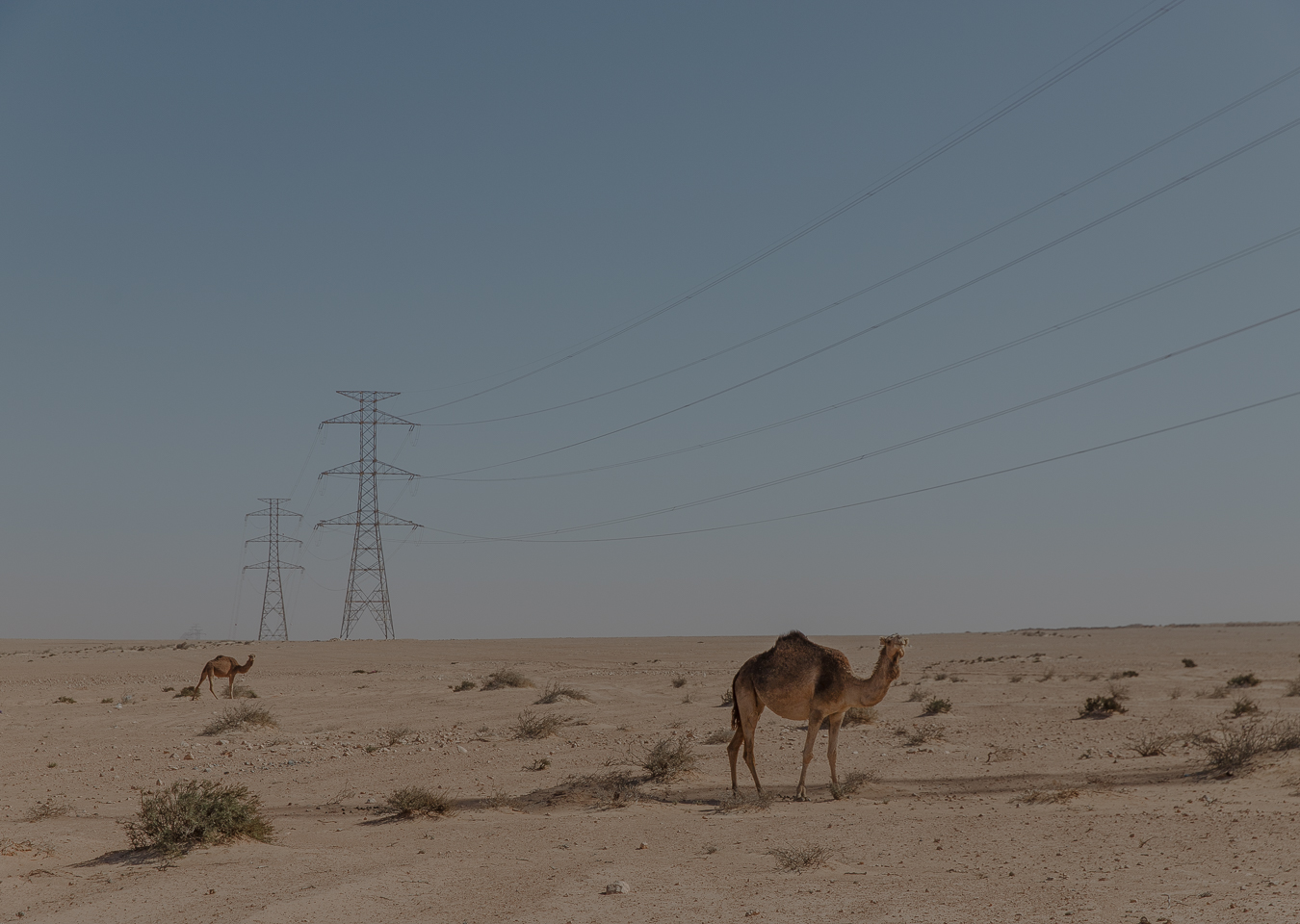
Another company of the Moroccan king involved in occupied Western Sahara
A company closely linked to Morocco’s royal business network has entered a new project in occupied Western Sahara, partnering with a Chinese state-owned electricity giant on high-voltage infrastructure in Boujdour.
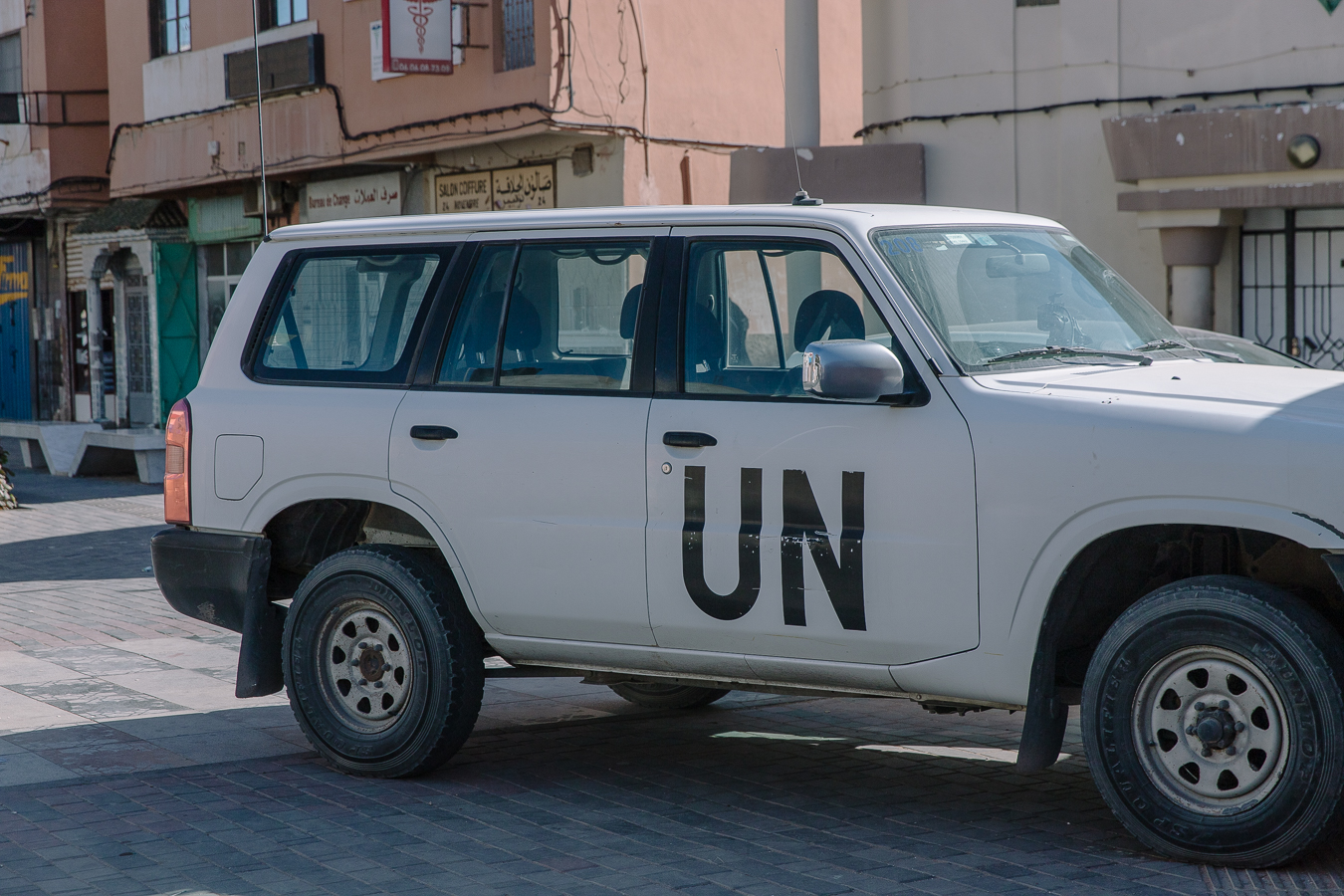
Don't let resource exploitation decide Western Sahara's future
Western Sahara Resource Watch calls on the UN to address the accelerating exploitation of the territory’s natural resources - and prevent it from becoming an even greater obstacle to self-determination.
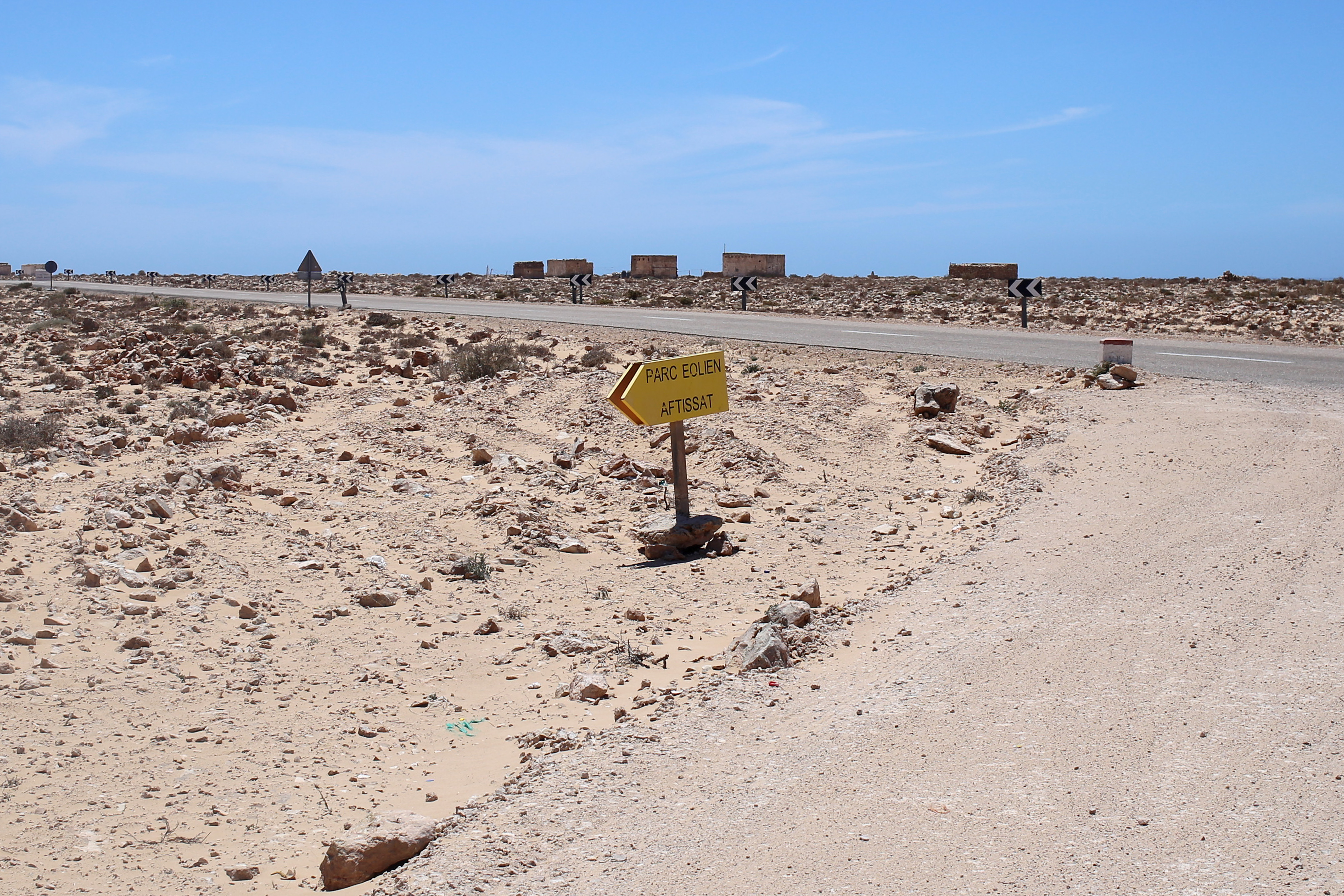
Occupied Western Sahara wind complex expands into Africa's top three
The Moroccan king’s energy company appears to have completed two new phases of the Aftissat wind power complex in occupied Western Sahara.