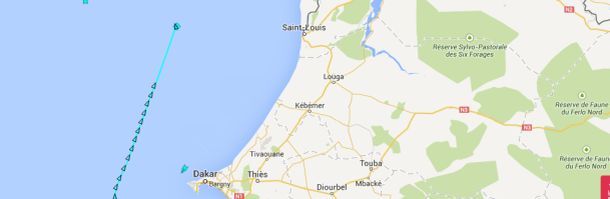
The oil plattform 'Atwood Achiever' could arrive occupied Western Sahara Friday 15 November. There it will do the first drilling in occupied territory, ever.
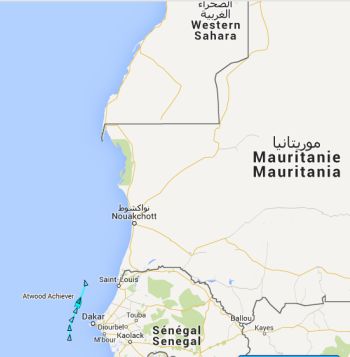
In two to three days, the vessel 'Atwood Achiever' will enter the waters of occupied Western Sahara. A few weeks later, the drilling will commence.
The platform will most probably arrive Western Sahara waters on Friday, 15 November 2014, depending on the length of the stop-over offshore Senegal.
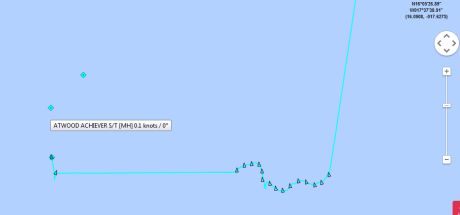
It was last seen departing from Namibia two weeks ago (see video below).
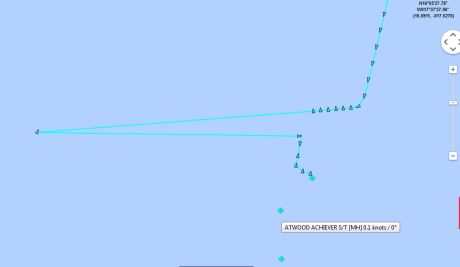
The vessel has sailed directly from there in the direction Western Sahara and is now offshore the Senegalese city of Saint Louis, where it is apparently bunkering supplies. It is accompanied by two anchor handling/supply vessels, Eland (IMO 9653757) and Springbok (IMO 9683996) who have sailed in from Mauritanian waters. The two latter vessels are owned by US company Edison Chouest Offshore LLC.
Any new oil exploration in Western Sahara is in violation of international law, according to the UN. The people of the territory protest the engagement, which the operator, Kosmos Energy, is undertaking in partnership with the occupying power of Morocco. Read more about the controversial and illegal oil programme here in our report A Platform for Conflict.
Both supply vessels, Eland and Springbok, sailed southwards from Mauritanian waters today down to Saint Louis to assist the vessel.
Another company of the Moroccan king involved in occupied Western Sahara
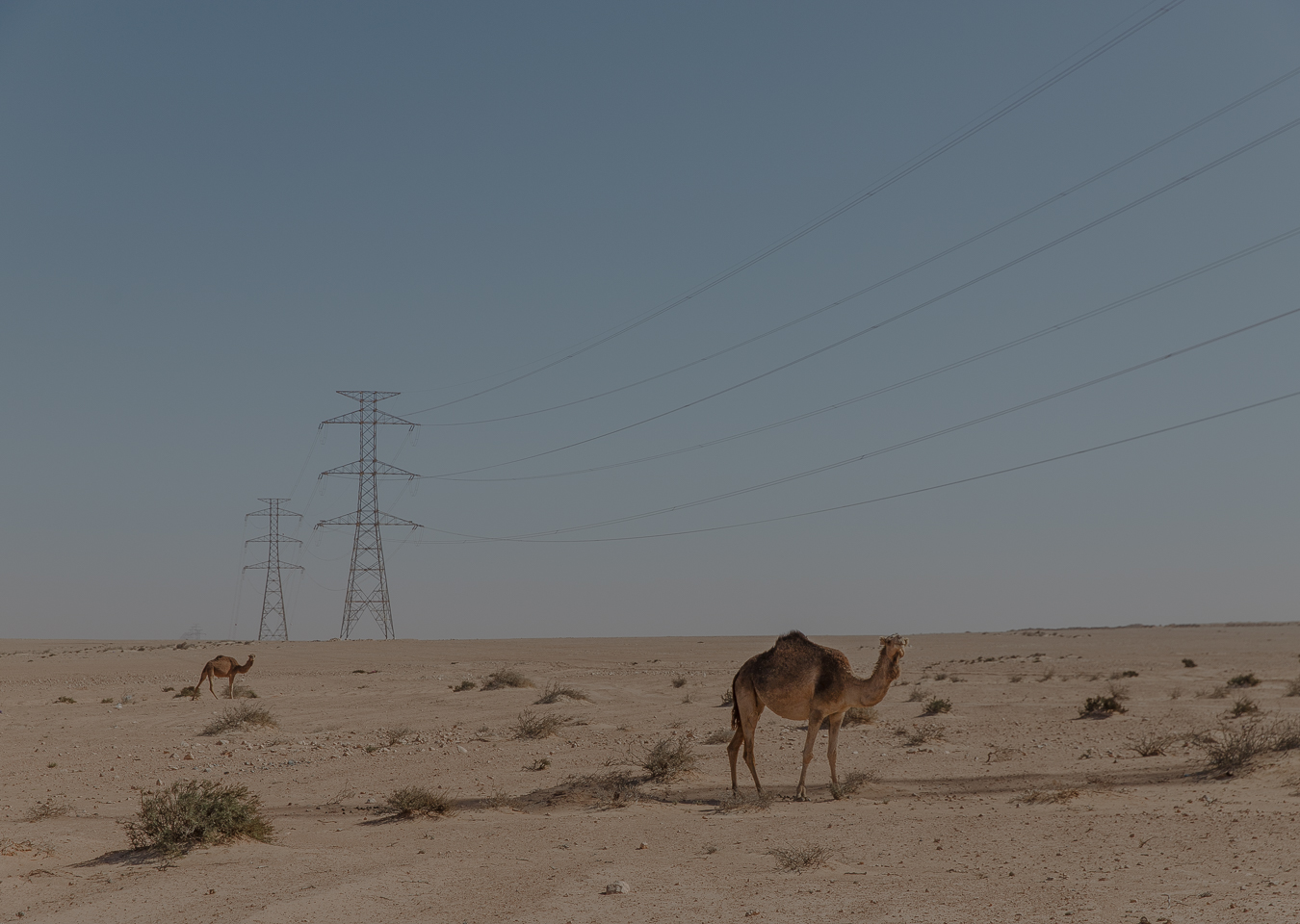
A company closely linked to Morocco’s royal business network has entered a new project in occupied Western Sahara, partnering with a Chinese state-owned electricity giant on high-voltage infrastructure in Boujdour.

Don't let resource exploitation decide Western Sahara's future
Western Sahara Resource Watch calls on the UN to address the accelerating exploitation of the territory’s natural resources - and prevent it from becoming an even greater obstacle to self-determination.
Occupied Western Sahara wind complex expands into Africa's top three
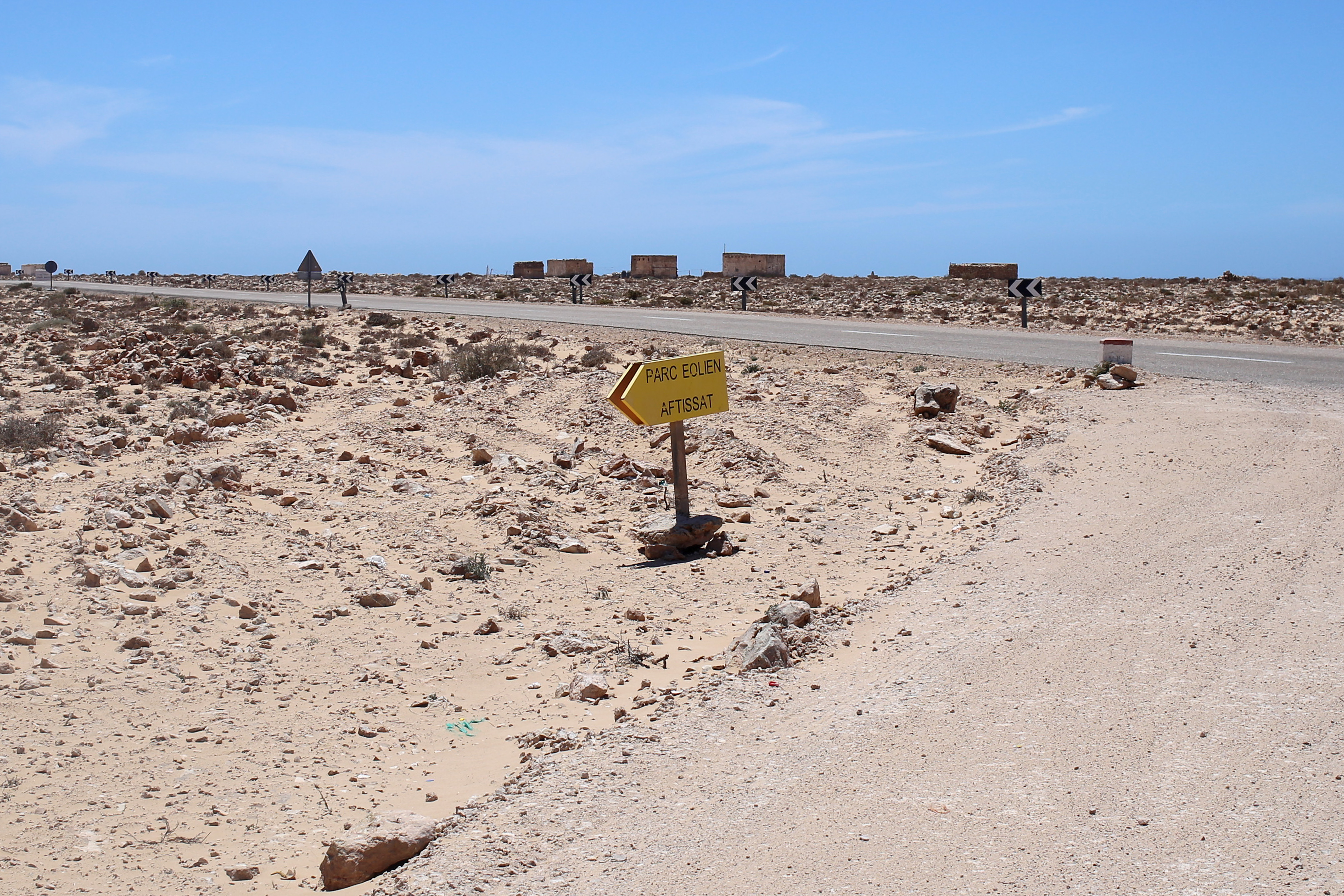
The Moroccan king’s energy company appears to have completed two new phases of the Aftissat wind power complex in occupied Western Sahara.

Dirty green energy on occupied land
How can it be wrong to develop renewable energy, in a world that is in desperate need for a green transition? In Western Sahara, the problems are numerous.