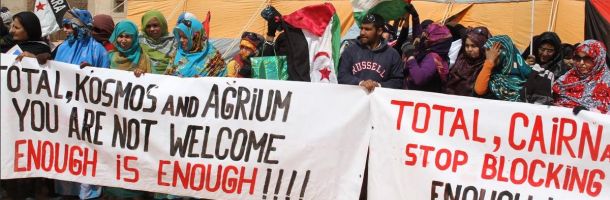
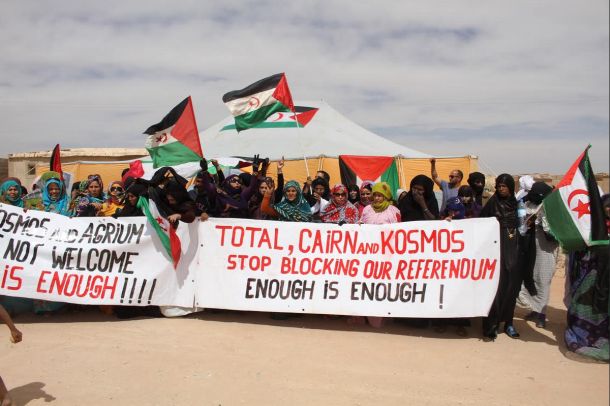
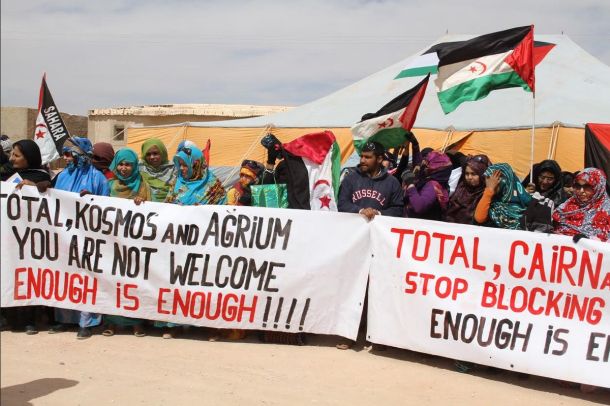
In celebration of International Women's Day, yesterday 8 March 2014, the women of the Saharawi refugee camps held a protest against foreign companies that are complicit in Morocco's plunder of their occupied homeland: Western Sahara.
In Boujdour camp, one of the Saharawi refugee camps in the south-western Algerian desert, women yesterday gathered to demand an end to the illegal exploitation of their homeland, urging the involved foreign companies to leave the territory.
Large parts of Western Sahara, home to the Saharawi people, have been illegally occupied by Morocco since 1975. About half of the people fled the territory during Morocco's invasion, and have lived in refugee camps in neighbouring Algeria ever since. The UN considers Western Sahara as the last colony of Africa. The Saharawi people's right to self-determination - the right to determine the future status of the territory and its resources - has been recognised by the International Court of Justice and backed up by the organised international community through countless UN Resolutions.
But while refusing to allow the UN to organise a Referendum in which the Saharawi people can choose their own future, Morocco has proceeded to sell off Western Sahara's natural resources as its own. A UN Legal Opinion of 2002 stated that any economic activity in Western Sahara is unlawful if not in accordance to the wishes and the interests of the Saharawis.
The Saharawi people have time and again spoken out against the pillage of Morocco and complicit partners. They don't want their resources taken before they've had the chance to exercise their right to self-determination. Nor do they benefit from the economic activities, as accruing revenues go directly to Morocco and the created jobs mainly serve to attract Moroccan settlers into the territory. Nevertheless, the plunder continues.
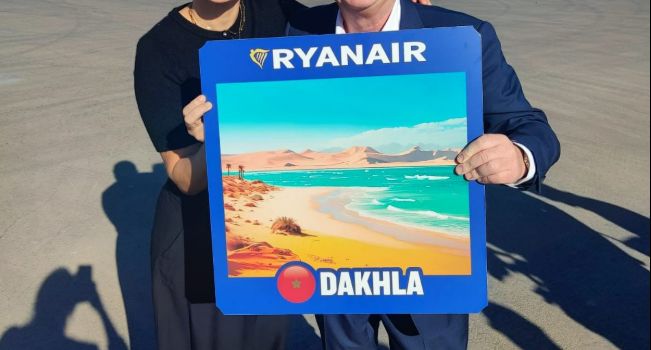
Irish ad watchdog: Ryanair misleading about flights to Western Sahara
In a preliminary decision, the Irish advertising watchdog says the airline’s ads are likely to mislead, as Dakhla is “not a part of Morocco”.
Gdeim Izik prisoners resume hunger strike
Saharawi political prisoners have resumed a hunger strike in Moroccan prisons, demanding their release, improved detention conditions and the implementation of UN decisions.
SRI update
The following overview enlists stock-exchange registered companies with current or recent operations in occupied Western Sahara. Updated 28 September 2026.
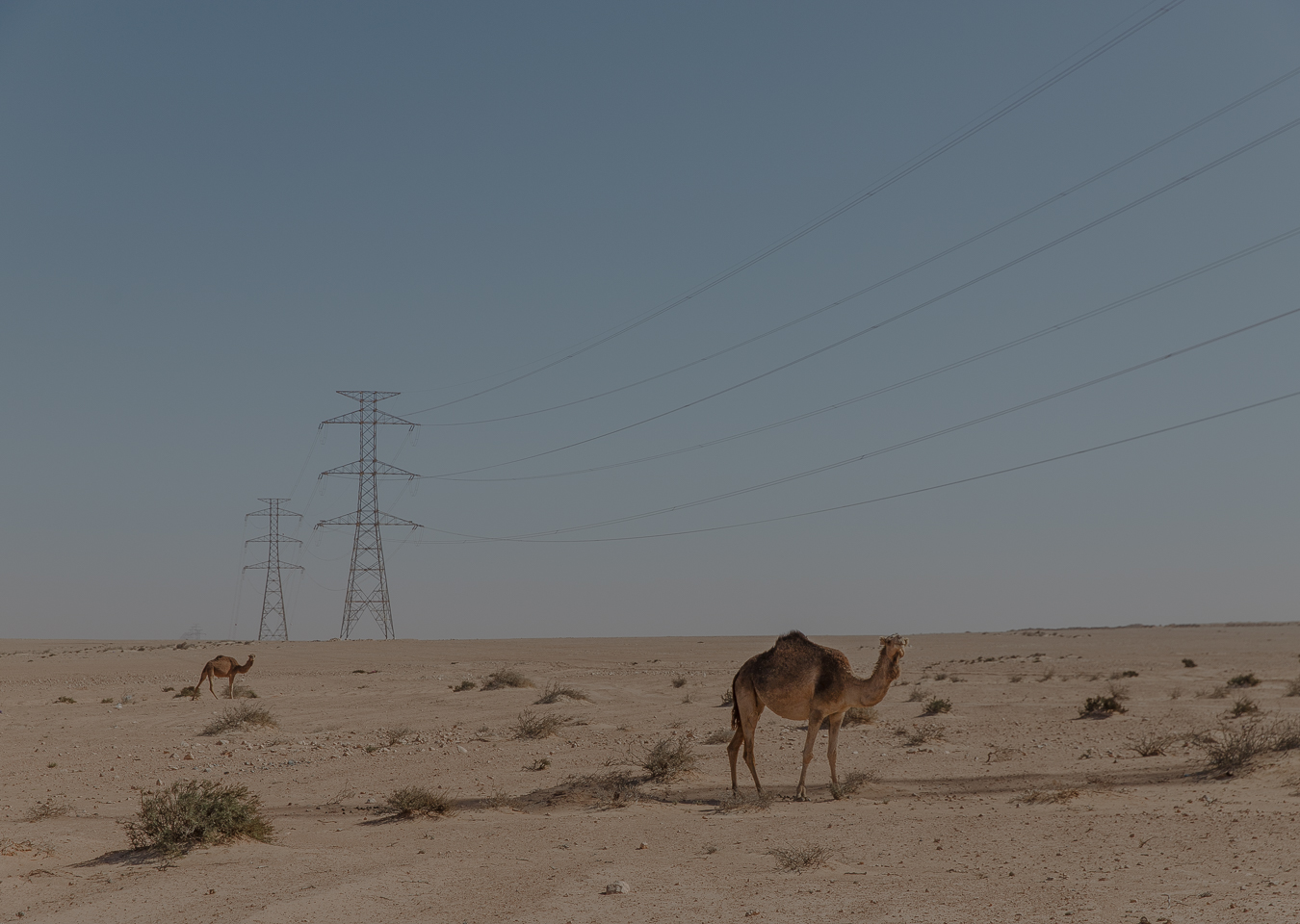
Another company of the Moroccan king involved in occupied Western Sahara
A company closely linked to Morocco’s royal business network has entered a new project in occupied Western Sahara, partnering with a Chinese state-owned electricity giant on high-voltage infrastructure in Boujdour.