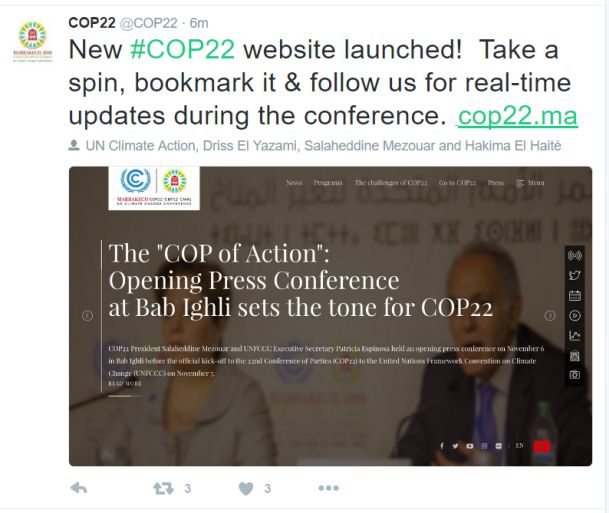
On the evening of 6 November 2016, the day before the opening of the climate talks in Marrakech, the official website COP22.ma is relaunched. False map is gone.
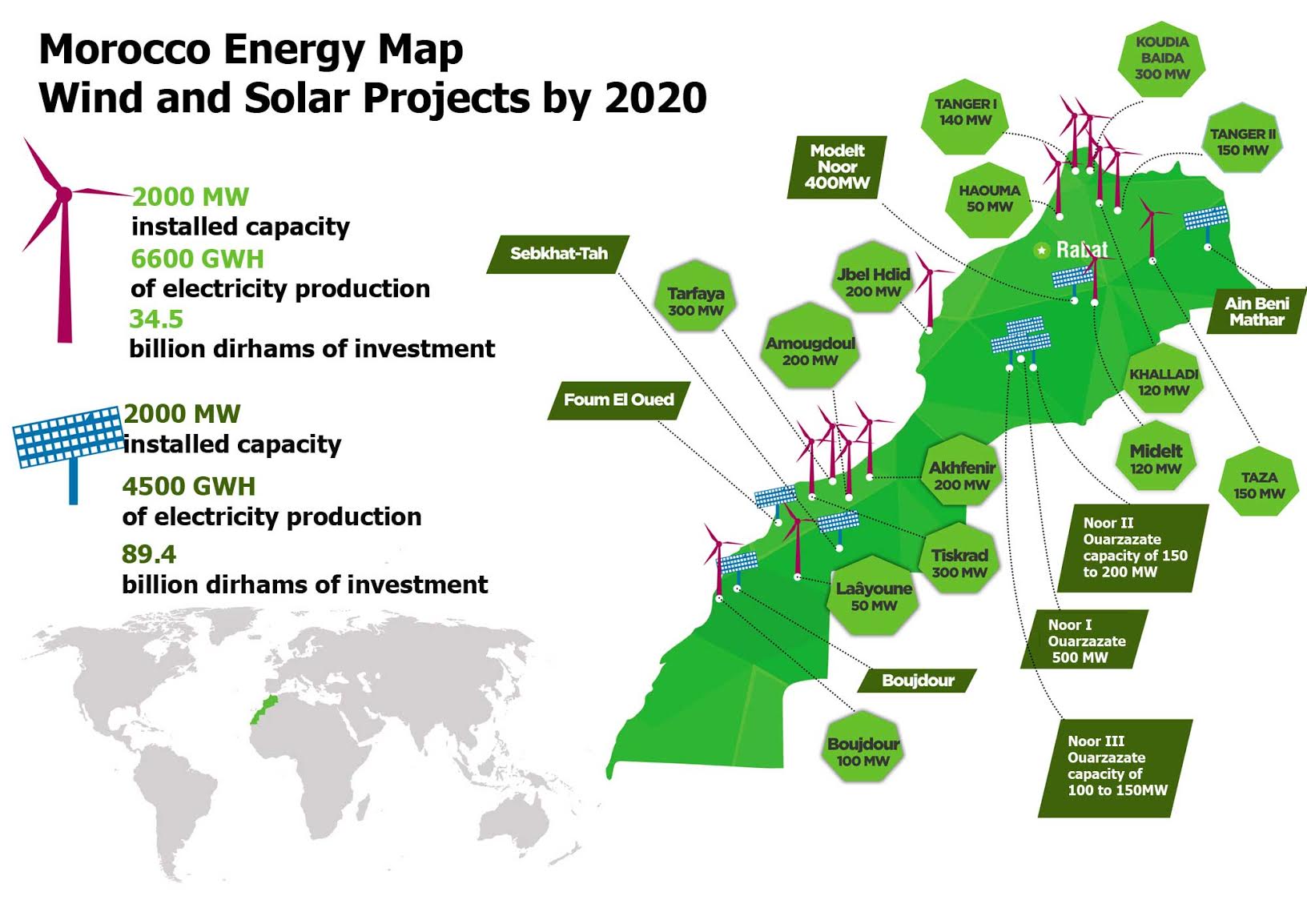
The Moroccan hosts of the COP22 climate talks in Marrakech has just announced on Twitter that it has relaunched its COP22.ma website. WSRW on 2 November mentioned in a report how the previous page contained a map in which Morocco had doubled its size as compared to official UN maps.
Morocco has illegally occupied Western Sahara since 1975, a territorial claim not recognised by the international community nor the UN.
With the largely revised site, the erroneous map is now removed. The URL to the previously published map is inactive.
Instead, a piece of country information has been published on the new site under the article "Useful information about Morocco" [or download].
There, the description of the surface area of Morocco is nearly doubled as compared to UN data. It is also claimed that Morocco borders Mauritania, which is not the case. The coastline is referred to as near identical to the circumference of the earth:
"Surface Area: 710,850 sq. km
3,5000 km of coastline
[...]
Bordering Countries: Algeria to the east and Mauritania to the south"
On the new site, it appears furthermore that Morocco is organising an event organised by something it calls "Coalition Régionale pour l'Economie Verte-Region Laayoune Sakhia El Hamra", while an exhibitor is called "Féderation des Amicales et Associations des Quartier de Laayoune".

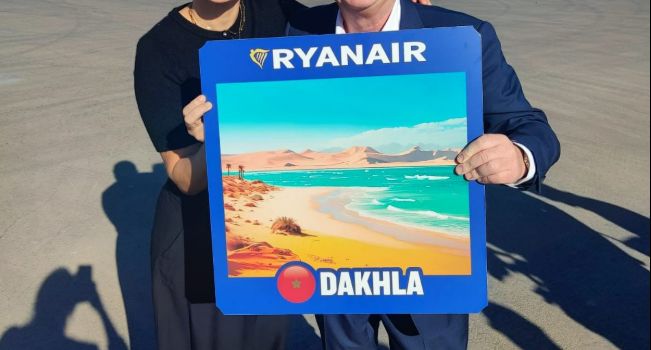
Irish ad watchdog: Ryanair misleading about flights to Western Sahara
In a preliminary decision, the Irish advertising watchdog says the airline’s ads are likely to mislead, as Dakhla is “not a part of Morocco”.
Gdeim Izik prisoners resume hunger strike
Saharawi political prisoners have resumed a hunger strike in Moroccan prisons, demanding their release, improved detention conditions and the implementation of UN decisions.
SRI update
The following overview enlists stock-exchange registered companies with current or recent operations in occupied Western Sahara. Updated 28 September 2026.
Another company of the Moroccan king involved in occupied Western Sahara
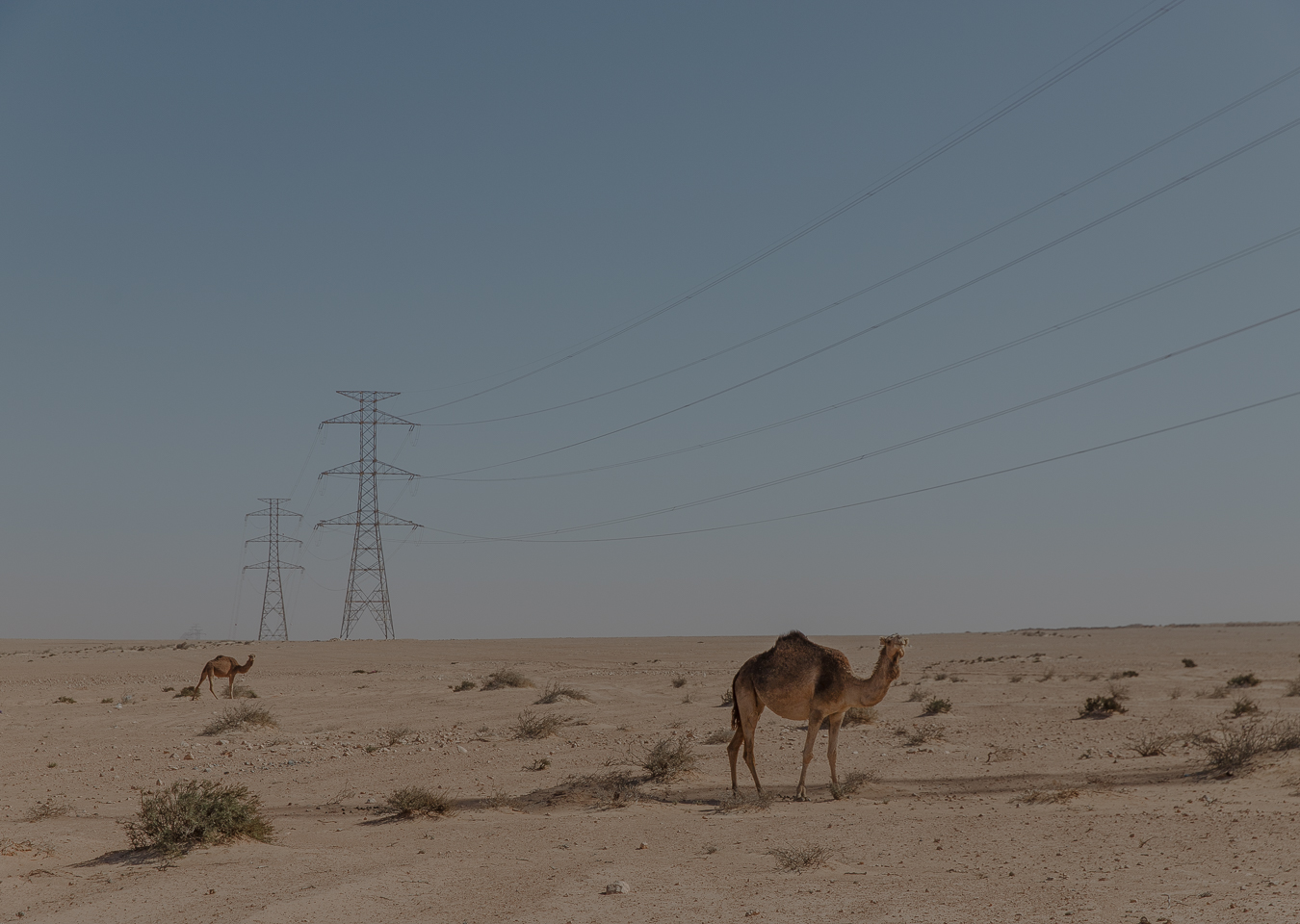
A company closely linked to Morocco’s royal business network has entered a new project in occupied Western Sahara, partnering with a Chinese state-owned electricity giant on high-voltage infrastructure in Boujdour.