Ballance takes in new controversial cargo to replace detained vessel
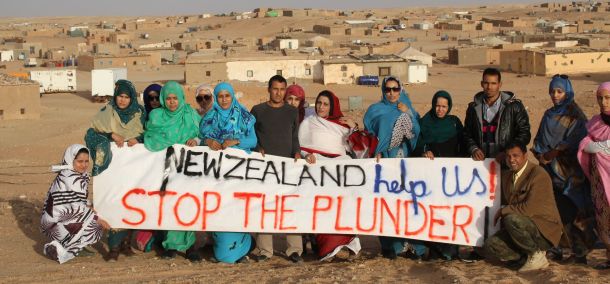
The New Zealand farmer-owned cooperative Ballance Agri-Nutrients is taking in another dirty cargo of phosphate rock from occupied Western Sahara while the vessel NM Cherry Blossom is detained by a court in South Africa.
Published 01 June 2017
New Zealand is the world’s second biggest importer of phosphate rock from occupied Western Sahara, a report from WSRW documented in April. Farmers of New Zealand are therefore among the biggest financial supporters of Morocco’s illegal occupation of the last unresolved colony in Africa.
On 1 May 2017, the Saharawi people – the owners of the phosphate rock – tried to have the problematic trade stopped, by succeeding to have a New Zealand bound vessel detained in Port Elizabeth, South Africa. On 9 June, the court is set to decide on the ownership of the phosphate rock, to identify whether the cargo belongs to the Moroccan occupier, to the farmers of New Zealand who has paid the occupying power, or to the people of Western Sahara themselves.
While the NM Cherry Blossom is locked at anchor in South Africa, it has now been confirmed that Ballance Agri-Nutrients is now taking in replacement cargo. The vessel is the Greek flagged Common Spirit. It departed El Aaiun on 16-17 May, only 15 days after NM Cherry Blossom was detained in South Africa.
Yesterday, Common Spirit completed a stop-over in Rio de Janeiro, Brazil, where it has most probably fuelled up. It is set to arrive Tauranga, New Zealand on 25 June. Tauranga is one of the ports into which Ballance Agri-Nutrients receives phosphates for production.
“It is saddening in the first place that the company fails to understand its negative role on the conflict. But it is simply surprising to observe that takes such steps as to take in a replacement now as a court is addressing the legality of the trade”, stated Morten Nielsen of Westenr Sahara Resource Watch (WSRW)
Nielsen underlined that WSRW has followed the trade daily for a number of years and that “we can easily say that it is not normal for Ballance to take in two vessels within 16 days of each other”.
The company has purchased 16 cargoes during the years 2012-2017, this includes the one detained in South Africa. In 2012, 2013, 2014, 2016, the company purchased three cargos, while in 2015 and so far in 2017 there have been 2 cargos.
WSRW estimates Common Spirit vessel to contain 55,000 tonnes of rock – a 97% of the ship’s stated deadweight capacity of 57,078 tonnes. As Common Spirit arrived to El Aaiun in Western Sahara to load the controversial cargo, it had sailed directly from Jorf Lasfar, a phosphate exporting port in Morocco. Therefore, there is a possibility that parts of the cargo onboard is from Western Sahara, while parts also might be from neighbouring Morocco.
The Greek flagged vessel (IMO number 9594717) is owned and operated by Greek company Common Progress Compania.
Half the people of Western Sahara has lived as refugees since Morocco occupied the territory in order to take control of the mine.
UPDATE, 27.06.2017. The Common Spirit has arrived New Zealand. See Radio New Zealand [or download].
News
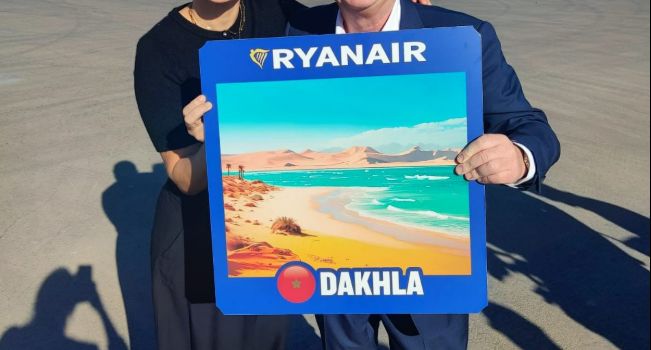
Irish ad watchdog: Ryanair misleading about flights to Western Sahara
In a preliminary decision, the Irish advertising watchdog says the airline’s ads are likely to mislead, as Dakhla is “not a part of Morocco”.
16 October 2026
Gdeim Izik prisoners resume hunger strike
Saharawi political prisoners have resumed a hunger strike in Moroccan prisons, demanding their release, improved detention conditions and the implementation of UN decisions.
06 October 2026
SRI update
The following overview enlists stock-exchange registered companies with current or recent operations in occupied Western Sahara. Updated 28 September 2026.
28 September 2026
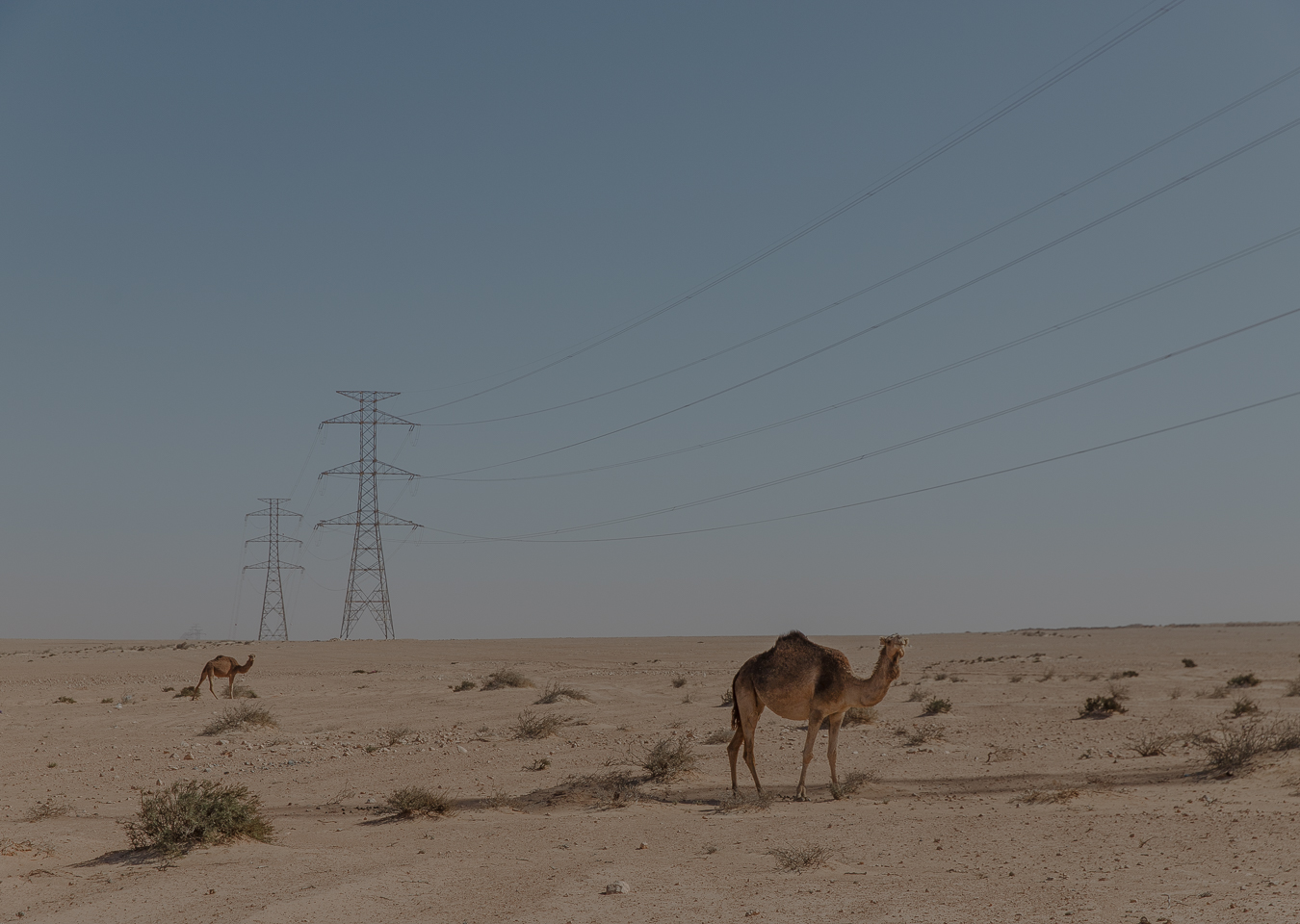
Another company of the Moroccan king involved in occupied Western Sahara
A company closely linked to Morocco’s royal business network has entered a new project in occupied Western Sahara, partnering with a Chinese state-owned electricity giant on high-voltage infrastructure in Boujdour.
10 September 2026