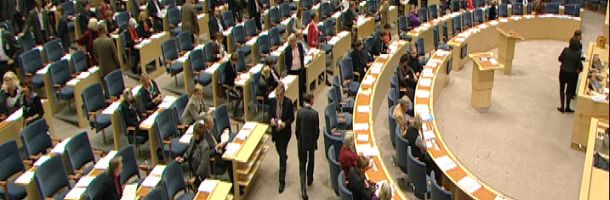
As the vote on the European Parliament's report on the UN General Assembly revealed, MEPs are split on the inclusion of a reference to the EU Court of Justice in relation to Western Sahara.
Yesterday, 5 July 2018, the Members of the European Parliament voted in the plenary session on the institution's annual report setting out its priorities for the forthcoming UN General Assembly. The report covers a wide range of topics, from human rights and development to UN reform.
The report, drafted by S&D Rapporteur Eugen Freund, had already been adopted in the Parliament's Foreign Affairs Committee (AFET) and at that time included an amendment on Western Sahara put forth by the Greens. The paragraph on Western Sahara suggested three elements:
1. to act upon the rulings of the Court of Justice of the European Union on Western Sahara;
2. to support UN efforts to secure a fair and lasting settlement of the Western Sahara conflict, on the basis of the right to self-determination of the Sahrawi people and in accordance with the relevant UN resolutions;
3. to push for the UN Mission for the Referendum in Western Sahara (MINURSO) to be provided with a human rights mandate, in line with all other UN peacekeeping missions.
The paragraph having survived the vote in AFET had triggered a heavy counter-lobby from the Moroccan diplomacy, which cannot accept any such language on Western Sahara.
As a result, two out of the three above-cited sentences were voted out in the Parliament's plenary session.
Astonishingly, the sentence regarding respect for the rulings of the EU Court of Justice on Western Sahara was voted down by a narrow majority of three votes. The sentence calling for MINURSO to be equiped with a human rights mandate, in line with all other UN peacekeeping missions, was rejected by 40 votes (267 in favour, 304 against, 36 abstentions).
In contrast, the sentence calling for supporting the UN efforts to secure a fair and lasting settlement of the Western Sahara conflict on the basis of the Saharawi people's right to self-determination, got a tiny majority of two votes.
Note that the Advocate-General of the EU Court of Justice stated in his Advisory Opinion on EU fisheries in Western Sahara of 10 January 2018 that "the right to self-determination forms part of ‘human rights’".
A roll-call vote on the sentence calling for MINURSO to be extended a human rights mandate reveals how MEPs voted on that particular phrase. Several things stick out.
The second largest political group in the Parliament, the Social Democrats (S&D) massively supported a human rights monitoring mandate for MINURSO (128 in favour, and only 20 against, including Mr Gilles PArgneaux, president of the unofficial Group of Friendship with Morocco).
The GUE/NGL and Greens/EFA groups all voted in favour, as did Italy's Movimento 5 Stelle.
On the opposite side of the spectrum are the Christian Democrats (EPP), who mostly voted against a human rights mandate - with the notable exception of Slovakia's former Minister of Foreign Affairs, Eduard Kukan and Sweden's Christopher Fjellner. The far right and other extremist MEPs also voted against the UN reference.
The liberal group, (ALDE) appeared deeply divided, with the EP International Trade Committee's standing rapporteur on trade with Morocco, MS Patricia Lalonde, abstaining. The President of the ALDE group, and former Prime Minister of Belgium, Guy Verhofstadt, favouring a human rights mandate.
Most surprisingly was the abstention of the corrent chair of the EP Human Rights sub-committee Mr Antonio Panzeri, who voted against a human rights mandate to the UN mission, as did his predecessor, Ms Elena Valenciano.
"Clearly, in their view, human rights are universal, except in Western Sahara. We'd be interested to hear their explanation for this vote when questioned by human rights NGOs as Amnesty International, Human Rights Watch and EuroMed Rights who have repeatedly called for MINURSO to have a human rights mandate", says Sara Eyckmans of Western Sahara Resource Watch.
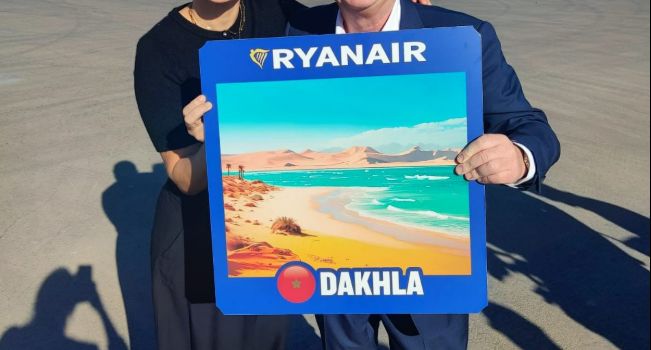
Irish ad watchdog: Ryanair misleading about flights to Western Sahara
In a preliminary decision, the Irish advertising watchdog says the airline’s ads are likely to mislead, as Dakhla is “not a part of Morocco”.
Gdeim Izik prisoners resume hunger strike
Saharawi political prisoners have resumed a hunger strike in Moroccan prisons, demanding their release, improved detention conditions and the implementation of UN decisions.
SRI update
The following overview enlists stock-exchange registered companies with current or recent operations in occupied Western Sahara. Updated 28 September 2026.
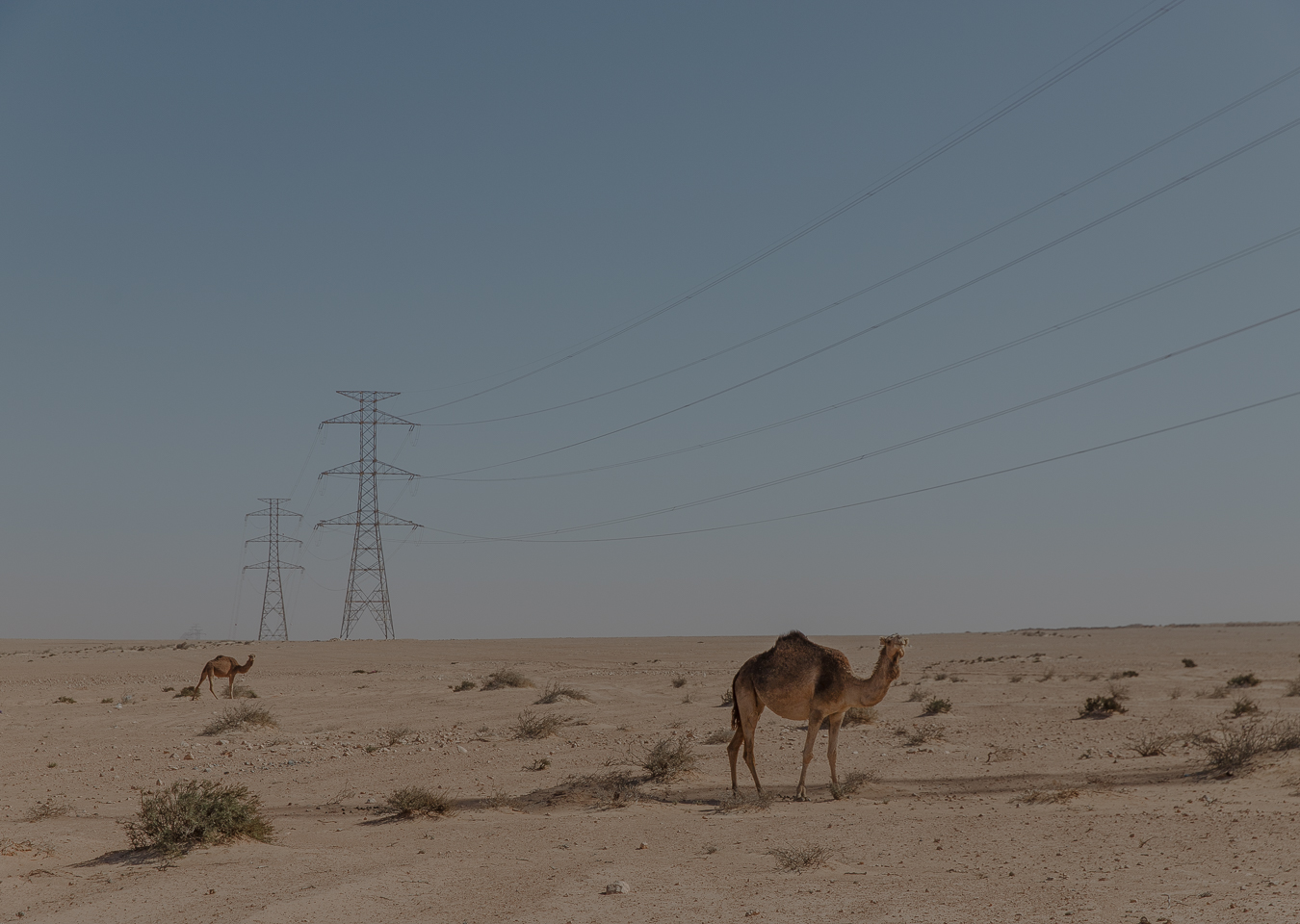
Another company of the Moroccan king involved in occupied Western Sahara
A company closely linked to Morocco’s royal business network has entered a new project in occupied Western Sahara, partnering with a Chinese state-owned electricity giant on high-voltage infrastructure in Boujdour.