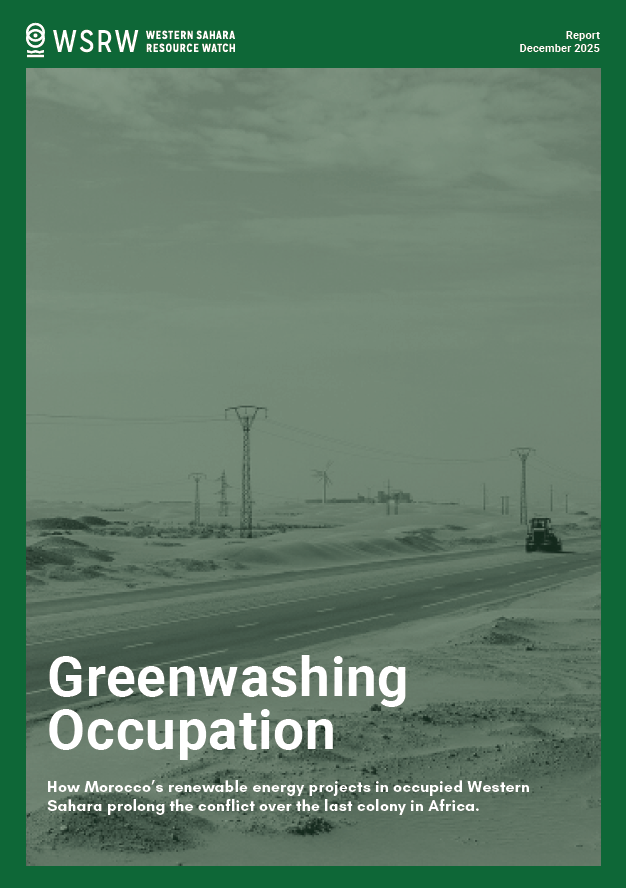
Out now: WSRW today publishes a new report outlining the massive - and deeply problematic - renewable energy projects that Morocco is developing in occupied Western Sahara.
Along the Atlantic coast of Western Sahara, Morocco is promoting what it calls a flagship of green progress: a dozen wind turbines rising from the desert, generating clean energy for a large desalination plant to irrigate new farmland - land that will soon attract workers and settlers from across Morocco.
Yet beneath this narrative of sustainability lies a more troubling reality. The Engie-led project, like other renewable ventures in Western Sahara, is not situated in Morocco at all, but is built in a territory under military occupation, without the consent of the Saharawi people. What is marketed as a climate solution is, in fact, a project that strengthens Morocco’s unlawful occupation.
In Western Sahara, renewable energy has become a strategic instrument of control. It powers industries that extract the territory’s non-renewable resources, supports agricultural schemes designed to attract Moroccan settlers, and is poised to feed electricity into Morocco’s national grid, supplying the occupying power – and potentially the EU – in years ahead. In 2025, the Moroccan authorities announced that major desalination plants in Casablanca and Agadir would rely on wind power from occupied Western Sahara. The latest frontier is green hydrogen: Morocco is positioning Western Sahara as a key-production zone, a move that could deepen international energy ties to projects built on occupied land.
This report published today, “Greenwashing Occupation”, provides the most comprehensive overview to date of all existing and planned renewable energy projects in Western Sahara.
Download the report here.
The energy generated on occupied land increases Morocco’s dependency on the territory that it occupies, fundamentally undermining the UN-led peace efforts aimed at realising the Saharawi people’s right to self-determination.
Morocco brands itself internationally as best in class on renewable energy as part of its commitments under the Paris Agreement. Yet states are expected to only report on climate actions within their own internationally recognised borders. The UN body that registers and reviews state parties’ achievements, the UNFCCC, has nevertheless accepted Morocco’s reporting, claiming that it is not in a position to assess the content of the submissions. This complacency is compounded by the fact that Morocco’s energy projects can only be carried out under the military occupation that the UN’s central bodies have declared illegal.
Equally troubling is the conduct of the companies involved. None of the corporations participating in the renewable energy industry inside Western Sahara - including multinationals such as Engie, Enel, Siemens Energy and GE Vernova - have demonstrated that they have even tried to obtain the consent of the people of the territory, as required under international law. Instead, they refer to an alleged ‘consultation’ of local ‘stakeholders’ or of the ‘population’, echoing the exact same flawed approach taken by the European Commission in its trade and fisheries agreements with Morocco, rejected as illegal by the European Court of Justice. The Court ruled that a ‘consultation’ of the ‘population’ cannot replace the required consent of the people of the territory, the Saharawi people.
Alarmingly, despite this jurisprudence, the European Union now plans to support renewable energy and infrastructure projects in Western Sahara under the new EU-Morocco trade deal, presenting them as “benefits to the Saharawis.” By potentially financing projects such as those described in this report, the EU risks directly subsidising Morocco’s occupation and further entrenching the dispossession of the Saharawi people.
Western Sahara Resource Watch (WSRW) calls for:
- The immediate withdrawal of all companies involved in energy projects in the occupied territory;
- An end to Morocco’s misrepresentation of climate actions outside its borders;
- The suspension of any EU financial or political support for renewable projects in Western Sahara until the Saharawi people have given their explicit consent.
“Greenwashing Occupation” updates WSRW’s 2021 report of the same title, which first revealed how renewable energy had become a cornerstone of Morocco’s occupation strategy. Since then, Morocco’s renewable infrastructure in the territory has expanded dramatically - deepening the injustice that these projects are meant to conceal.
Since you're here....
WSRW’s work is being read and used more than ever. We work totally independently and to a large extent voluntarily. Our work takes time, dedication and diligence. But we do it because we believe it matters – and we hope you do too. We look for more monthly donors to support our work. If you'd like to contribute to our work – 3€, 5€, 8€ monthly… what you can spare – the future of WSRW would be much more secure. You can set up a monthly donation to WSRW quickly here.
UN Security Council may endorse the occupation of Western Sahara
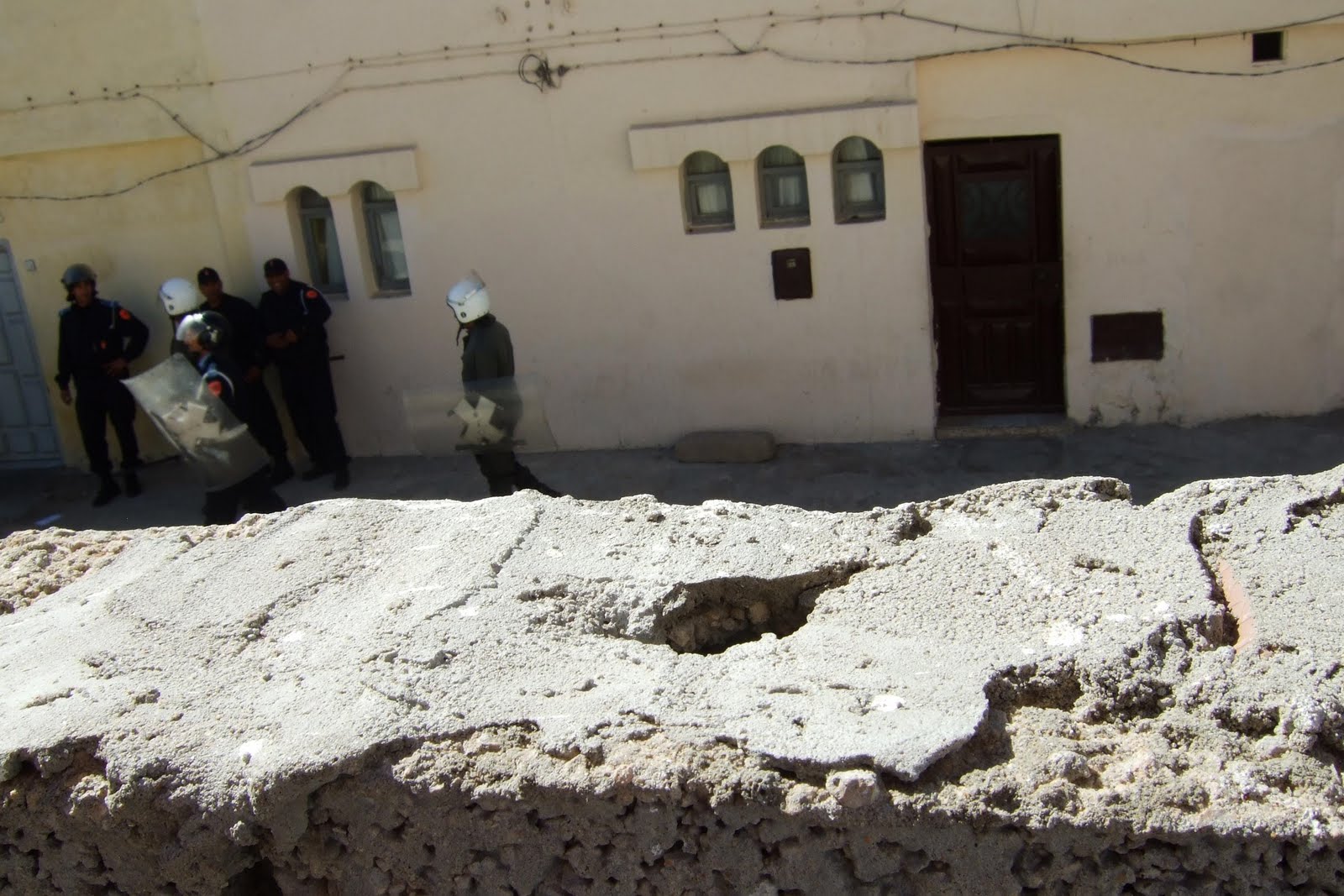
On the 30th of October, the UN Security Council may vote on a resolution on Western Sahara that sets aside the Saharawi people's right to self-determination, in violation of the UN Charter.
Polisario takes legal action to stop Ryanair
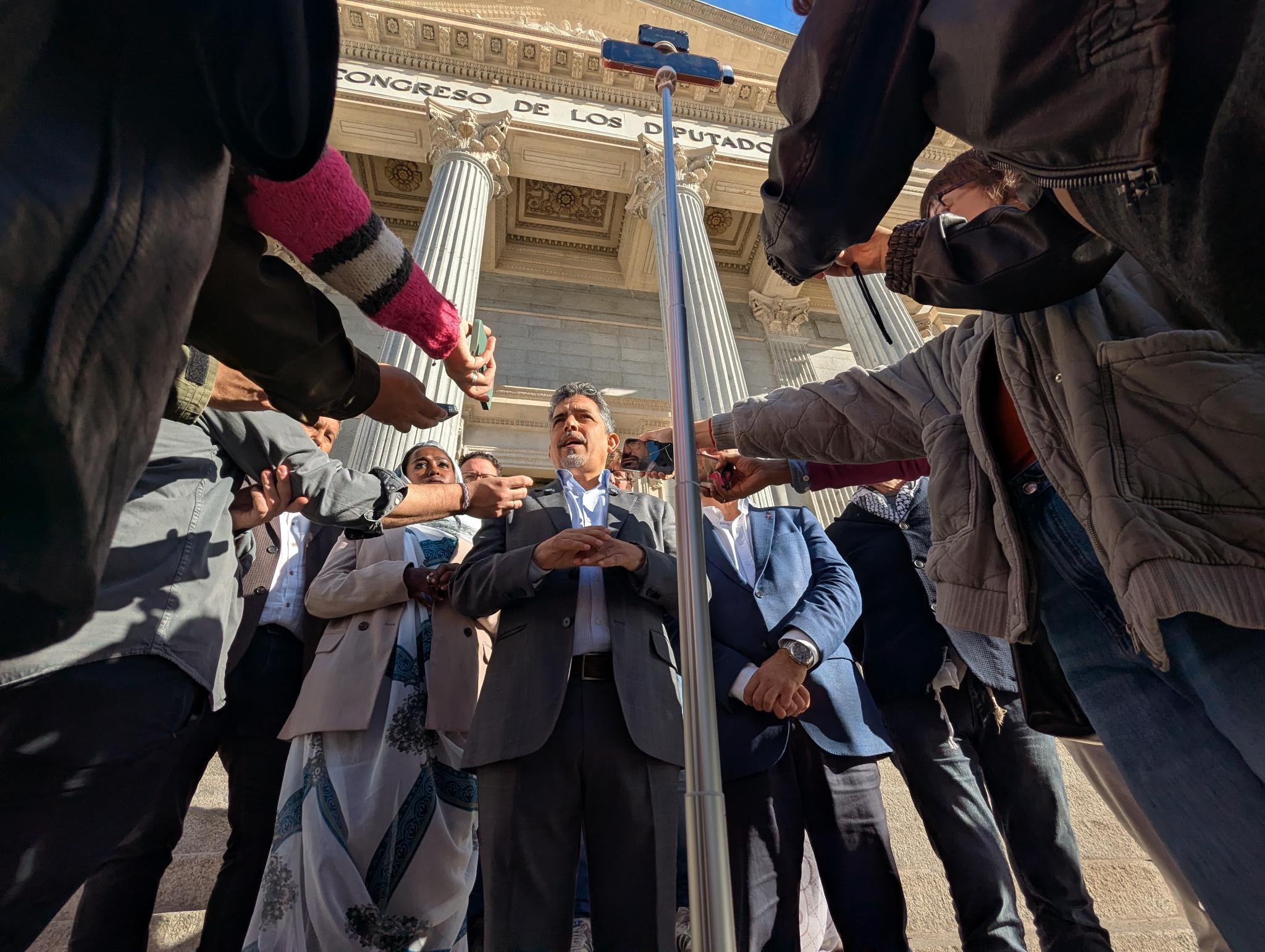
In a press conference in Madrid today, Polisario Front announced that the Western Sahara liberation movement is opening a legal case against the Spanish authorities for having issued a permit to Ryanair to fly to occupied Western Sahara.
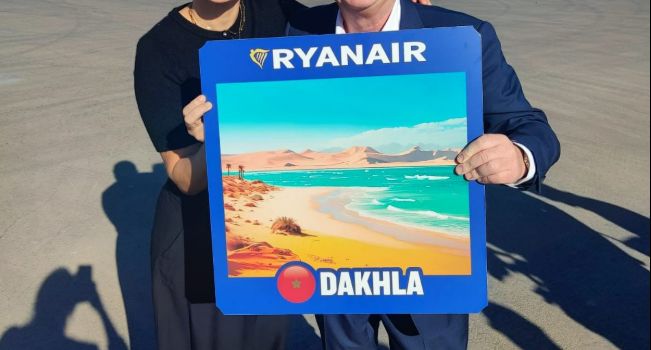
Irish ad watchdog: Ryanair misleading about flights to Western Sahara
In a preliminary decision, the Irish advertising watchdog says the airline’s ads are likely to mislead, as Dakhla is “not a part of Morocco”.
Gdeim Izik prisoners resume hunger strike
Saharawi political prisoners have resumed a hunger strike in Moroccan prisons, demanding their release, improved detention conditions and the implementation of UN decisions.