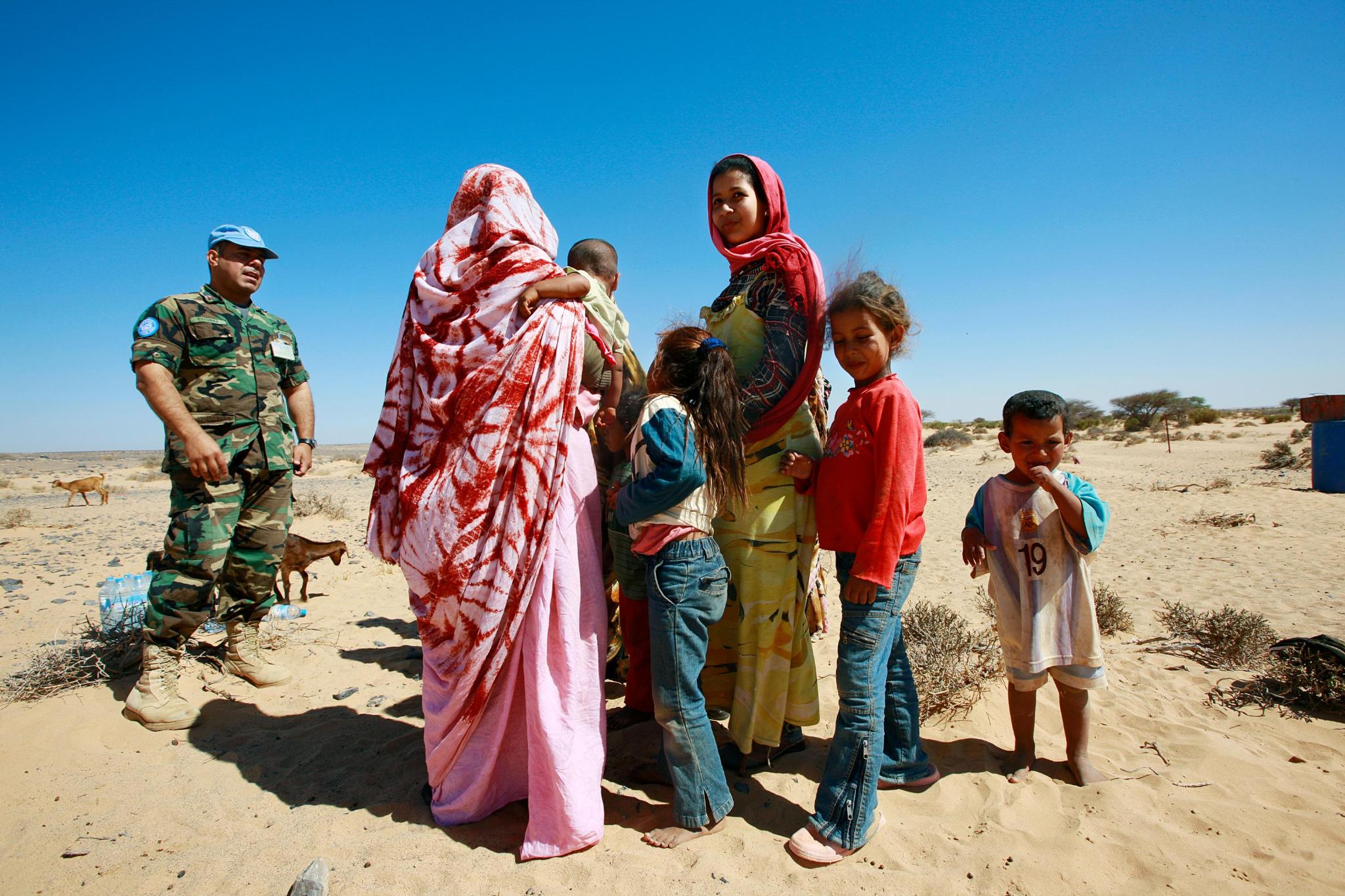
Our analysis of yesterday's UN Security Council vote on Western Sahara reveals a striking gap between what some governments said about the Saharawi people's right to self-determination and the resolution they voted to support.
Photo: UN Photos/Martine Perret
The UN Security Council failed on 30 October to renew the mandate of its mission in Western Sahara, MINURSO, after Russia vetoed a US-sponsored resolution backed by 11 members. A competing Russian proposal for a straightforward renewal also failed to secure sufficient support.
The vote exposed deep divisions over the future of the UN mission and, more fundamentally, over the Saharawi people's right to self-determination, as a majority of Council members supported a US initiative placing Morocco's plan to formally annex the territory - the so-called “autonomy proposal” - at the centre of the political process.
But beyond the dramatic confrontation between the United States and Russia, the meeting revealed another problem: several Council members defended their votes for a US-sponsored resolution by insisting that they remained committed to the Saharawi people's right to self-determination, despite supporting a text that would have made Morocco's annexation plan the exclusive basis for further negotiations.
Denmark and Latvia were particularly notable in this paradoxical approach. Both voted in favour of the US draft, then used their explanations of vote to insist that they had not endorsed a predetermined political outcome or Moroccan sovereignty claims. Their statements raise a fundamental question: what meaning does self-determination retain when the resolution text - drafted by the US administration - excludes alternatives from the outset?
The meeting ended without an agreement to renew MINURSO's mandate. The US-sponsored draft received 11 votes in favour, one against and three abstentions, but was vetoed by Russia. A competing Russian draft proposing a straightforward renewal received only three votes in favour, one against and 11 abstentions, and was blocked by the United States.
With neither proposal adopted, MINURSO's mandate was left due to expire on 31 October.
A US proposal that narrowed the political horizon
The US draft, document S/2026/868, proposed extending the mission's mandate for another year, but also sought significant changes to its identity and future role.
Notably, it proposed removing the word "Referendum" from the mission's name, renaming it the United Nations Mission in Western Sahara (MINUSO). It also requested proposals from the Secretary-General concerning the mission's future structure, staffing and resources, opening the way to possible changes in its configuration.
The most consequential element, however, concerned the political process itself. The text identified Morocco's autonomy proposal as the only basis for continuing negotiations and described genuine autonomy under Moroccan sovereignty as the most feasible solution.
The resolution retained language referring to a just, lasting and mutually acceptable political solution in accordance with the UN Charter, including the principle of self-determination. But the inclusion of that principle did not resolve the underlying contradiction: if Morocco's autonomy proposal is the only basis for negotiations, what meaningful alternatives remain available to the Saharawi people?
In his report of 1 October 2026 (S/2026/781), the UN Secretary General underlined that the self-determination talks would logically mean that the Saharawis would also be able to reject Morocco´s plans. This is a fundamental element of the right to self-determination: the Saharawi people must be free to say no to Morocco's autonomy proposal. The US draft removed this explicit safeguard, effectively stripping the proposed political process of a crucial guarantee that the outcome must reflect the freely expressed will of the people concerned.
This is particularly important in a decolonisation context. Western Sahara remains on the UN list of Non-Self-Governing Territories, and its status has not been resolved through an internationally recognised exercise of self-determination.
For Western Sahara Resource Watch, the issue is not whether autonomy can be discussed as one possible political arrangement. It is whether one political arrangement can legitimately be elevated above all other possibilities before the people whose future is at stake have freely determined their wishes. A right to self-determination cannot be reduced to the opportunity to negotiate the terms of an outcome selected in advance.
Denmark and Latvia: supporting the text, distancing themselves from its implications
Perhaps the most striking explanations of vote came from Denmark and Latvia.
Denmark voted in favour of the US resolution, but its representative subsequently insisted that a lasting solution could not be predetermined by the Security Council and must emerge through negotiations consistent with the UN Charter and the Saharawi people's right to self-determination. Denmark also called on Morocco to clarify how autonomy under Moroccan sovereignty would guarantee the Saharawi people a meaningful opportunity to exercise that right. It stressed that its vote did not constitute recognition of Moroccan sovereignty over Western Sahara.
Latvia made a remarkably similar argument. Having voted in favour, it stated that its support did not constitute recognition of Moroccan sovereignty or endorsement of autonomy as the predetermined outcome of the political process. It also invoked its own history, saying that the voices and aspirations of the Saharawi people should remain central to the process.
These statements deserve to be examined against the actual text both countries supported.
The US proposal did not simply invite the parties to discuss Morocco's autonomy plan alongside other possible solutions. It identified that proposal as the only basis for continuing negotiations. The distinction is fundamental.
A government cannot resolve this contradiction simply by explaining that its vote should not be interpreted as endorsing the consequences of the text. The question is what the text itself would have established.
If the right to self-determination means that the Saharawi people must be able to determine their political status freely, then the negotiating framework must preserve that possibility. Supporting a text that makes one party's proposal the exclusive basis for negotiations, while simultaneously insisting that no outcome has been predetermined, requires an explanation that neither delegation adequately provided.
Denmark's request that Morocco clarify how its autonomy proposal would guarantee self-determination is particularly revealing. It acknowledges that the compatibility of the proposal with the right remains an unresolved question. Yet Denmark voted for a resolution that placed that very proposal at the centre, and indeed at the exclusive starting point, of the negotiations.
Latvia's statement similarly asserted that the Saharawi people's aspirations should remain central, without explaining how those aspirations could be translated into a process that no longer kept the referendum in the mission's name or retained the full range of possible political outcomes.
For WSRW, this illustrates a wider problem in the Council's approach. Self-determination is repeatedly invoked as a diplomatic assurance, while the practical parameters of the process risk progressively narrowing the right it is supposed to protect.
The other supporters of the US resolution
The remaining supporters offered a range of arguments, although several were considerably more explicit than Denmark and Latvia in their support for Morocco's proposal.
France strongly regretted Russia's veto and described the US draft as an important step towards advancing the political process. Its representative went beyond supporting negotiations on autonomy, stating explicitly that France considers Western Sahara to be part of Moroccan sovereignty. France called for negotiations to resume on the basis of Morocco's proposal.
This position raises a particularly serious question about the role of a Security Council member in a UN-led decolonisation process. France's position was not simply that autonomy could be discussed; it was an assertion of Moroccan sovereignty over a territory whose final status remains unresolved.
The United Kingdom also supported the US draft and criticised Russia's veto. It described Morocco's 2007 autonomy proposal as the most credible, viable and pragmatic basis for a lasting settlement, while maintaining that any outcome must meaningfully provide for the Saharawi people's self-determination.
Bahrain expressed regret that the draft had not been adopted. Its representative openly supported genuine self-determination under Moroccan sovereignty, welcomed the removal of the referendum reference from MINURSO's name and endorsed the Moroccan initiative as the basis for negotiations. Bahrain also reiterated its position in support of Morocco's sovereignty during the discussion of the Russian proposal.
Panama supported the resolution, arguing that it offered an opportunity to preserve diplomatic momentum and improve conditions on the ground. It supported Morocco's autonomy proposal as the most viable foundation for negotiations but also argued that a lasting solution must respect international law and self-determination.
Panama placed particular emphasis on consultation with a broad range of Saharawi stakeholders, including people in the territory, refugee camps and diaspora. It argued that other options could fulfil the principle of self-determination, even if a referendum appeared difficult to organise.
Colombia regretted the failure of the US resolution and supported Morocco's autonomy proposal as the basis for a lasting solution. Its representative argued that the principles of sovereignty and self-determination in the text were consistent with the UN Charter.
Liberia offered one of the clearest endorsements of the proposal. It explicitly supported Morocco's autonomy initiative and welcomed the resolution's description of autonomy under Moroccan sovereignty as the most feasible solution and the only basis for negotiations. Liberia argued that the reference to self-determination in the resolution's operative paragraph was sufficient to justify its affirmative vote.
The Democratic Republic of the Congo voted in favour, citing the importance of stability and continued negotiations. It described Morocco's updated autonomy proposal as a foundation for the substantive discussions held earlier in the year and called for constructive dialogue.
Greece, which held the Council presidency, also supported the US initiative. Its representative regretted the failure to adopt the resolution and called for a political solution providing for the Saharawi people's self-determination, on the basis of Morocco's autonomy proposal.
The United States, as the penholder, defended its proposal by arguing that the referendum had become unworkable after decades of failed attempts. It pointed to the humanitarian conditions in the refugee camps and argued that continuing to renew MINURSO's existing mandate would perpetuate an unacceptable status quo.
Washington presented the autonomy initiative as a means of moving the political process forward and said that its resolution had incorporated concerns raised by Council members, including on refugees and self-determination.
The US also argued that the proposed changes to MINURSO would make the mission more relevant to current political realities.
However, the humanitarian urgency of the refugee situation does not itself answer the question of political status. The predicament of Saharawi refugees cannot be used to justify removing the very right whose non-implementation is central to their displacement.
The abstentions: concerns about predetermining the outcome
Three countries abstained on the US draft: China, Pakistan and Somalia.
China supported a one-year extension of the mission but considered the US text unbalanced. It argued that the proposal did not adequately build on previous Security Council resolutions and placed pressure on one side to accept a predetermined outcome. China maintained that negotiations must take place on an equal footing and guarantee the Saharawi people's right to self-determination.
Pakistan reiterated that self-determination must remain an inviolable principle of any political settlement. It supported MINURSO's continued stabilising role and argued that changes to the mission should be guided by progress in the political process and conditions on the ground.
Somalia expressed concern that certain provisions of the US draft could prejudge the outcome of negotiations. It argued that a just and mutually acceptable solution must emerge from genuine dialogue and compromise, taking account of the interests and aspirations of the Saharawi people.
These abstentions reflected a concern shared by several delegations: that the proposed negotiating framework risked moving beyond facilitating negotiations towards predetermining their outcome.
Russia's veto and the alternative resolution
Russia was the only country to vote against the US proposal, thereby exercising its veto.
Its representative argued that the draft represented a departure from the historical framework for resolving the conflict and sidelined the Saharawi people's right to self-determination. Russia criticised the exclusive emphasis on Morocco's autonomy plan and the removal of the referendum reference from MINURSO's name.
Russia also argued that the Security Council had no authority to predetermine questions of sovereignty or remove Western Sahara from the decolonisation agenda.
It subsequently tabled an alternative resolution proposing a straightforward technical extension of MINURSO's existing mandate for another year.
The Russian proposal did not receive the necessary nine votes. It received three votes in favour, one against and 11 abstentions. The United States voted against it.
Russia's alternative was supported by Somalia and Algeria, while the other Council members abstained.
The abstentions revealed an important distinction between supporting the continuation of MINURSO and supporting the Russian approach to securing that continuation.
France abstained, arguing that Russia had introduced its proposal too late and that it undermined negotiations on the US draft.
Latvia and Denmark both abstained, reiterating that they supported MINURSO but considered the Russian text an attempt to undermine the US proposal. Both maintained that the US initiative offered a more forward-looking framework.
Pakistan abstained, calling for a consistent and unified Council position that preserved MINURSO and supported self-determination.
Bahrain abstained, arguing that parallel resolutions risked undermining the negotiations and reiterating its support for Moroccan sovereignty.
Liberia also abstained, saying that clarity was needed in the political process.
The United Kingdom urged Council members to find a solution based on the US proposal, while the United States rejected the Russian text, arguing that the mission needed to evolve rather than continue under a mandate that it considered ineffective.
Algeria: a warning about the consequences for international law
Algeria, participating in the meeting as a neighbouring and host country for Saharawi refugees, delivered an extensive intervention challenging the legal and political foundations of the US proposal. Its representative described self-determination as the fundamental reference point for resolving the conflict and warned against reducing an inalienable right to an autonomy arrangement under the sovereignty of the occupying power.
Algeria argued that the US text effectively treated Moroccan sovereignty as the starting and ending point of negotiations, rather than leaving the territory's final status to be determined through a process consistent with international law.
It also warned against reducing the Saharawi people to a refugee population whose humanitarian needs could be discussed independently of their political rights.
Algeria's intervention highlighted a crucial distinction: humanitarian assistance, refugee registration and durable solutions are important, but they cannot replace the resolution of the underlying decolonisation question.
Morocco, also invited to participate in the meeting, used its intervention to defend the US proposal and challenge Algeria's position, while attempting to redirect attention towards the humanitarian situation in the Saharawi refugee camps. Yet the very displacement Morocco was discussing is inseparable from its own military invasion and occupation of Western Sahara in 1975. Tens of thousands of Saharawis fled advancing Moroccan forces and attacks by the Moroccan air force, with further displacement resulting from subsequent military operations and repression. Morocco's representative nevertheless spoke of refugee registration and freedom of movement as though the humanitarian situation were a problem detached from Morocco's own responsibility for creating it. Rather than addressing the fundamental question of why the Saharawi people remain in exile, Morocco used the discussion to defend its autonomy proposal for a territory it holds in contravention of international law, and express gratitude to the United States and the countries supporting its position.
Self-determination cannot be reduced to diplomatic language
The Security Council's meeting exposed a fundamental contradiction in the international response to Western Sahara.
For decades, the United Nations has maintained that the territory's status remains unresolved and that the Saharawi people have a right to self-determination. Western Sahara remains on the UN list of Non-Self-Governing Territories, and the decolonisation process has not been completed.
Yet the 30 October vote demonstrated how easily that principle can become detached from the practical decisions taken by the very institution charged with maintaining international peace and security.
The US resolution's supporters repeatedly invoked the language of self-determination. Some openly endorsed Moroccan sovereignty; others insisted that their votes should not be interpreted as doing so. But all 11 affirmative votes supported a text that made Morocco's autonomy proposal the only basis for continuing negotiations.
The explanations offered by Denmark and Latvia are particularly difficult to reconcile with that decision. Their insistence that the Saharawi people's right must remain central is not enough. The question is whether the framework they voted to support actually protects the possibility of the Saharawi people freely determining their future.
For Western Sahara Resource Watch, this is not simply a disagreement over the name or configuration of a UN mission, nor is it a technical dispute about the effectiveness of peacekeeping operations.
It concerns the integrity of the decolonisation process and the principle that the political future of a people cannot be determined by diplomatic convenience, geopolitical bargaining or the preferences of more powerful states.
The Saharawi people are not merely stakeholders in a negotiation between Morocco and other governments. They are the people whose right to self-determination is at issue.
The failure to agree on a MINURSO renewal leaves the United Nations with an immediate institutional challenge. But the deeper challenge is to restore a political process that does not treat self-determination as a phrase to be inserted into resolutions while progressively narrowing the choices available to the people entitled to exercise it.
Self-determination must be more than a promise in Security Council statements. It must remain the guiding principle, and the actual objective, of the process.
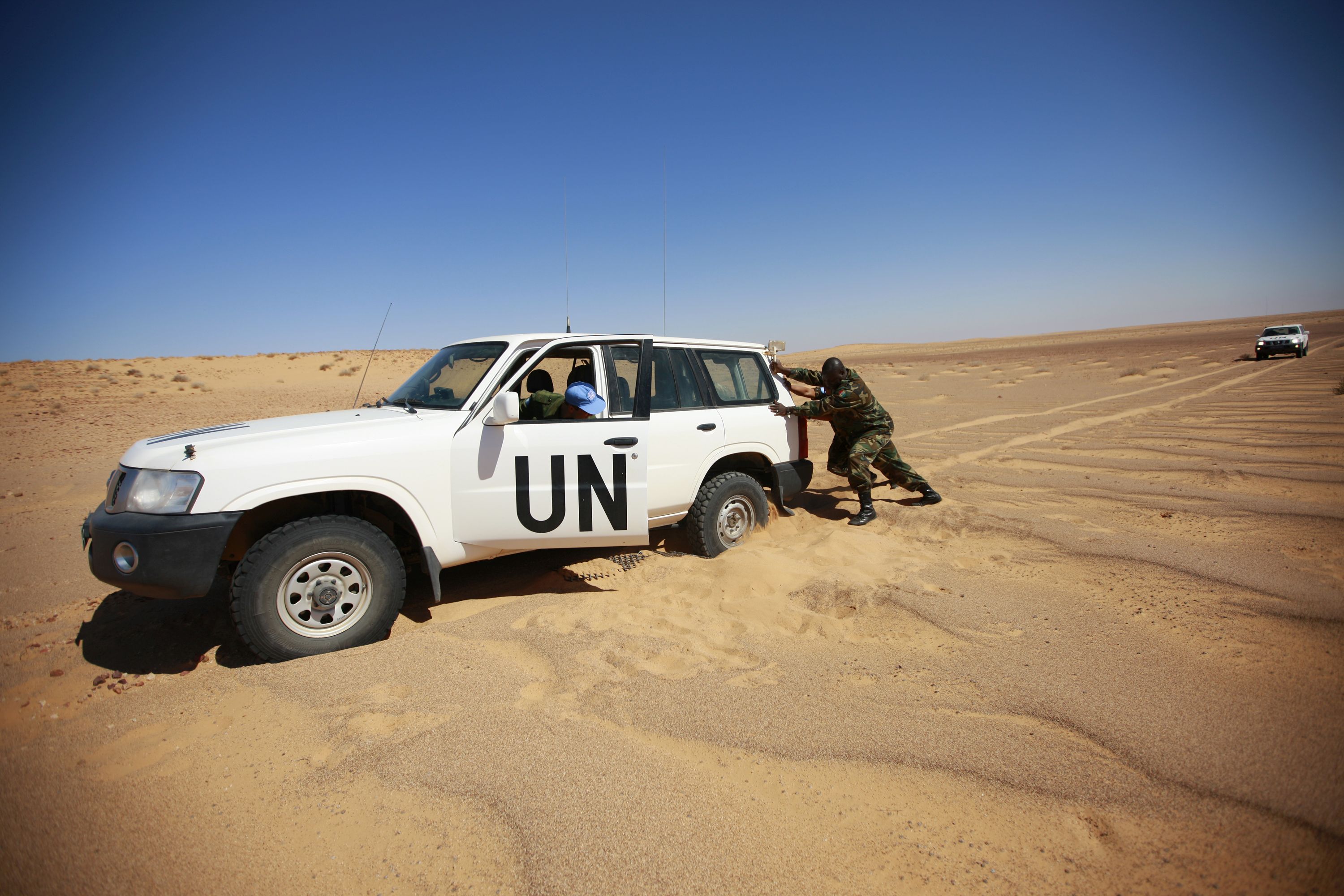
US and Russia veto competing Western Sahara resolutions, leaving MINURSO’s future uncertain
In an extraordinary confrontation, both permanent members blocked each other’s proposals on Western Sahara. With no resolution adopted, the UN mission faces an imminent expiry of its mandate.
SRI update
The following overview enlists stock-exchange registered companies with current or recent operations in occupied Western Sahara. Updated 28 October 2026.
UN Security Council may endorse the occupation of Western Sahara
On the 30th of October, the UN Security Council may vote on a resolution on Western Sahara that sets aside the Saharawi people's right to self-determination, in violation of the UN Charter.
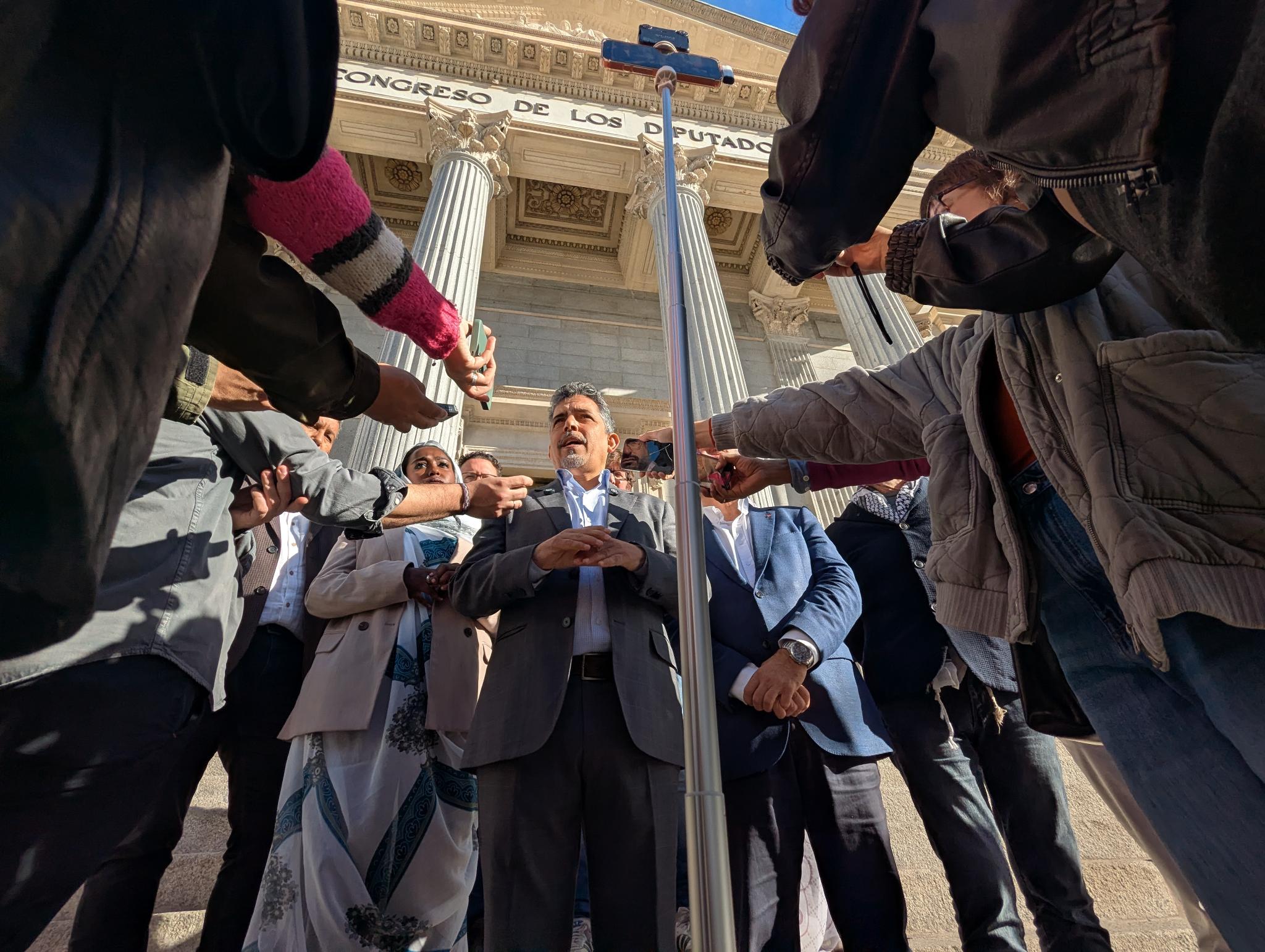
Polisario takes legal action to stop Ryanair
In a press conference in Madrid today, Polisario Front announced that the Western Sahara liberation movement is opening a legal case against the Spanish authorities for having issued a permit to Ryanair to fly to occupied Western Sahara.