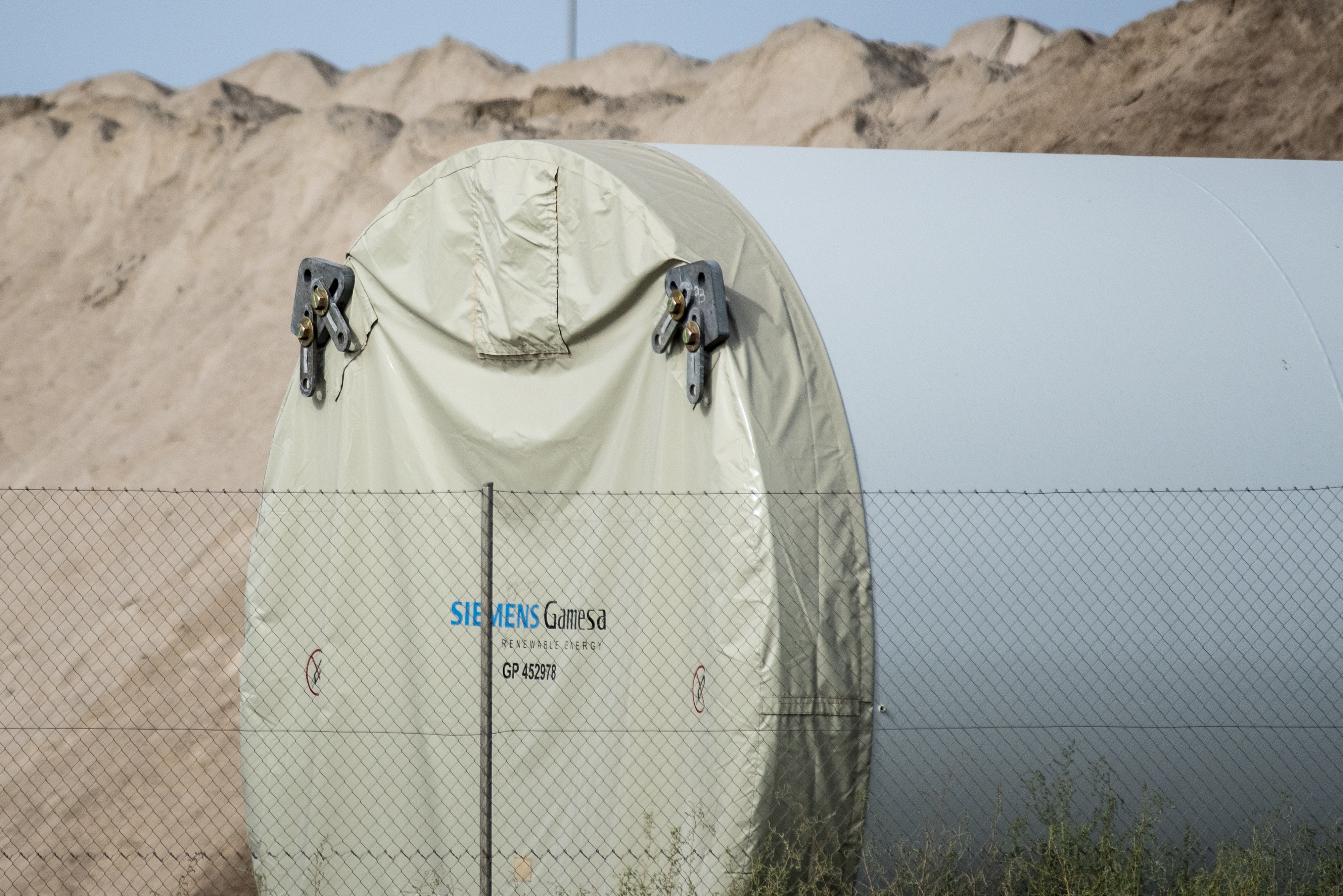
At its 2026 Annual General Meeting, Siemens Energy defended its involvement in wind energy projects in occupied Western Sahara.
Four out of the five currently operational wind farms in occupied Western Sahara run on turbines supplied by companies within the Siemens corporate group - now all under the control of the spin-off Siemens Energy. At least one additional wind park planned in the territory is also expected to be supplied with Siemens turbines.
At the Annual General Meeting (AGM) of 26 February 2026, Siemens Energy argued that it remains bound by existing contracts related to wind power projects in Western Sahara and that rulings by the Court of Justice of the European Union do not directly apply to private-law contracts between companies. The company also maintained that it has not entered into new business in the territory “for years”.
Yet the reality appears far less clear than these answers suggest.
Download questions presented by Western Sahara Resource Watch (WSRW) with support of Dachverband der Kritischen Aktionärinnen und Aktionäre, as well as answers from the executive board of Siemens Energy, here (the original German transcript is accessible here).
Contract obligations cannot override legality
For years, Siemens defended its operations in the territory - which the UN considers non-self-governing - by referring to an undisclosed legal opinion.
At last year’s AGM, Siemens Energy suddenly began referring to the EU Court of Justice’s concept of presumed consent, based on a selective interpretation of the Court’s rulings of October 2024.
When asked by WSRW in a follow-up letter how it intended to operationalise that framework and ensure compliance with international legal standards, Siemens declined to answer, stating that it would only address such questions at its annual AGMs - effectively thwarting communication.
When WSRW repeated the questions at this year’s AGM, asking whether its activities comply with the concept of “presumed consent” outlined by the Court in its 2024 rulings on EU agreements with Morocco, Siemens Energy replied that the concept is not currently relevant because the company is bound by existing contracts. Invoking the principle pacta sunt servanda, it argued that agreements must be respected and that the Court’s rulings do not apply directly to private contracts.
This reasoning sidesteps a central issue: whether the contracts underpinning Siemens Energy’s activities in Western Sahara were legally valid in the first place.
The projects in question are carried out in cooperation with Moroccan authorities and Nareva, a company owned by the Moroccan monarchy. Yet Morocco has no sovereignty over Western Sahara, a status repeatedly affirmed by the United Nations and by the Court of Justice of the European Union. Entering into agreements with a party that has no lawful authority over the territory raises fundamental legal concerns.
The Court has consistently ruled that Western Sahara is “separate and distinct” from Morocco and that activities affecting the territory must respect the right of the Saharawi people to self-determination. Contracts concluded without the consent of the people of the territory cannot simply be legitimised by invoking contractual obligations between companies.
Moreover, the company’s argument overlooks a basic principle of private law: contracts cannot produce effects that unlawfully harm third parties. In this case, the agreements underpinning the wind farms have direct consequences for the Saharawi people, whose rights over their territory and natural resources are affected.
Selective reference to ECJ jurisprudence
Siemens Energy’s claim that EU court rulings do not apply directly to private law sits uneasily with its simultaneous assertion to henceforth assess projects in light of the Court’s concept of presumed consent.
If the jurisprudence of the Court is not relevant to private actors, it is unclear why the company would refer to the Court’s framework at all. Conversely, if the concept of presumed consent is relevant, Siemens Energy has not demonstrated how its activities meet the Court’s criteria.
The company stated that it assesses projects on a “case-by-case basis” to determine whether they could bring “collective benefits” to the Saharawi people and whether exchanges with “possible representatives” might be necessary.
“It is not clear to us what Siemens means by “possible representatives” - on the one hand it could refer to the representative as defined by the UN, but on the other hand Siemens Energy may well be referring to some sort of alleged representative handpicked by the occupying power of Morocco”, says Nina Matzik from WSRW Germany.
Given Siemens Energy’s extensive role in the territory’s wind sector, such a response appears inadequate. The company has supplied turbines to most of the operational wind farms in Western Sahara, making it one of the most prominent corporate actors in the territory’s renewable energy infrastructure to date.
Consultation with customers is not independent oversight
Asked how it ensures its presence does not contribute to the consolidation of Morocco’s occupation of most of the territory, Siemens Energy said at the AGM that human rights issues are assessed internally “in consultation with our customers”.
In practice, those customers are Moroccan state institutions or companies linked to the Moroccan monarchy, including the national electricity utility ONEE and Nareva, owned by the royal holding.
Consulting the very actors that utilise the territory as part of the occupation cannot be considered an independent or objective assessment of human rights impacts. Nor did the company explain how such consultations would address the broader issue of whether its infrastructure contributes to the economic integration of the occupied territory into Morocco.
The company also failed to explain how it ensures that its activities do not help entrench the occupation.
Misrepresenting the EU Court’s position on Polisario
Siemens Energy also rejected the suggestion that it should engage with the Polisario Front, the liberation movement recognised by the United Nations as representing the people of Western Sahara.
The company stated that the Court of Justice does not consider the Polisario Front to be the sole representative of the Saharawi people.
This is a red herring: the EU Court was never asked to determine Polisario’s role or status. Nor did it need to do so. The Court only had to assess whether Polisario had legal standing to bring a case before it, and whether it was directly and individually concerned by the EU agreements being challenged.
On both questions, the Court’s answer was clear.
In its October 2024 rulings, the Court confirmed that the Polisario Front has standing to bring cases before EU courts on behalf of the people of Western Sahara. It further stated that the organisation “represents the people of Western Sahara as holder of the right to self-determination with regard to that territory” (CJEU Joined Cases C-779/21 P and C-799/21 P, §109 and Joined Cases C-778/21 P and C-798/21 P, §138).
These findings reinforce the Polisario Front’s standing before European courts to defend the Saharawi people’s right to self-determination.
Contradictions over infrastructure tenders
The AGM also revealed inconsistencies regarding Siemens Energy’s involvement in major planned energy infrastructure projects in Western Sahara.
Morocco’s national electricity utility announced in 2024 that the company had expressed interest in providing Engineering, Procurement and Construction (EPC) services to a planned 3-gigawatt transmission line linking Dakhla in Western Sahara to Casablanca in Morocco - a project lead by Emirati firm TAQA and Nareva.
Siemens Energy now says it never submitted a bid and only expressed non-binding interest at an early stage. Moroccan media, however, reports that ONEE has shortlisted the company for the project.
Questions also remain regarding the status of the Tiskrad wind farm project near El Aaiún, following rumours it had been shelved. Siemens Energy told shareholders that the project has not been discontinued but that the company is not involved.
That statement appears inaccurate. The 100-MW Tiskrad wind farm forms part of Morocco’s 850-MW Integrated Wind Energy Programme, awarded in 2015 to a consortium including Enel Green Power, Siemens Wind Power and Nareva, the energy company owned by the Moroccan royal holding. Under that framework, Siemens was responsible for supplying turbines and related technology to the project.
Central role in Western Sahara wind power
Despite claiming not to have entered into new contracts in recent years, Siemens technology remains central to the expansion of wind power projects in Western Sahara. The company has supplied turbines to the majority of operational wind farms in the territory.
These projects play a key role in Morocco’s strategy to integrate Western Sahara’s energy infrastructure into its national grid and to power industries operating in the occupied territory.
For the Saharawi people, who have repeatedly protested Siemens’ involvement in the exploitation of their resources without their consent, the question remains unresolved: how can projects proceed in their territory without their approval?
Siemens Energy’s responses at the AGM did little to clarify that point.
Since you're here....
WSRW’s work is being read and used more than ever. We work totally independently and to a large extent voluntarily. Our work takes time, dedication and diligence. But we do it because we believe it matters – and we hope you do too. We look for more monthly donors to support our work. If you'd like to contribute to our work – 3€, 5€, 8€ monthly… what you can spare – the future of WSRW would be much more secure. You can set up a monthly donation to WSRW quickly here.
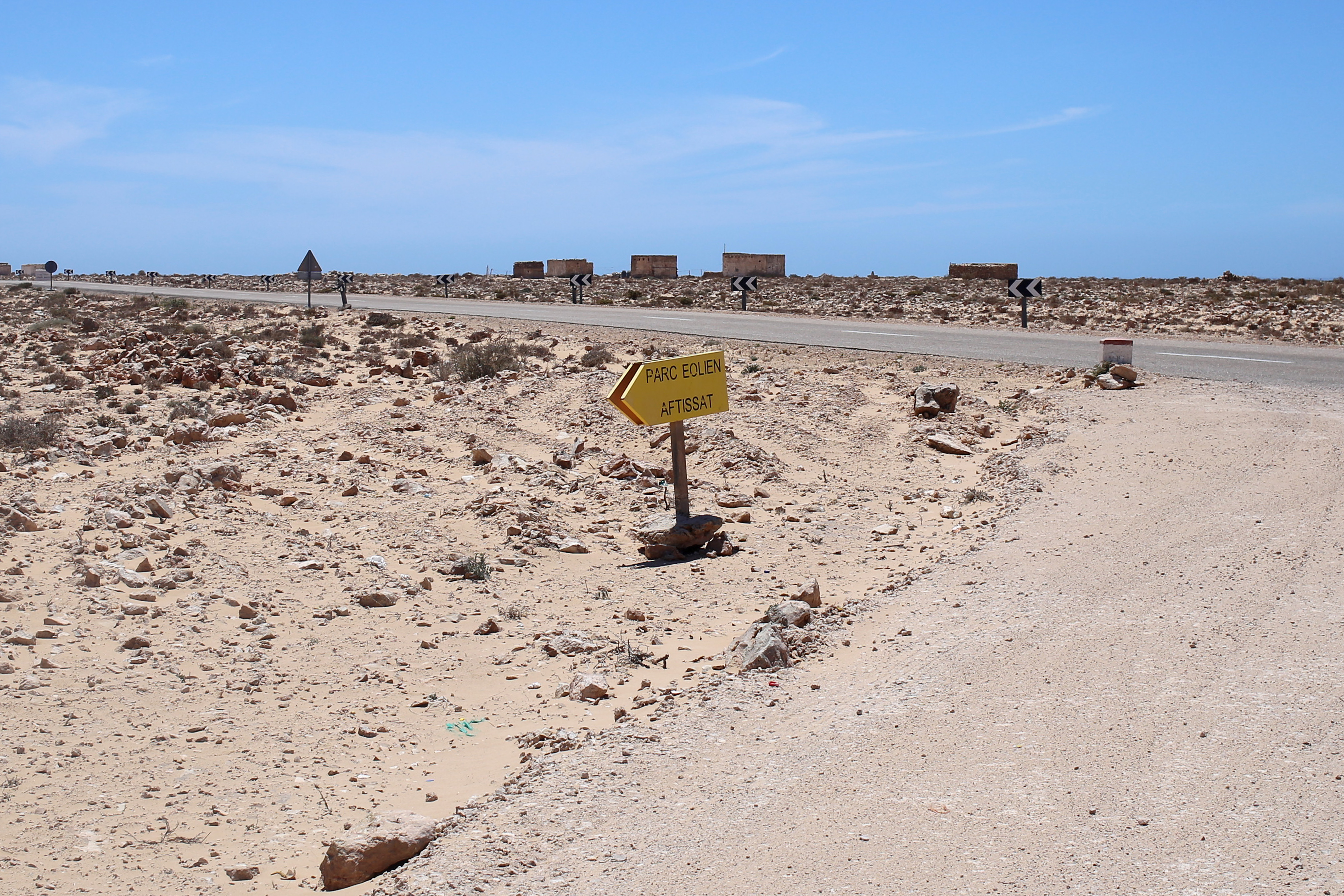
Occupied Western Sahara wind complex expands into Africa's top three
The Moroccan king’s energy company appears to have completed two new phases of the Aftissat wind power complex in occupied Western Sahara.

Dirty green energy on occupied land
How can it be wrong to develop renewable energy, in a world that is in desperate need for a green transition? In Western Sahara, the problems are numerous.
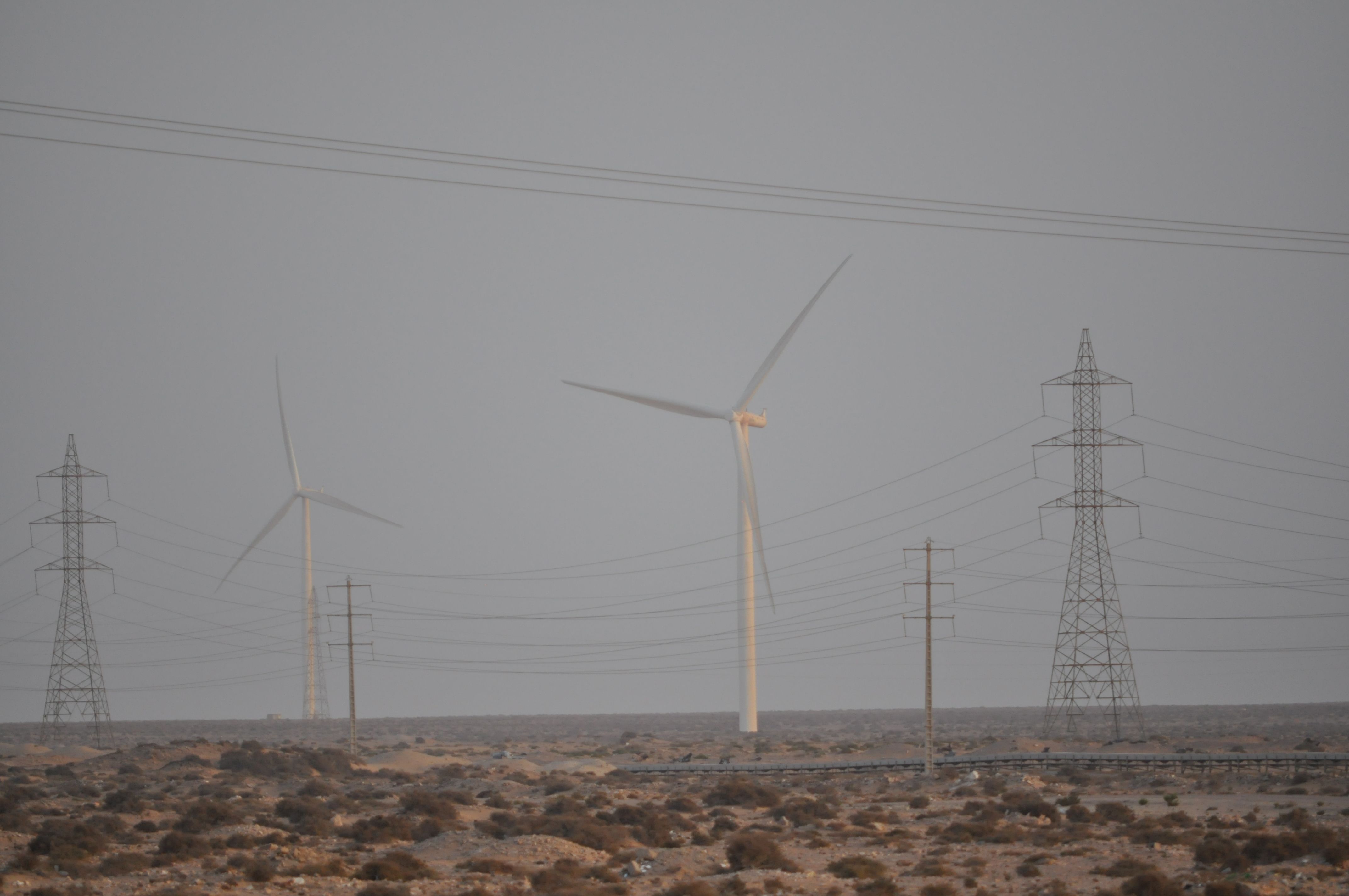
Trump administration bankrolls ammonia project in occupied Western Sahara
The Trump administration has become the first US government to finance a private-sector project in occupied Western Sahara, awarding support to the controversial ORNX green ammonia venture.
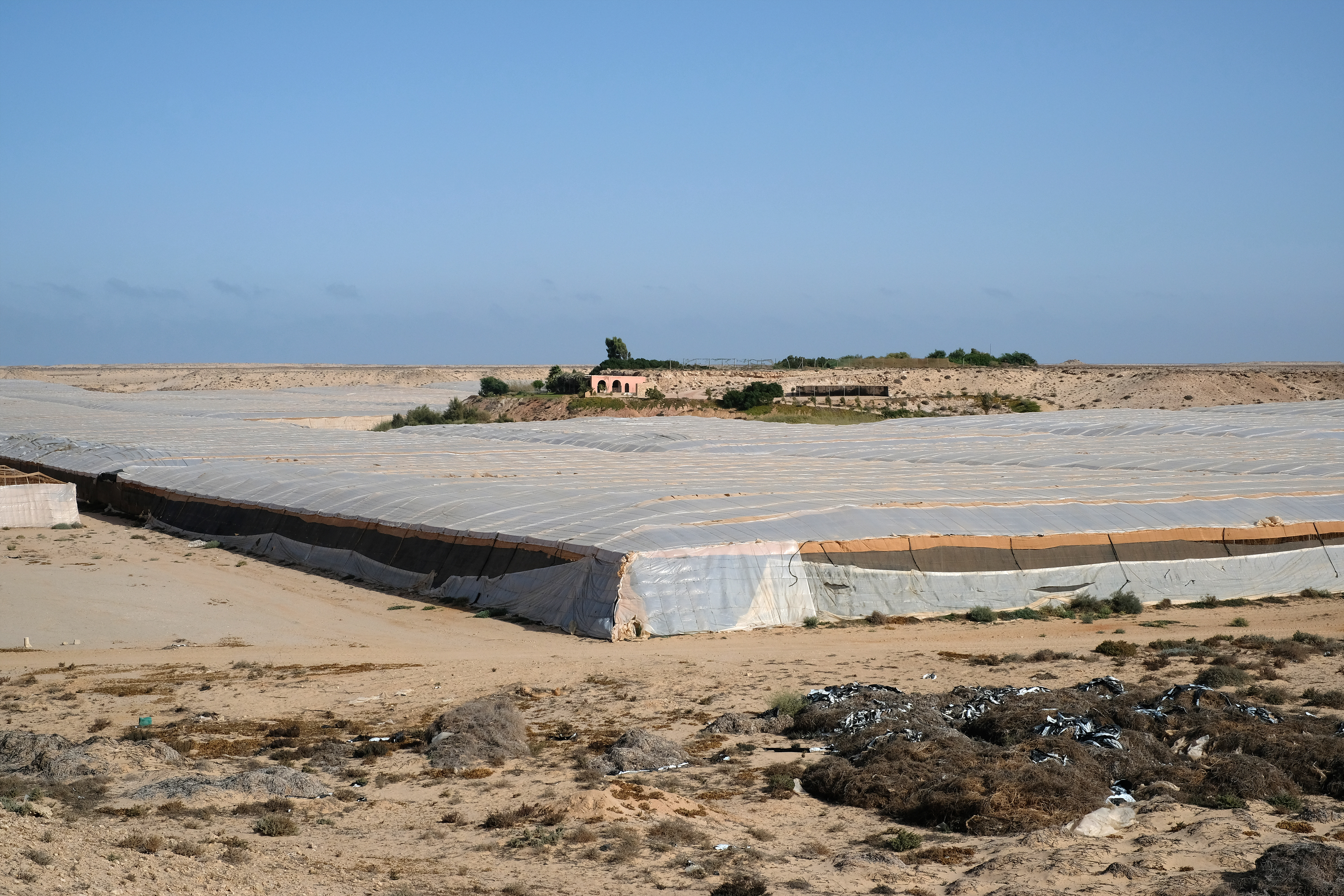
Engie paves way for new farmland in occupied Western Sahara
Morocco has launched another tender to allocate more than 1,000 hectares of agricultural land in occupied Western Sahara, made cultivable through the French company Engie. The expansion comes as the EU considers increasing the unlawful trade with the territory.