
SGS blames everyone else for mistakes on MarinTrust certificates it had issued to Moroccan companies in occupied Western Sahara.
SGS S.A., headquartered in Geneva, provides inspection, verification, testing, and certification services across a range of sectors, including food safety, quality assurance, and environmental protection. Through these activities, the company has repeatedly collaborated with Moroccan industries operating in occupied Western Sahara.
The core issue is that Western Sahara is not part of Morocco, as confirmed by international courts. By supporting Moroccan industries established in the territory in violation of international law, SGS effectively provides critical assistance to those operations - and in doing so, misrepresents the legal status of the territory.
In November, Western Sahara Resource Watch (WSRW) reported on the certification scheme MarinTrust, which ensures that fisheries products such as fish feed and fish oil are “responsibly” produced. However, MarinTrust accepts erroneous SGS certificates and fails to clarify which legislation it believes applies in occupied territory.
SGS is one of the independent third-party institutions that help Moroccan companies in the occupied territory obtain certification containing false geographical information.
In 2022, SGS’s Peruvian subsidiary issued a certificate [or download] to the Moroccan company Protein and Oil Industry, as compliant with the MarinTrust Global Standard for Responsible Supply. The company is located in Dakhla, deep south in occupied Western Sahara. One of the certificates, valid during 2022, claimed that the firm sourced its sardine and chub mackerel from the “Moroccan EEZ”.

This claim is highly questionable. WSRW is not aware of any instance where fish caught within Morocco’s EEZ - which extends no further south than the 27°40′N parallel - has been landed in Dakhla, located roughly 450 kilometers further south, in the waters off occupied Western Sahara.
It appears that SGS made a serious error in assuming that the waters from which the Moroccan company sourced its fish fall within Morocco’s Exclusive Economic Zone (EEZ). SGS has not responded to questions regarding whether it considers the waters off Dakhla, to be part of Morocco’s EEZ.

SGS wrote to WSRW on 2 December, describing its involvement as a «limited and concise role of a certifying body».
Ironically, while SGS is blindly accepting incorrect address information from the Moroccan companies on MarinTrust certificates, it states that it is by its nature «not making designations as to geo-political boundaries».
«SGS has no intention to take any position on this ongoing conflict. We therefore contest your statement that SGS would have acted grossly negligently», it wrote. SGS shifted responsibility to the audited companies, the scheme owner MarinTrust and other certification bodies.
“As a certification body, SGS conducts audits in accordance with the MarinTrust Standard and the information provided in the official MarinTrust application form by the applicant and as approved by MarinTrust. In this form, the classification of authorized FAO zones and species is provided and the applicant chose FAO 34. The classification of species is also provided by MarinTrust in its report of the evaluation of sub-products, which is elaborated previously by another certification body (LRQA, in this case) on behalf of MarinTrust. The certification process involves several certification bodies, each with a different role», the signatureless SGS letter commented. A new SGS certificate was issued to Protein and Oil Industry later in 2022, valid from 29 August that year until 28 August 2025, replacing the erroneous “Moroccan EEZ” claim with the technical term “FAO 34”, a designation that could refer to either waters off Morocco or Western Sahara. It is unclear why SGS issued two certificates for the same standard, to the same company, in the same year.
Another SGS-issued MarinTrust certificate [or download] - for the Moroccan company CIBEL II, based in Agadir – states that the company sources sardines from “FAO 34, South Zone (Zone C) / Moroccan EEZ.” The certificate, valid until 2027, therefore contains a serious geographic inaccuracy, as the Moroccan EEZ does not extend into FAO 34 Zone C. This certificate, containing a serious geographical inaccuracy, is valid from 11 June 2024 to 10 June 2027. WSRW has written to CIBEL II but has not received a reply.
Such claims directly contradict international law: Morocco’s EEZ does not extend into Wester Sahara, as reaffirmed by the European Court of Justice in its 4 October 2024 ruling. It’s paradoxical that a certificate meant to ensure “responsible supply” misrepresents the origin of the fish it certifies.
MarinTrust, a certification scheme that purports to support responsible fisheries practices, has failed to answer WSRW’s inquiries regarding these erroneous maritime descriptions signed by SGS.
However, SGS is not only misidentifying maritime zones; it also fails to recognise land borders.
The company lists Dakhla as part of Morocco, though it is located in occupied Western Sahara. Misrepresenting a product’s country of origin amounts to food fraud. The CJEU ruled on 4 October 2024 that goods from the territory must be labeled “Western Sahara,” not “Morocco”, yet MarinTrust certificates continue to enable exporters in occupied Western Sahara to make false origin claims. MarinTrust has ignored WSRW’s repeated requests for clarification.
Its failure to correctly identify the country in which it operates, raises serious questions about SGS’s ability to conduct the legal compliance checks required by the MarinTrust's responsibility standard.
In 2022, SGS del Perú S.A.C. also issued a MarinTrust certificate [or download] under the same standard to KB Fish SARL, based in El Aaiún, Western Sahara. The certificate states that KB Fish’s sardines come from stocks in the “Central Zone (Zones A + B)” and the “South Zone (Zone C)” of FAO Fishing Area 34. To clarify, Zone A lies offshore Morocco proper, Zone B spans waters off both Morocco and Western Sahara (down to 27°N), and Zone C covers only the waters off Western Sahara.
WSRW asked SGS whether KB Fish is required to separately manage, assess, and report on products sourced from Western Sahara versus Morocco , a distinction required under international law.
“In accordance with the established MarinTrust certification procedure, the information related to the fishing areas is declared directly by the applicant company in the official application form, which is then approved by MarinTrust […]. Specifically, the standard mandates the collection of Key Data Elements (KDEs) including vessel identification, species, catch areas, fishing method, and dates. During the audits, SGS verifies that facilities maintain records of these elements throughout their supply chain”, it wrote.
“SGS's role is to audit compliance with these traceability requirements as defined in the MarinTrust Standard based on the information provided by MarinTrust to SGS in the application form. It does not fall within SGS’s remit to determine whether KB Fish assesses different geographic areas in distinct manners.”
The SGS statement suggests that SGS has misunderstood the core issue, namely that Moroccan companies declare their location as being in Morocco, and that this declaration is then accepted by MarinTrust.
In addition to these above issues, SGS also conducts activities that directly or indirectly relate to the territory:
- Certification of facilities in southern Morocco: SGS has certified [or download] facilities in southern Morocco, including Nouvelle Ougala in Tan-Tan. Its certificate explicitly states that the raw materials originate from the “Moroccan EEZ”. WSRW asked SGS how Nouvelle Ougala verifies that its inputs - transported by sea or land- originate from the Moroccan EEZ rather than from Western Sahara waters. SGS provided a notable explanation: “During the audit, the traceability of raw materials is assessed based on official landing documents, lists of authorized suppliers, and transport and production records. This verification does not involve determining the political boundaries of fishing zones, but rather confirming their correspondence with FAO codes and the operational descriptions included in the official application form approved by MarinTrust.”. In other words, the political boundaries that SGS itself formulated on the certificate are, according to SGS, outside the scope of its audit work. “It is not the objective of the audit, nor are we authorized, to verify the client's position with the interpretation of the CJEU”, SGS added.
- Vehicle inspection operations in Dakhla: SGS confirmed that it operates a vehicle inspection franchise in Dakhla. When asked about the legal basis for including inspections in Western Sahara within an agreement with the Government of Morocco, SGS did not respond to the legal question, but stated “as Morocco is currently administrating this region and residents and businesses in the region require the same road safety standards as elsewhere”. A map previously published on SGS’s website depicting Western Sahara as part of Morocco was removed in 2025 prior to SGS’s reply to WSRW.
- Contract with the Moroccan government: In March 2021, SGS signed a contract [or download] with Morocco’s Ministry of Industry, Trade, Green and Digital Economy to implement a Conformity Assessment Programme for industrial products. The programme is designed to ensure that exports comply with Moroccan standards before entering the national market. WSRW asked whether Western Sahara was covered by this agreement. SGS did not respond to that question, but stated that “SGS’s involvement related to product conformity assessments operated by SGS Maroc SA is limited to delivering technical services to the authorities responsible for day-to-day governance to protect local populations and ensure continuity of public services. The mandate is purely technical: delivering services to the institutions and populations that depend on them.”
- Certification for German importer KMP: The German firm KMP relies on SGS to certify its fishmeal both at the source in Latin America and upon arrival in Bremen [or download]. SGS clarified that its role is limited to products of Peruvian origin and that it has “no information for products from other countries”. KMP has been the largest European importer of fishmeal from Western Sahara in recent years, has not responded to WSRW’s letters.
SGS confirmed that it also provides GMP+ certification in Western Sahara. WSRW wrote about the role of GMP+ last week.
WSRW and the Swiss organisation terre des hommes schweiz wrote to SGS on 28 November 2024, 14 June 2025 and 9 November 2025.
Since you're here....
WSRW’s work is being read and used more than ever. We work totally independently and to a large extent voluntarily. Our work takes time, dedication and diligence. But we do it because we believe it matters – and we hope you do too. We look for more monthly donors to support our work. If you'd like to contribute to our work – 3€, 5€, 8€ monthly… what you can spare – the future of WSRW would be much more secure. You can set up a monthly donation to WSRW quickly here.
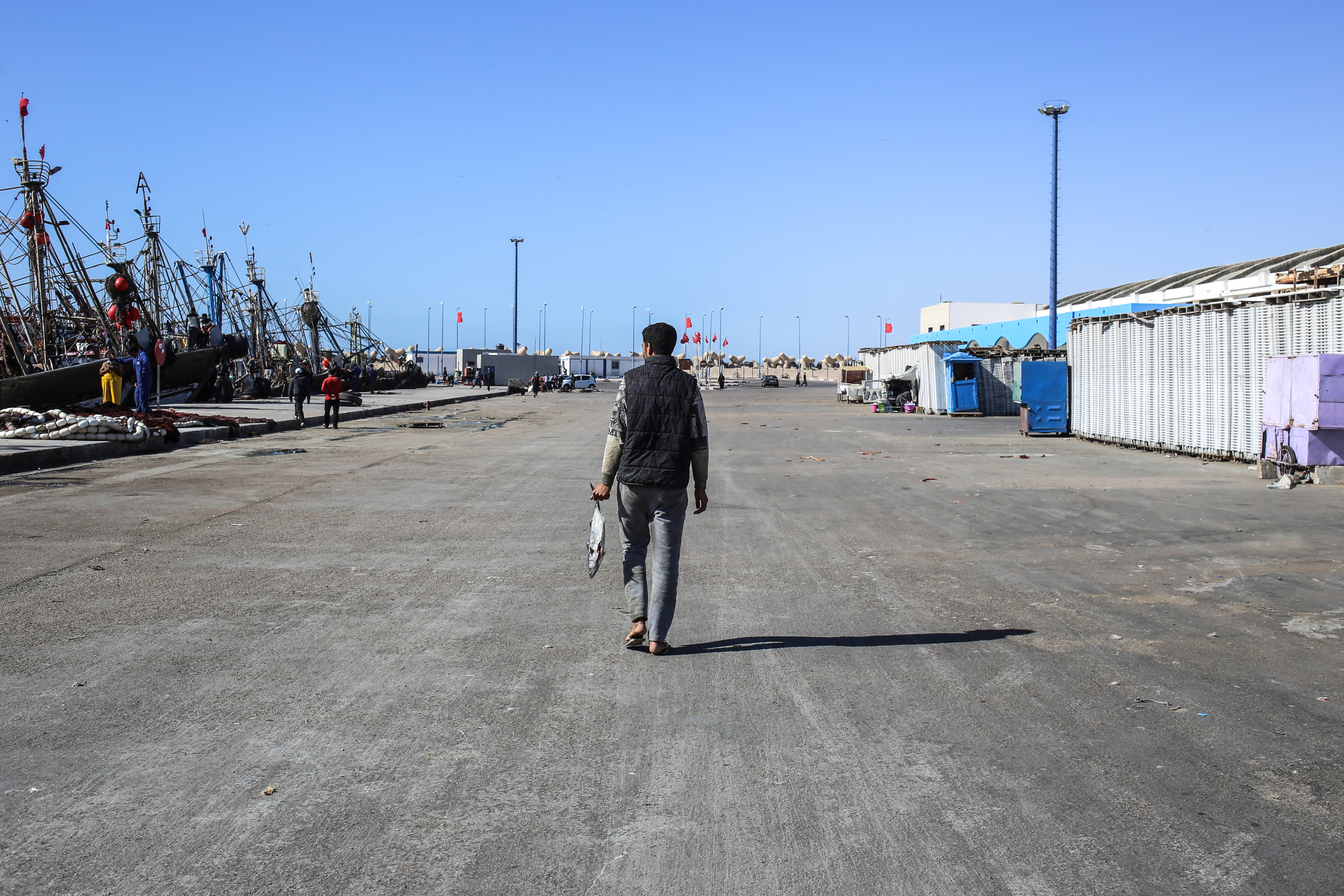
New report: Certified occupation
International certification standards embellish Morocco’s controversial trade with fisheries and agricultural products in occupied Western Sahara, new report documents.
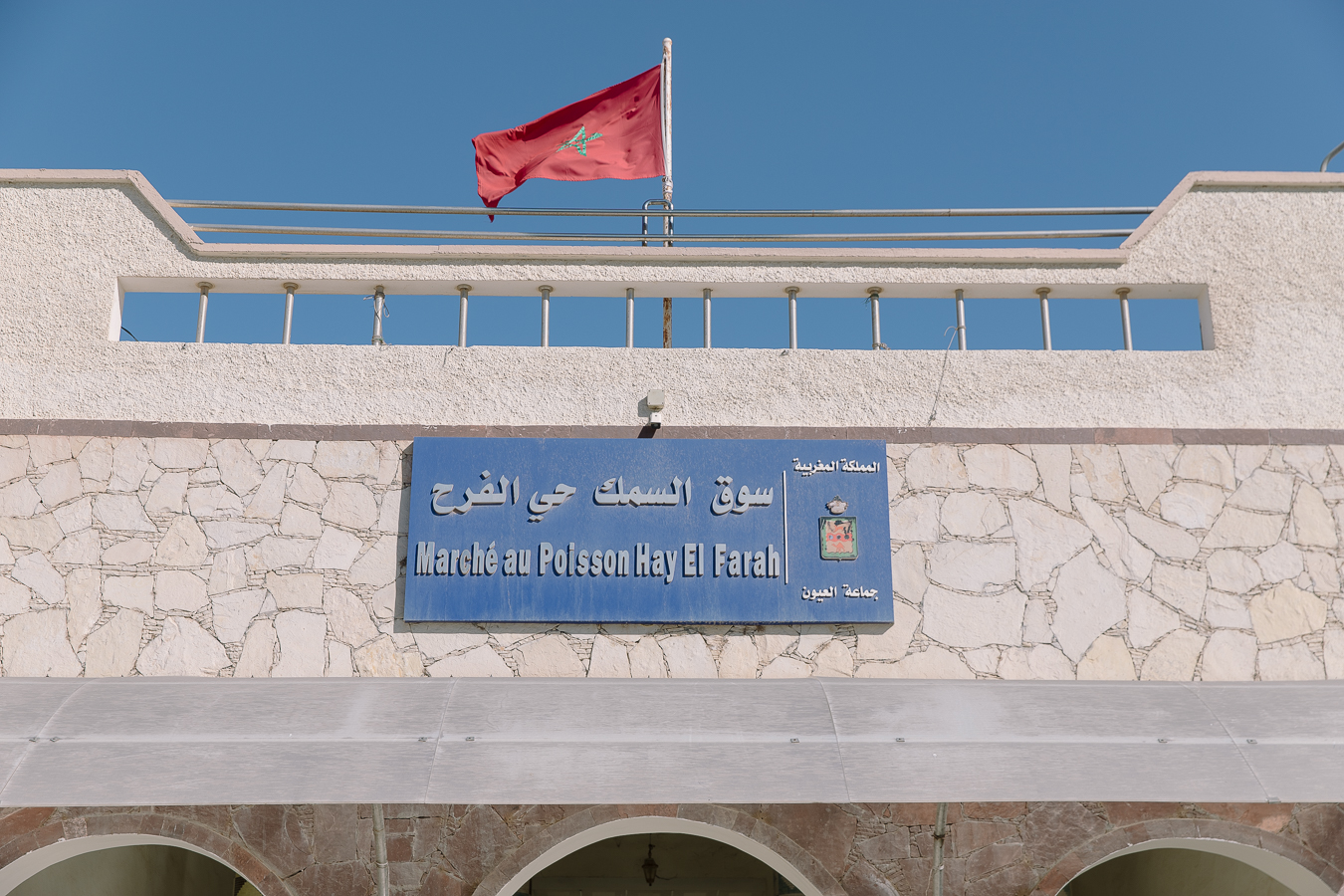
GMP+ does not check if “sustainable” fish is legally caught
The world’s largest certification scheme for “safe and sustainable animal feed” does not check whether its certified fish feed companies source from illegal fisheries in occupied Western Sahara, where catches violate the Saharawi people’s right to self-determination.
ASC withdraws from occupied Western Sahara
Certification scheme ends involvement with Azura Group and declares that no future certifications will be granted to companies in the occupied territory.
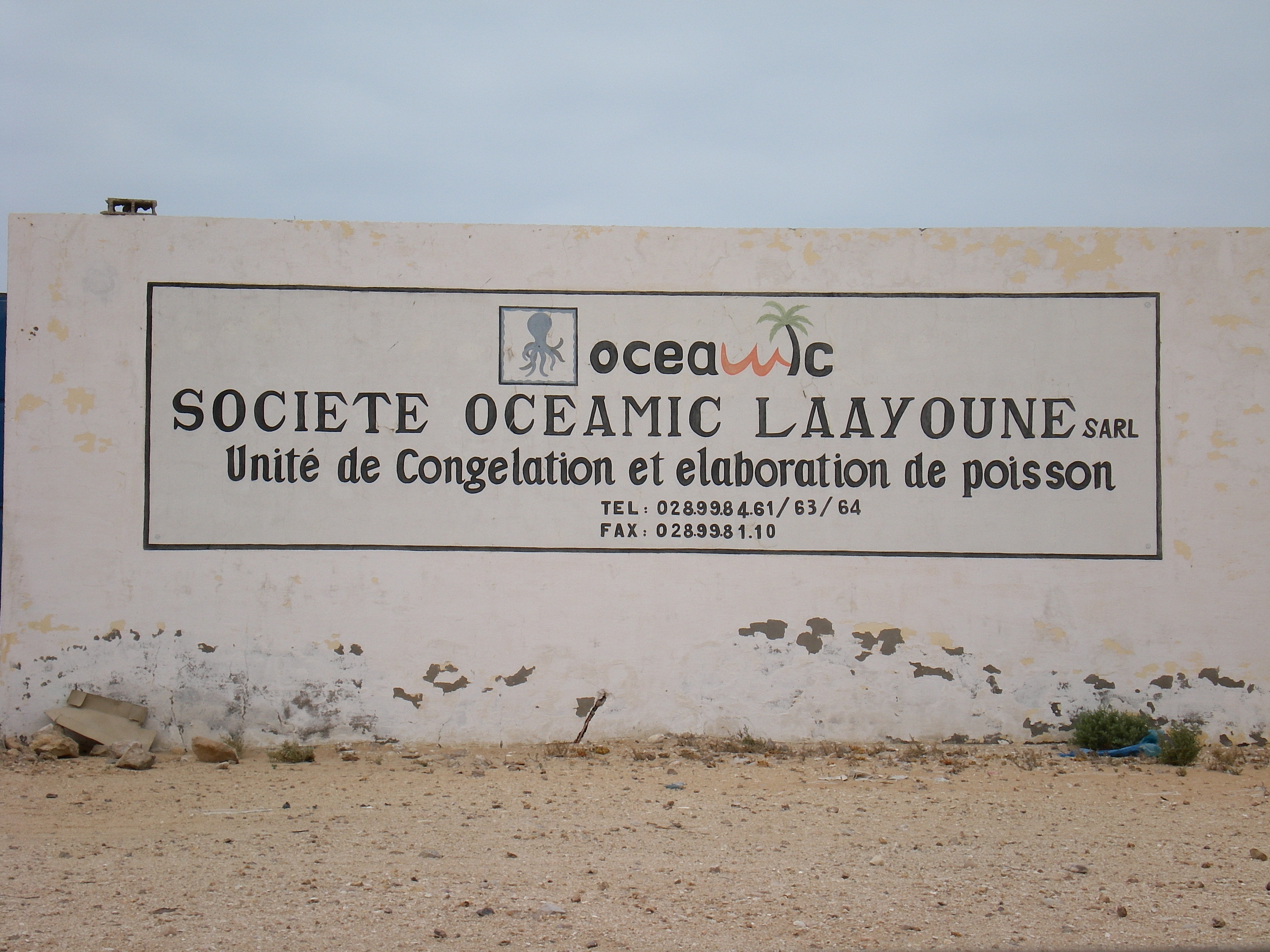
BRCGS fails accountability test
Despite repeated requests, the organisation does not clarify why its food safety certificate ignores legal boundaries.