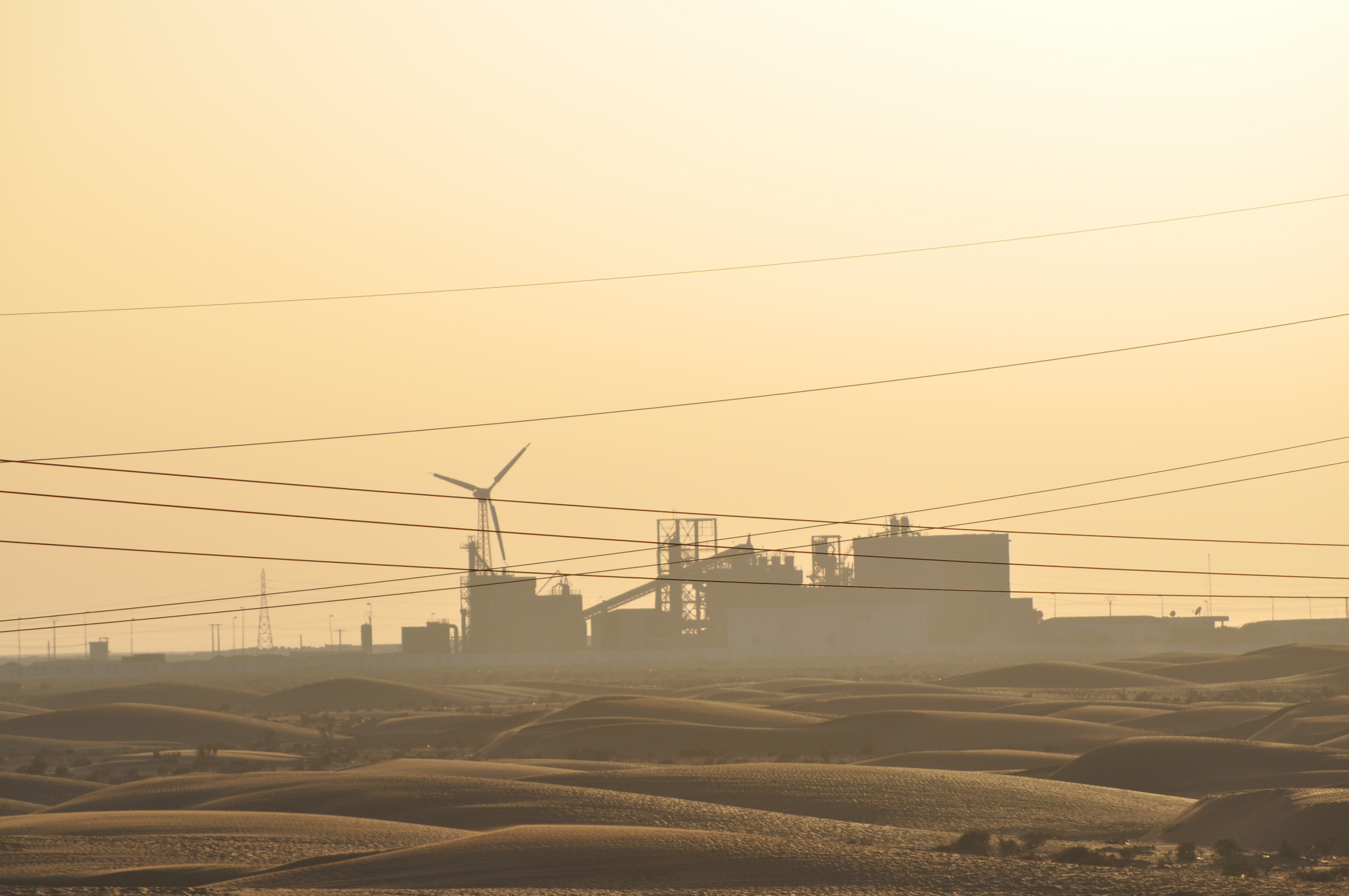
The German company confirms once again that its operations in occupied Western Sahara are closely tied to Morocco’s infrastructure expansion in the territory - while continuing to dismiss the Saharawi people’s right to consent.
The German construction materials giant Heidelberg Materials acknowledged in its Annual General Meeting (AGM) in May that it is supplying major controversial infrastructure projects in the occupied territory, including the ports of El Aaiún and Dakhla Atlantique. The company also confirmed an increase in production levels in 2025.
Rather than dispelling concerns over its activities in Western Sahara, Heidelberg Materials’ AGM responses reinforced how closely its business operations are tied to Morocco’s consolidation of the occupied territory.
The management´s AGM statements came in response to a series of questions from Western Sahara Resource Watch (WSRW). Download the Q&A here (English translation of a German original).
Cementing the occupation
Through its subsidiary Ciments du Maroc, Heidelberg Materials operates two cement grinding plants and a ready-mix concrete plant in occupied Western Sahara.
At the AGM, the company disclosed that it produced nearly 600,000 tonnes of cement in Western Sahara in 2025, up from approximately 500,000 tonnes in 2024. It also admitted supplying construction material to two of Morocco’s largest infrastructure projects in the territory.
For the controversial Moroccan port project in El Aaiún, Heidelberg Materials stated that it sold approximately 50,000 cubic metres of concrete in 2024 and another 20,000 cubic metres in 2025.
The company also confirmed supplying approximately 50,000 tonnes of cement annually in both 2024 and 2025 for the construction of the massive “Dakhla Atlantique” port project near Dakhla.
These projects are not neutral civilian developments.
The Dakhla Atlantique port is one of Morocco’s flagship strategic projects in occupied Western Sahara. The port is designed to facilitate exports and strengthen Morocco’s economic integration of the territory, despite the fact that Morocco holds no sovereignty over Western Sahara under international law.
By supplying the cement and concrete necessary for these projects, Heidelberg Materials is facilitating infrastructure that entrenches and normalises the occupation.
Yet during the AGM, the company denied that its activities contribute to “the consolidation of an occupation” - despite supplying precisely the projects Morocco relies upon to strengthen its control over the territory.
The contradiction is striking.
The company’s legal argument collapses under scrutiny
During the AGM, Heidelberg Materials again attempted to justify its activities by claiming that it “does not extract raw materials” in Western Sahara and has therefore “not identified any infringement of the Saharawi people’s rights for which we consider consent to be necessary.”
That argument is deeply misleading.
International law concerning Western Sahara is not limited to the extraction of raw materials. The core legal principle is the Saharawi people’s right to self-determination and permanent sovereignty over their territory and resources.
The Court of Justice of the European Union (CJEU) repeatedly confirmed - most recently in three landmark rulings in October 2024 - that Western Sahara is “separate and distinct” from Morocco, and that activities affecting the territory require the consent of the people of Western Sahara, represented internationally by the Frente Polisario, as a corollary of their right to self-determination.
Heidelberg Materials nevertheless continues to reject the need to obtain such consent.
Instead, the company alleges to “fulfill our obligation to respect the right to self-determination” through its standardised structure for stakeholder engagement.
But in its rulings on Western Sahara, the CJEU has made clear that the consent of a people cannot be substituted by consultations with stakeholders or segments of the local population.
This distinction is fundamental.
Under international law, the relevant question is not whether a company has consulted selected business partners, employees or community actors. The question is whether the people of Western Sahara have consented to the activities carried out in their territory.
The Court has consistently stressed that the Saharawi people are the rights-holder under the principle of self-determination. Their consent cannot be replaced by consultations with economic stakeholders, municipal actors, settlers, or groups presented as representing the “local population”.
That distinction is particularly important in a territory where Morocco has, over decades of occupation, profoundly altered the demographic composition through settlement policies.
Heidelberg Materials itself admitted during its 2025 AGM that it makes “no active distinction” between Saharawis and Moroccan settlers in its local engagement processes.
That admission significantly weakens the company’s attempt to present its stakeholder dialogue as a source of legitimacy.
International law requires the consent of the people of the territory - expressed through their internationally recognised representative, Frente Polisario - before economic activities affecting Western Sahara can lawfully proceed.
By replacing consent with generic stakeholder engagement, Heidelberg Materials effectively strips the Saharawi people’s right to self-determination of any practical meaning.
The company also continues to argue that its activities benefit the “local population”, pointing to a limited yet undisclosed number of Saharawi shareholders, procurement contracts and charitable initiatives.
But the CJEU has explicitly distinguished between alleged economic benefits for a population under occupation and the legally required consent of the people of the territory.
The issue is therefore not whether Heidelberg Materials creates local economic activity. The issue is whether it respects the Saharawi people’s internationally recognised right to determine the future of their land and resources.
It does not.
A growing reputational and legal risk
Heidelberg Materials’ continued operations in occupied Western Sahara stand increasingly at odds with international legal developments.
The company repeatedly refers to its commitment to international human rights standards, including the UN Covenants that place the right to self-determination in their very first article.
Yet when asked directly how it reconciles those commitments with its activities in Western Sahara, Heidelberg Materials argued that implementation of self-determination “falls under the jurisdiction of states.”
That position ignores the growing international consensus that companies also bear responsibilities under international human rights standards when operating in occupied or conflict-affected territories.
The UN Guiding Principles on Business and Human Rights make clear that companies must avoid contributing to human rights abuses and exercise heightened due diligence in such contexts.
WSRW letters to Heidelberg Materials have never been responded to.
Since you're here....
WSRW’s work is being read and used more than ever. We work totally independently and to a large extent voluntarily. Our work takes time, dedication and diligence. But we do it because we believe it matters – and we hope you do too. We look for more monthly donors to support our work. If you'd like to contribute to our work – 3€, 5€, 8€ monthly… what you can spare – the future of WSRW would be much more secure. You can set up a monthly donation to WSRW quickly here.
Another company of the Moroccan king involved in occupied Western Sahara
A company closely linked to Morocco’s royal business network has entered a new project in occupied Western Sahara, partnering with a Chinese state-owned electricity giant on high-voltage infrastructure in Boujdour.
Don't let resource exploitation decide Western Sahara's future
Western Sahara Resource Watch calls on the UN to address the accelerating exploitation of the territory’s natural resources - and prevent it from becoming an even greater obstacle to self-determination.
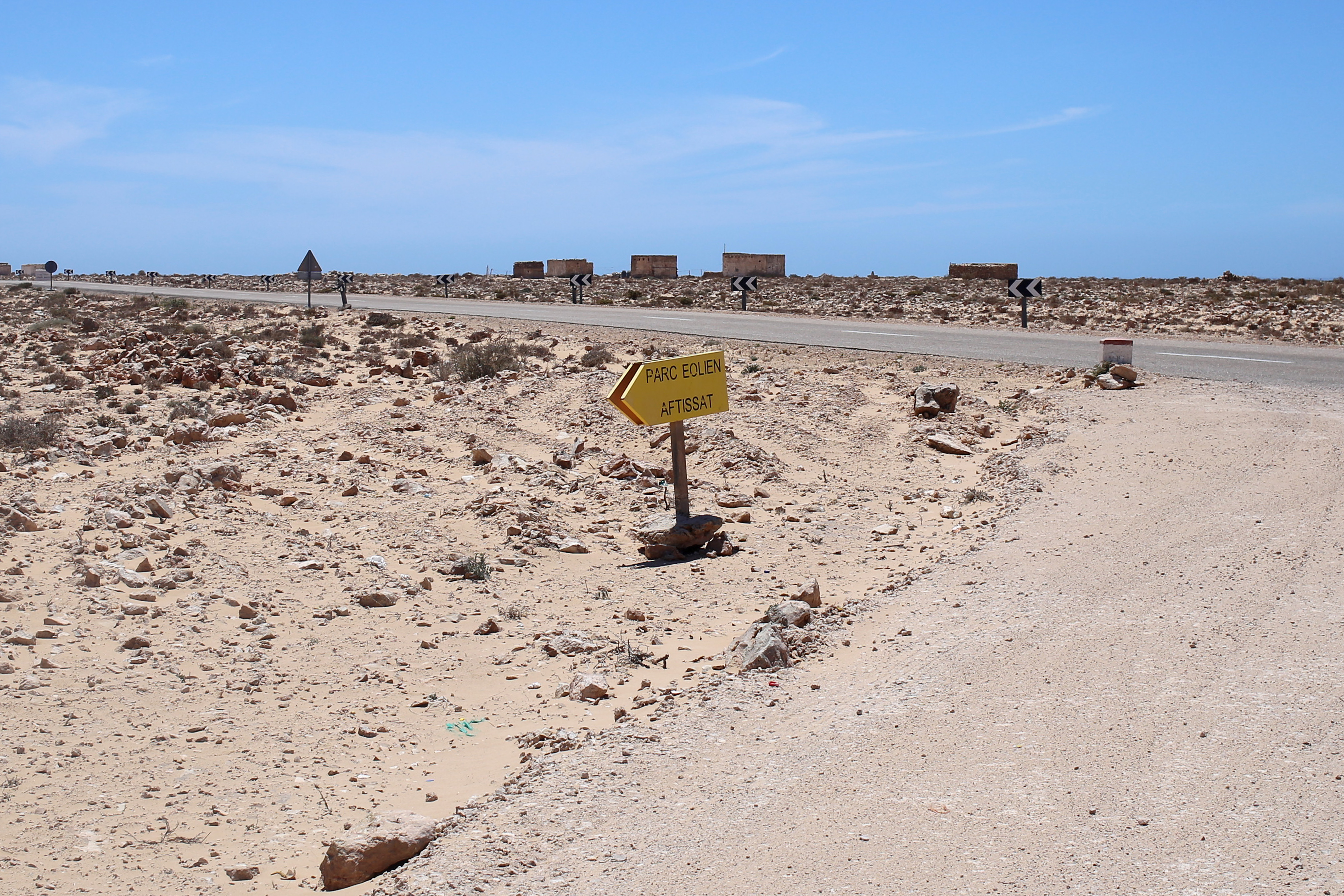
Occupied Western Sahara wind complex expands into Africa's top three
The Moroccan king’s energy company appears to have completed two new phases of the Aftissat wind power complex in occupied Western Sahara.

Dirty green energy on occupied land
How can it be wrong to develop renewable energy, in a world that is in desperate need for a green transition? In Western Sahara, the problems are numerous.