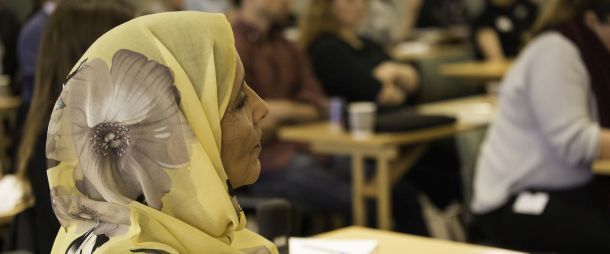
The vice-president of the Panafrican Parliament, Suelma Beirouk, was to attend COP22, but is now being held by Moroccan police. Morocco has occupied her homeland Western Sahara - and illegally built windmills on it.
For 40 years, Morocco has occupied the former Spnish colony of Western Sahara. Half the people of Western Sahara had to flee when Morocco invaded. One of them was Suelma Beirouk, a young activist for independence from Spain.
Now, Suelma Beirouk is the vice-president of the Pan-African Parliament. In that capacity, she was in the preparatory committee for the COP21.
From what WSRW understands, Suelma Beiruk was last night, 6 November, detained by the Moroccan police as she was about to leave Marrakech airport and head to the city center, where COP22 is being hosted. She was to attend as a representative of the African Union.
"A man came running after her and asked her to return", WSRW was told from a relative of hers. "They instructed her to wait at the airport", WSRW was told.
Beirouk has since last night been held at the airport. She has apparently alerted the African Union, who is said to be on the case. Morocco is the only country of Africa that is not a member of that Union.
It is not clear to WSRW what reasons have been given for preventing her from leaving the airport.
UPDATE, 7 Nov 2016, 14:12, Mrs. Beirouk communicated to WSRW that she had been told by the Moroccan airport police she was not allowed to go to Marrakech."The Moroccans have not allowed me to enter Marrakech", she wrote
UPDATE, 18:34: Beirouk's daughter is interviewed by Radio France International. Beirouk had all papers in order for the attendance, and was representing the African Parliament. She was ordered to take a flight to Oran in Algeria.
UPDATE, 21:15: The African Union vice president is still held - now at Casablanca airport. The last communication with her was a bit after 7PM. She had then been told she was to be deported to Nouakchott in Mauritania, no longer to Algeria. Beirouk's phone is off.
UPDATE, 22:29. All still unclear. She is said to be still in Casablanca, and that she is to travel to Algiers tomorrow.
While keeping the territory under occupation, expelling UN peace keepers, refusing the UN Secretary-General access to the land, and preventing the self-determination process in Western Sahara, Morocco is also building renewable energy infrastructure on the occupied territory.
That infrastructure is used by a state company to exploit the depleting mineral reserves there, as detailed in a report WSRW published on 2 November. Morocco applies the alleged "sustainable" energy to cement the occupation itself.
Morocco has not sought the consent of the people of the land to carry out such projects - a situation which the UN Human Rights Council expressed concerns about this week. Neither Morocco, nor its two partners in that sector, German company Siemens or Italian company Enel have lifted a finger to hear the opinion of the Saharawis. Nareva, the company of the Moroccan king, fails to respond to questions on human rights in a study published last week by Business and Human Rights.
Yesterday, hundreds of Saharawis protested against Morocco, Siemens and Enel.
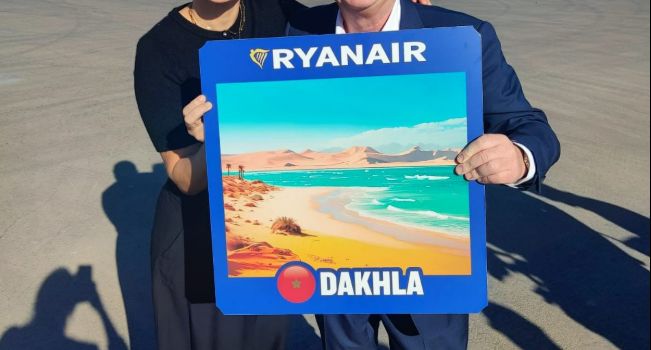
Irish ad watchdog: Ryanair misleading about flights to Western Sahara
In a preliminary decision, the Irish advertising watchdog says the airline’s ads are likely to mislead, as Dakhla is “not a part of Morocco”.
Gdeim Izik prisoners resume hunger strike
Saharawi political prisoners have resumed a hunger strike in Moroccan prisons, demanding their release, improved detention conditions and the implementation of UN decisions.
SRI update
The following overview enlists stock-exchange registered companies with current or recent operations in occupied Western Sahara. Updated 28 September 2026.
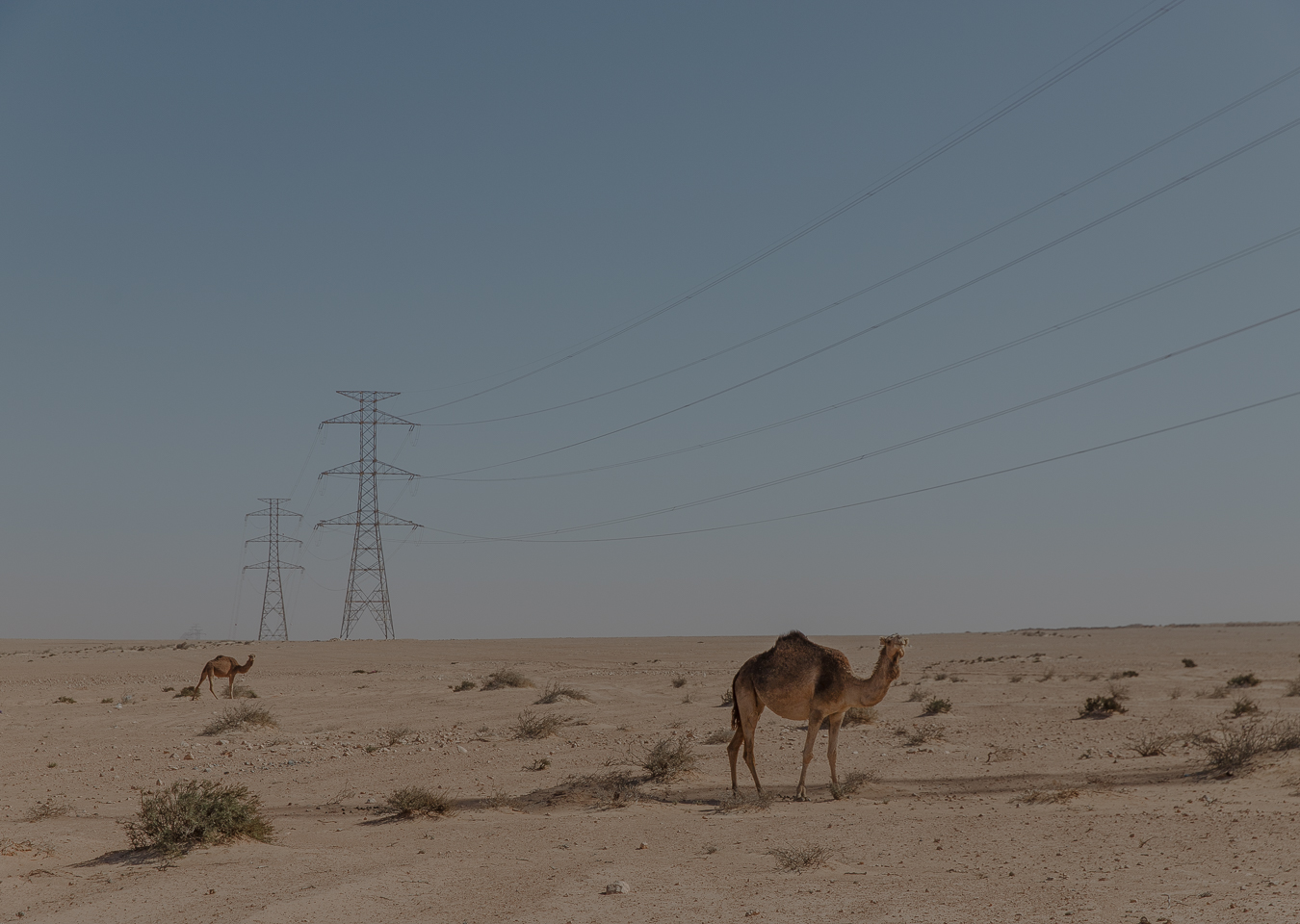
Another company of the Moroccan king involved in occupied Western Sahara
A company closely linked to Morocco’s royal business network has entered a new project in occupied Western Sahara, partnering with a Chinese state-owned electricity giant on high-voltage infrastructure in Boujdour.